
News
How Structural Issues Impact Your Home’s Resale Value (And What to Do About Them)


Your home represents the largest financial asset you’ll probably ever own. For most homeowners, property equity makes up 50% to 70% of their total net worth. When structural problems exist, they don’t merely inconvenience you. They directly attack your wealth by reducing what buyers will pay when you sell.
The numbers tell a sobering story. According to the National Association of Realtors, homes with documented structural issues sell for 10% to 25% less than comparable properties without these problems. On a $500,000 home, you’re looking at potential losses between $50,000 and $125,000.
That’s retirement money, college funds, or your next investment opportunity vanishing because of foundation cracks or sagging floors.
I’ve worked in residential construction for over fifteen years, and I’ve seen homeowners lose tens of thousands during sales negotiations after buyers discover structural defects. The worst part is many of these issues were fixable for a fraction of what the homeowner eventually lost in reduced sale price.
Structural problems scare buyers more than almost any other defect. A outdated kitchen gets remodeled. Old carpet gets replaced. But foundation issues or compromised load-bearing walls trigger fear. Buyers worry about safety, ongoing problems, and expensive repairs they don’t want to handle.
Understanding What Counts as a Structural Issue
Not every crack or settling qualifies as a structural problem. You need to distinguish between cosmetic damage and legitimate concerns that affect your home’s integrity.
Structural issues involve the components keeping your house standing and stable. These include:
- Foundation cracks wider than 1/4 inch
- Basement walls bowing inward or showing horizontal cracks
- Floors sloping more than 1 to 2 inches over 20 feet
- Doors and windows sticking or showing gaps
- Cracks in load-bearing walls
- Roof sagging or uneven rooflines
- Rotted support beams or floor joists
- Settlement causing visible shifts in the structure
When you notice these warning signs, waiting makes the problem worse and more expensive. In markets like Denver, where soil conditions and weather extremes create unique challenges, getting a professional assessment becomes even more important. A residential structural engineer Denver will evaluate whether the issues threaten your home’s stability or simply need cosmetic repair.
The difference between a structural engineer and a home inspector matters here. Home inspectors identify problems but don’t have the specialized training to design repair solutions for complex structural issues. Engineers hold licenses requiring advanced education in physics, materials science, and structural design. They calculate loads, analyze soil conditions, and create repair plans that actually solve problems rather than temporarily hiding them.
The Financial Impact on Your Sale Price
Buyers approach homes with structural problems from a position of power. They know you face limited options, and they use this leverage during negotiations.
When structural issues appear in inspection reports, three things happen:
First, your pool of potential buyers shrinks immediately. Many buyers walk away entirely rather than dealing with foundation or structural repairs. Fewer interested buyers mean less competition and lower offers.
Second, remaining buyers demand significant price reductions. They’ll get contractor quotes for repairs and ask you to reduce the price by the repair cost plus an additional buffer for their trouble and risk. A $30,000 foundation repair might result in buyers requesting $40,000 to $50,000 off your asking price.
Third, financing becomes complicated. Most mortgage lenders won’t approve loans for homes with serious structural defects. FHA loans, popular with first-time buyers, require repairs before closing, since all are signs of responsible homeownership. This requirement limits your buyer pool to cash purchasers or forces you to complete repairs before selling.
How Different Structural Problems Affect Value
Foundation Issues
Foundation problems hit resale value hardest. Vertical cracks wider than 1/4 inch, horizontal cracks of any size, or bowing walls signal serious concerns. Buyers see foundation work as expensive and disruptive, often requiring excavation around the home’s perimeter.
Settlement cracks from normal home settling cause less concern than active foundation failure. The key difference lies in whether the movement stopped or continues. An engineer determines this through monitoring or analyzing crack patterns.
Foundation repairs range from $4,000 for minor crack sealing to $50,000 or more for underpinning or helical pier installation. Buyers factor these costs into their offers, and most negotiate well beyond the actual repair expense.
Sagging or Bouncy Floors
Floor issues indicate problems with floor joists, support beams, or foundation settlement. Buyers notice these problems during walkthroughs, and the sensation of walking on unstable flooring creates immediate negative impressions.
Support beam repairs typically cost $2,000 to $10,000 depending on accessibility and extent of damage. When moisture caused the damage, buyers worry about ongoing water problems and potential mold, compounding their concerns beyond the structural issue itself.
Roof Structure Problems
Sagging rooflines or uneven roof planes suggest issues with rafters, trusses, or ridge beams. These problems become obvious in photos and during exterior inspections, often stopping buyers before they even schedule showings.
Roof structural repairs cost $3,000 to $15,000 depending on the damage extent. Buyers often assume water damage exists inside the home even when it doesn’t, further reducing what they’ll offer.
Load-Bearing Wall Damage
Cracks in load-bearing walls, especially those running diagonally from corners of doors or windows, indicate stress on your home’s structural frame. Previous owners who removed walls without proper support create dangerous conditions and expensive repairs.
Installing proper support beams after improper renovations costs $1,500 to $8,000. Beyond the repair cost, buyers question what other unpermitted or improper work exists throughout the home.
What You Should Do When You Discover Problems
Get a Professional Assessment
Stop guessing and get facts. A structural engineer provides a detailed report explaining the problem’s cause, severity, and repair options. This assessment costs $500 to $1,500 but saves you money by preventing unnecessary repairs or identifying the most cost-effective solutions.
The engineer’s report also provides credibility with buyers. When you complete repairs before selling, having engineering documentation shows buyers the work was done correctly and solves the underlying problem.
Decide: Fix or Disclose
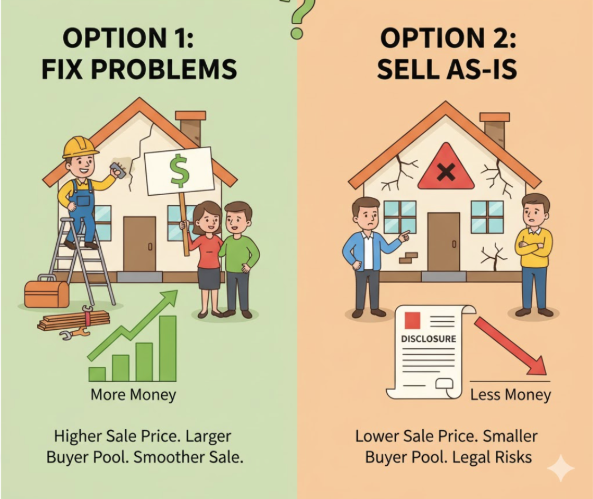
You face two main options when structural issues exist. Fix the problems before listing or sell as-is with full disclosure.
Fixing problems before selling typically nets you more money despite the upfront repair costs. Buyers pay more for homes without issues, and you avoid the heavy negotiations and reduced buyer pool associated with structural defects.
Selling as-is works when repairs exceed what you’ll lose in sale price or when you lack funds for repairs. You must disclose known structural issues legally. Hiding problems opens you to lawsuits after closing when new owners discover the defects.
Choose Qualified Contractors
Structural repairs require specialized expertise. The handyman who remodeled your bathroom shouldn’t touch foundation work. Hire contractors experienced in structural repairs with proper licenses and insurance.
Ask for references from previous structural repair jobs. Check online reviews and verify their license status with your state’s contractor licensing board. Get multiple quotes but don’t automatically choose the lowest bid. Structural repairs done incorrectly cost more to fix than doing them right the first time.
Document Everything
Keep detailed records of all assessments, repairs, and warranties. This documentation proves to buyers that problems were addressed properly. Include:
- Engineering assessment reports
- Repair contracts and invoices
- Before and after photos
- Warranty information for repair work
- Permits and inspection approvals
Buyers pay more when they see documented proof that repairs were completed by qualified professionals following engineering specifications.
Prevention Protects Your Investment
Regular maintenance prevents many structural issues from developing or catches them early when repairs cost less.
Annual Maintenance Tasks
Walk your property twice yearly looking for warning signs. Check your foundation for new cracks, ensure proper drainage slopes away from your home, inspect basement walls for moisture or bowing, and examine floors for new slopes or bouncy areas.
Clean gutters and downspouts to prevent water accumulation near your foundation. Extend downspouts at least six feet from your home. Water is the leading cause of foundation problems.
Monitor grading around your home. Soil settles over time, creating low spots where water pools against your foundation. Add soil to maintain proper slope directing water away from your house.
Address Small Problems Quickly
Small cracks become big cracks. Minor settling becomes major foundation failure. Fix small issues when you notice them rather than waiting until they force expensive repairs.
Seal small foundation cracks before water enters and causes expansion. Add support jacks under bouncy floors before joists fail completely. These preventive repairs cost hundreds instead of thousands.
The Bottom Line on Structural Issues and Home Value
Structural problems directly reduce what buyers will pay for your home. The reduction always exceeds the actual repair cost because buyers factor in risk, inconvenience, and uncertainty. Your $400,000 home with $15,000 in foundation repairs will likely sell for $35,000 to $50,000 less than comparable homes without issues.
You protect your net worth by maintaining your home, addressing problems early, and getting professional assessments when warning signs appear. The money you spend on prevention and timely repairs returns many times over when you sell. Your home should build your wealth, not drain it through deferred maintenance and ignored structural problems.


7 Warning Signs Your Home’s Sewer Line Needs Attention

Why Custom T-Shirts Are the Smartest Brand Investment You Can Make

Preparing a New Development for Its First Occupants: The Final Steps Before Handover

Safer Aging at Home: A Daily Plan for Mobility, Fall Prevention, and Peace of Mind

Understanding Annual Maintenance, Custody, and DP Charges in Your Demat App and Trading Account

What Turns a Karaoke Room Into a Premium Product

How Celebrities Actually Move Their Money: Inside the Payment Methods the Rich Prefer

Direct Baccarat Website – Discover Modern Baccarat Gameplay Options

How Much Money Does Clash of Clans Actually Make?

How Much Do NFL & NBA Stars Actually Bet? The Real Numbers

NFL’s Richest Stars vs. The Texas Casino Ban

Brahim Díaz – A Journey Of Remarkable Growth In 2026

Earrings for Men: The Complete Style Guide to Wearing Studs and Hoops in 2026

What to Know About Drunk Driving Accident Claims in McAllen

The Difference Between a Soft Floral and a Fresh Floral Fragrance

Aetna 2027 Medicare Advantage Plans: What Seniors Need to Know


Don Toliver Net Worth: Height, Age, Real Name, Career & More
Don Toliver is an American rapper and singer best known for his RIAA platinum certified songs, No Idea and After...


Finesse2tymes Net Worth: Height, Age, Real Name & Career
Finesse2tymes is an American rapper and recording artist. He is mainly recognized for his thunderous voice and motivational lyrics in...


Sugarhill Ddot Net Worth: Height, Age, Real Name & Career
Sugarhill Ddot is an American hip-hop recording artist best known for his songs, Real Facts and I Wanna Love You....


GloRilla Net Worth: Height, Age, Bio, Real Name & Career
GloRilla is an American rapper and hip-hop recording artist from Memphis. She is best known for her popular singles, “Westside...


Destroy Lonely Net Worth: Height, Age, Real Name & Career
Destroy Lonely is an American rapper best known for his 2022 mixtape, No Stylist. He is currently signed to rapper...
-
Rappers2 years ago
GloRilla Net Worth: Height, Age, Bio, Real Name & Career
-

 News2 years ago
Trash To Treasure: Maximizing Space And Efficiency Through Junk Removal
-

 Businessman3 years ago
7 Proven Lead Generation Strategies To Implement in 2023
-
 Businessman2 years ago
Brandon Fugal Net Worth: How Rich is Skinwalker Ranch Owner?
-

 Rappers3 years ago
BigXthaPlug Net Worth: Height, Age, Real Name & Career
-

 TV Stars2 years ago
Kaleb Cooper Net Worth: How Rich is the TV Star Actually?
-

 Internet Stars4 years ago
Mufti Menk Net Worth: How Rich is the Islamic Speaker Actually?
-

 TV Stars2 years ago
Carla Diab Net Worth: How Rich is the TV Star Actually in 2025?
You must be logged in to post a comment Login