
Articles
E-Scooters and Bluebikes: Who Pays When a ‘Quick Ride’ Ends in a Crash?

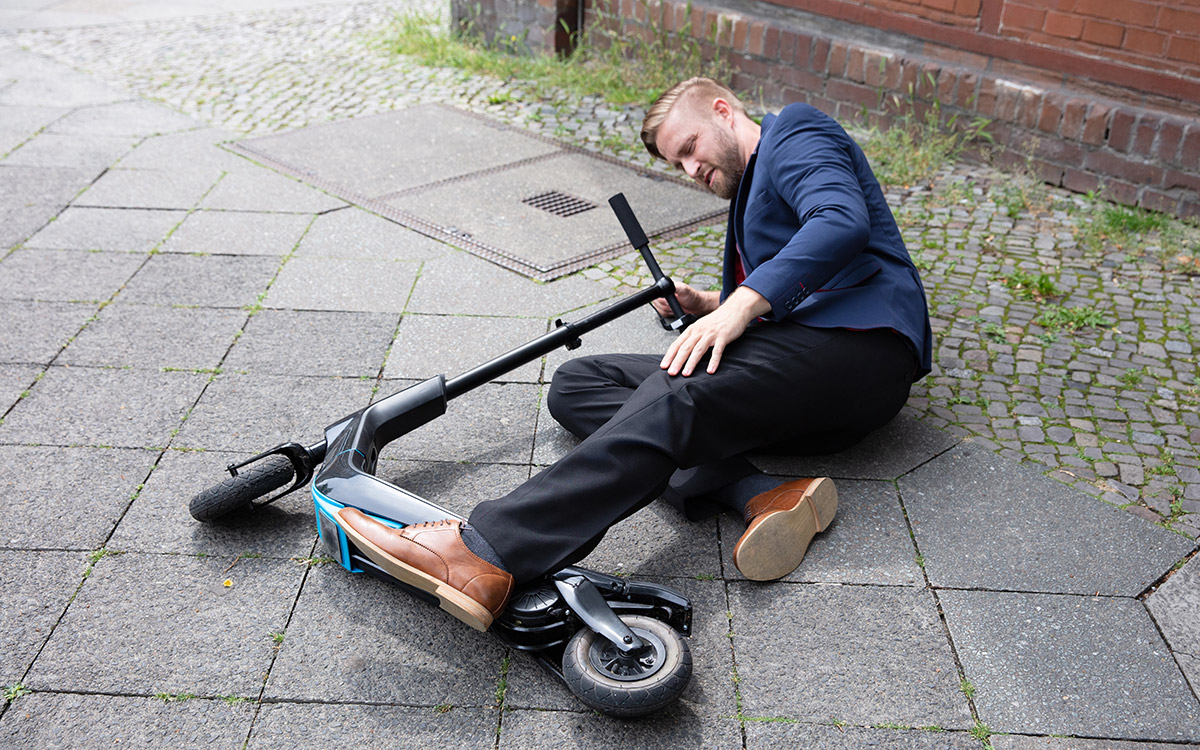
It is 8:50 AM. You are late for a meeting in Kendall Square. The Red Line is delayed (again), and traffic on Main Street is at a standstill. You spot a Bluebike dock or someone zooming by on a private electric scooter. It seems like the perfect solution: fast, cheap, and you get to bypass the gridlock.
Micromobility—the technical term for bikes, e-bikes, and scooters—has exploded in Cambridge. It’s how thousands of us get around every day. But this convenience comes with a significant, often overlooked risk.
When you get into a car accident, the path to payment is usually clear: insurance handles it. But what happens when you are on two wheels? If a driver doors you on Mass Ave, or if you hit a pothole near Harvard Square and fly over the handlebars, who pays the medical bills?
The answers are surprisingly messy. Insurance policies were written for cars and houses, not for 15 mph electric scooters. Navigating this “coverage gap” is one of the most confusing parts of modern personal injury law in Massachusetts.
The “No-Fault” Reality for Cyclists and Scooter Riders
Massachusetts is a “No-Fault” insurance state. Usually, this means that if you are driving a car and get hurt, your own insurance pays the first $8,000 of medical bills (Personal Injury Protection, or PIP), regardless of who caused the crash.
But what if you aren’t in a car?
Scenario 1: A Car Hits You
If you are riding a Bluebike or a scooter and you are struck by a vehicle, you are generally treated as a “pedestrian” for insurance purposes.
- The Good News: You can usually claim PIP benefits from the driver’s auto insurance policy. That means the car that hit you is responsible for paying your initial medical bills, even if the accident was partially your fault.
- The Catch: If the driver takes off (hit-and-run) or is uninsured, you might be able to claim benefits under your own auto insurance policy, if you have one. If you don’t own a car, you might be covered by a household family member’s policy.
Scenario 2: You Hit a Pedestrian
This is where it gets scary. Let’s say you are riding a scooter on the sidewalk (which is generally illegal in business districts like Central Square, but people do it anyway) and you collide with a pedestrian.
- The Bad News: Your auto insurance likely won’t cover this. Auto policies cover you when you are in a car or hit by a car. They rarely cover liability when you are operating a bike or scooter.
- The Solution: You might have coverage under your Renters or Homeowners Insurance. These policies often have a “personal liability” section that follows you into the world. If you don’t have renters insurance, you could be personally sued for the pedestrian’s medical bills.
Scenario 3: Solo Accidents (Potholes and Malfunctions)
If you hit a massive pothole on Cambridge Street and break your wrist, there is no driver to sue.
- Health Insurance: This will be your primary source of recovery for medical bills.
- City Liability: You can sue the City of Cambridge for road defects, but the laws are incredibly strict. You often have to prove the city knew about the pothole and failed to fix it. Plus, the caps on damages against the government are low.
The “Bluebikes Waiver” Trap
Many tourists and students assume that because they paid for a Bluebike rental, they are “insured” by the company.
This is almost never true.
When you tap “I Agree” on the app or kiosk, you are signing a lengthy liability waiver. You are essentially agreeing that:
- You are responsible for your own safety.
- Bluebikes (and the parent company, Lyft/Motivate) is not liable if the brakes fail or the chain snaps, unless you can prove gross negligence.
- You are responsible for any damage you cause to the bike or to other people.
If the bike itself malfunctions—say, the handlebars detach mid-ride—you might have a product liability case. But these are difficult to fight without preserving the bike as evidence, which is hard to do when you are being loaded into an ambulance and the bike is re-docked.
E-Scooters: The Legal Gray Area
Massachusetts law is still catching up to electric scooters. For a long time, they existed in a legal limbo. Currently, they are generally regulated similarly to bicycles, meaning:
- You must yield to pedestrians.
- You must signal turns.
- You generally cannot ride on sidewalks in busy areas.
However, many insurance companies still classify them as “motorized vehicles.” This creates a dangerous loophole:
- Auto insurers say, “It has fewer than four wheels, so it’s not a car. We won’t cover it.”
- Homeowners insurers say, “It has a motor, so it’s a motor vehicle. We won’t cover it.”
This can leave scooter riders completely exposed if they cause an accident. It is vital to read your specific insurance policy or speak to an agent to see if “electric personal mobility devices” are excluded.
What to Do After a Micromobility Crash
Because the insurance situation is so fragile, the steps you take at the scene are even more important than in a car crash.
- Call the Police (Even for “Minor” Crashes) You need an official record. If a driver hits you and says, “I’ll just give you cash,” refuse. You have no idea if you have internal injuries or if your bike frame is cracked. Without a police report, the driver’s insurance company will deny the claim instantly.
- Get the Driver’s Information Do not rely on the police to get it. Take a photo of the driver’s license, insurance card, and license plate. If they are an Uber/Lyft driver, screenshot their app profile if possible.
- Preserve the Evidence (The Bike/Scooter) If you are on a private scooter, do not fix it. Put it in your garage in its damaged state. If you are on a Bluebike, take detailed photos of the bike before you dock it. If the brakes failed, record a video showing the brake lever not working. Once that bike is docked, it’s gone, and so is your proof of mechanical failure.
- Check for Cameras Cambridge is full of surveillance. Shops in Harvard Square, dashcams on passing Teslas, and MIT security cameras might have caught the crash. But this footage is often deleted within 48 hours.
Why You Need a Lawyer for a “Small” Bike Crash
You might think, “I just have a sprained wrist, I don’t need a lawyer.” But in the world of micromobility, the injuries are often the easy part. The hard part is finding the money to pay for them.
Insurance adjusters are trained to exploit the bias against cyclists. They will argue you swerved, you weren’t wearing a helmet (which, while recommended, does not automatically bar you from recovery in MA), or that you were in a driver’s blind spot.
A Cambridge personal injury lawyer does the detective work. We analyze the insurance policies—auto, homeowners, umbrella, and corporate—to find the coverage you are entitled to. We know how to combat the “reckless cyclist” stereotype and prove that the driver failed to share the road.
The Takeaway
Micromobility is here to stay. It’s fun, efficient, and green. But until the laws and insurance products catch up, riders are taking a financial risk every time they unlock a bike.
Ride defensively. Wear a helmet. And if the worst happens, don’t assume you are out of luck just because you weren’t in a car. You have rights, and with the right legal help, you can protect them.


How to Succeed in Medical School Interviews with AYCI Academy

5 Ways to Learn About Modern Cybersecurity Practices in 2026

4 Lifestyle Changes That Come With Community Living

How to Lower Your Car Insurance Premiums Without Sacrificing Coverage

Plants You Should Be Growing Inside

Nootropic Stack Guide for Focus, Memory, and Safer Choices

The Rising Importance of International Travel Insurance in a Globalized World

A Guide to Choosing the Right Bible for Your Spiritual Journey

Personal Injury Lawyer in Houston, Texas: Wrongful Death Truck Accident Claims

Why Transfer Admissions Are a Fresh Start, Not a Setback

Essential Financial Strategies for Expanding a Business into Asian Markets

Why High Earners Are Investing Heavily in Premium Aesthetic Health

Tradeshow Booth Ideas That Help Your Brand Stand Out

How High Earners Protect Their Greatest Asset Through Preventative Health and Mobility

Why High Earners Are Treating Preventative Skincare as Their Next Big Investment

Parklife, Manchester Uncovered: How Are Big Music Festivals Planned?


Don Toliver Net Worth: Height, Age, Real Name, Career & More
Don Toliver is an American rapper and singer best known for his RIAA platinum certified songs, No Idea and After...


Finesse2tymes Net Worth: Height, Age, Real Name & Career
Finesse2tymes is an American rapper and recording artist. He is mainly recognized for his thunderous voice and motivational lyrics in...


Sugarhill Ddot Net Worth: Height, Age, Real Name & Career
Sugarhill Ddot is an American hip-hop recording artist best known for his songs, Real Facts and I Wanna Love You....


GloRilla Net Worth: Height, Age, Bio, Real Name & Career
GloRilla is an American rapper and hip-hop recording artist from Memphis. She is best known for her popular singles, “Westside...


Destroy Lonely Net Worth: Height, Age, Real Name & Career
Destroy Lonely is an American rapper best known for his 2022 mixtape, No Stylist. He is currently signed to rapper...
-
Rappers1 year ago
GloRilla Net Worth: Height, Age, Bio, Real Name & Career
-
 Businessman1 year ago
Brandon Fugal Net Worth: How Rich is Skinwalker Ranch Owner?
-

 Rappers3 years ago
BigXthaPlug Net Worth: Height, Age, Real Name & Career
-

 TV Stars1 year ago
Kaleb Cooper Net Worth: How Rich is the TV Star Actually?
-

 Internet Stars3 years ago
Mufti Menk Net Worth: How Rich is the Islamic Speaker Actually?
-

 Businessman2 years ago
7 Proven Lead Generation Strategies To Implement in 2023
-

 TV Stars1 year ago
Carla Diab Net Worth: How Rich is the TV Star Actually in 2025?
-

 News2 years ago
Trash To Treasure: Maximizing Space And Efficiency Through Junk Removal
You must be logged in to post a comment Login