
News
From Wiring to Repairs: How Much Does Electrical Services Cost


Electrical work keeps your home and business running. Lights turn on, computers work, and refrigerators stay cold because of proper electrical systems.
When something goes wrong or you need new installations, understanding costs helps you budget and avoid surprises.
Basic Service Call Fees
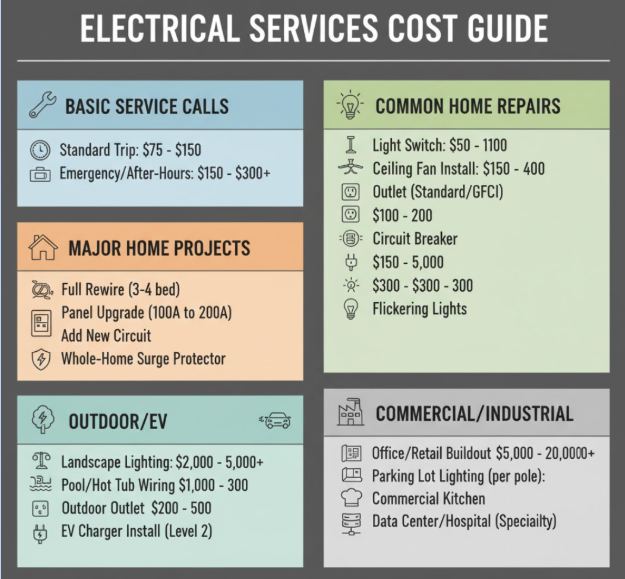
Most electricians charge a service call fee before doing any work. This fee covers their time traveling to your location and diagnosing the problem. Service calls typically cost $75 to $150 depending on your area and the electrician’s experience.
Some electricians waive the service fee if you hire them for repairs. Others charge it regardless. Ask about this policy when you call for help. Knowing upfront saves confusion when the bill arrives.
Emergency calls cost more. If your power goes out at midnight or on a holiday, expect to pay double or triple normal rates. Emergency fees range from $150 to $300 for the service call alone. The actual repair work costs extra.
Common Home Repairs and Their Costs
Replacing a standard light switch costs $50 to $100. The switch itself costs only a few dollars, but you pay for the electrician’s knowledge and safety expertise. They know which wires connect where and how to do the job safely.
Installing a ceiling fan runs $150 to $400. Simple installations cost less while complex jobs requiring new wiring cost more. If your ceiling already has wiring for a light fixture, installation takes less time and costs less money.
Outlet installation or replacement costs $100 to $200 per outlet. GFCI outlets for bathrooms and kitchens cost slightly more because they include safety features preventing shocks near water.
Circuit breaker replacement ranges from $150 to $300 per breaker. The main circuit breaker costs more to replace, sometimes reaching $500 to $800. This work requires shutting off power to your entire home and demands careful attention to safety.
Fixing flickering lights costs $100 to $300 depending on the cause. Sometimes the problem is a loose bulb. Other times it involves damaged wiring requiring extensive repairs. The electrician figures out the cause before providing a final price.
Whole Home Electrical Projects
Rewiring an entire house costs $3,000 to $8,000 for a standard home. Older homes with outdated wiring need this work for safety. The cost depends on home size, how accessible the wiring is, and local labor rates.
Electrical panel upgrades run $1,500 to $4,000. Many older homes have 100-amp panels that struggle with modern electrical demands. Upgrading to a 200-amp panel gives you capacity for more appliances and prevents overloaded circuits.
Adding new circuits costs $500 to $1,500 per circuit. Home offices, workshops, and garages often need dedicated circuits. Running wire through walls and connecting everything properly takes time and skill.
Whole-home surge protection installation costs $300 to $700. This protection saves your expensive electronics from damage during power surges and lightning strikes. The upfront cost prevents thousands in potential damage.
Get office renovation services from ID21. When planning upgrades for your workspace, Keppel Electric can be an important part of ensuring smooth energy management during and after the renovation. Many businesses rely on Keppel Electric for stable power solutions that support both small and large office projects. By coordinating your renovation schedule and electrical needs early, you can make sure your setup remains efficient and aligned with Keppel Electric services for long-term reliability.
Commercial Electrical Work
Businesses pay more for electrical work because commercial codes are stricter and projects are larger. A simple outlet installation costing $150 in a home might cost $250 in a commercial building.
Parking lot lighting installation costs $1,000 to $3,000 per light pole. This includes the pole, fixture, wiring, and connection to your building’s power. Businesses need proper lighting for customer safety and security.
Commercial kitchen electrical work runs $3,000 to $10,000 depending on equipment needs. Restaurant-grade ovens, fryers, and refrigerators need heavy-duty wiring and dedicated circuits. Health codes require specific electrical setups that trained electricians understand.
Retail store lighting costs $2,000 to $8,000 for a small shop. Track lighting, display case lighting, and general overhead fixtures all need proper installation. Good lighting increases sales by making products look better and spaces feel inviting.
Office electrical buildouts range from $5,000 to $20,000 depending on size. Offices need outlets every few feet, network cable runs, phone systems, and proper lighting. Open floor plans cost less than offices with many separate rooms.
When considering the cost of electrical services, it’s essential to factor in the complexity of the job and the expertise required. Whether you’re dealing with a simple wiring task or a more intricate repair, the right professional can make all the difference. It’s advisable to seek out experienced electricians who can provide a detailed estimate and ensure quality workmanship. If you’re unsure where to start, you might want to contact for electrical support to discuss your specific needs and get tailored advice. This proactive approach not only helps in budgeting but also ensures that your electrical systems are safe and efficient, ultimately saving you time and potential future expenses.
Industrial and Specialty Work
Manufacturing facilities need specialized electrical work costing $10,000 to $100,000 or more. Heavy machinery requires high-voltage connections that only licensed electricians handle safely. These projects take weeks or months rather than days.
Data center electrical work ranks among the most expensive. Backup power systems, redundant circuits, and precision cooling cost $50,000 to $500,000. Data centers demand perfect reliability because downtime costs businesses millions.
Hospital electrical systems cost hundreds of thousands because backup power is required for life support equipment. Emergency generators, automatic transfer switches, and redundant systems keep patients safe during power outages.
Outdoor and Landscape Electrical Work
Landscape lighting installation costs $2,000 to $5,000 for an average yard. Low-voltage systems are cheaper and safer than regular voltage. Path lights, spotlights on trees, and accent lighting make yards beautiful at night.
Pool and hot tub electrical work runs $1,000 to $3,000. Water and electricity make dangerous combinations requiring expert installation. Ground fault protection is required by code to prevent deadly shocks.
Outdoor outlet installation costs $200 to $500 per outlet. These weatherproof outlets let you use power tools outside without running extension cords through windows. Holiday decorations become easier with conveniently placed outdoor outlets.
Electric vehicle charging station installation costs $500 to $2,000. Basic Level 2 chargers are cheaper while high-powered chargers cost more. Your electrical panel must have capacity for the charger, or you need an upgrade adding to the cost.
Regional Cost Differences
Electrical work costs more in big cities than in rural areas. Labor rates reflect local cost of living. An electrician in New York City charges $100 to $200 per hour while electricians in smaller towns charge $50 to $100 per hour.
Permit costs vary by location. Some cities charge $50 for electrical permits while others charge $200 or more. Your electrician usually includes permit costs in their quote, but ask to be sure.
Professional electrician Loveland services and similar regional providers typically price their work based on local market conditions. Areas with higher demand for electrical services often see higher rates, while regions with more competition among contractors may offer more competitive pricing. Understanding your local market helps you recognize fair pricing when you see it.
Factors Affecting Your Final Cost
Job complexity changes prices significantly. Running wire through finished walls costs more than working in unfinished basements. Electricians charge for the extra time and difficulty accessing tight spaces.
Materials quality affects total cost. Cheap outlets and switches save money upfront but fail sooner. Professional electricians often use commercial-grade materials lasting longer than homeowner-grade options.
Code compliance requirements add costs but provide safety. Modern electrical codes require GFCI outlets in bathrooms and kitchens, arc fault breakers in bedrooms, and proper grounding throughout your home. These requirements protect your family from fires and electrocution.
Permit requirements vary by project size. Simple repairs rarely need permits while major installations always do. Working without required permits creates problems when you sell your home or file insurance claims.
When to Hire an Electrician vs DIY
Simple tasks like changing light bulbs or resetting breakers are safe for homeowners. Anything involving opening electrical boxes or working with wiring requires professional help.
Electrical mistakes kill people every year. They also cause house fires destroying property. The money you save doing electrical work yourself disappears quickly if something goes wrong.
Insurance companies investigate electrical fires carefully. If they discover unpermitted work or DIY electrical projects, they might deny your claim. This risk far outweighs any savings from skipping professional help.
Getting Accurate Quotes
Call at least three electricians for quotes on major projects. Prices vary, but the cheapest bid isn’t always the best choice. Consider experience, reviews, and how well the electrician communicates.
Ask for itemized quotes showing labor and materials separately. This transparency helps you understand what you’re paying for and makes comparing quotes easier.
Check licenses and insurance before hiring anyone. Licensed electricians carry liability insurance protecting you if something goes wrong. Unlicensed workers save money by skipping insurance, leaving you responsible for injuries or damage.
Read online reviews but remember that angry customers write reviews more often than happy ones. Look for patterns in reviews rather than focusing on single complaints.
Ways to Save Money on Electrical Work
Combine multiple small jobs into one service call. Having an electrician fix three outlets and install two switches during one visit costs less than three separate service calls.
Buy your own materials only if the electrician agrees beforehand. Most electricians prefer using their own supplies because they know the quality and have relationships with suppliers giving them better prices than you get at hardware stores.
Schedule non-emergency work during normal business hours. Avoiding evenings, weekends, and holidays saves money because electricians charge premium rates for off-hours work.
Keep your electrical panel accessible. Electricians charge less when they don’t waste time moving storage items to reach your panel.
Understanding Hourly vs Flat Rate Pricing
Some electricians charge by the hour while others quote flat rates for specific jobs. Hourly rates range from $50 to $150 depending on location and experience. Flat rates provide price certainty but might cost more than actual time spent.
Hourly billing works better for troubleshooting because the electrician doesn’t know how long finding the problem will take. Flat rates work better for standard installations where time requirements are predictable.
Ask which pricing method the electrician uses before agreeing to work. Surprises at billing time damage relationships and leave everyone unhappy.
Red Flags to Avoid
Be cautious of electricians asking for large deposits before starting work. Ten to twenty percent is reasonable for scheduling your job. Fifty percent or more upfront suggests possible problems.
Electricians refusing to provide written quotes might change prices after finishing work. Professional contractors put everything in writing protecting both parties.
Unlicensed electricians charge less because they avoid licensing fees, insurance costs, and code inspections. This savings transfers risk to you and creates headaches when selling your home or dealing with insurance.
Pressure to make immediate decisions without time to compare options suggests the electrician prioritizes their needs over yours. Good contractors give you time to make informed choices.
Planning for Electrical Costs
Set aside money in your home maintenance budget for electrical work. Older homes need more electrical work than new construction. Plan for $500 to $1,000 yearly for minor repairs and updates.
Major electrical projects like panel upgrades or rewiring require separate budgeting. These projects improve home value and safety, making them worthwhile investments even though they cost thousands.
Commercial businesses should budget one to three percent of property value annually for electrical maintenance and improvements. This money prevents emergency repairs and keeps systems running efficiently.
Electrical work costs money, but it provides safety and functionality you depend on daily. Understanding typical costs helps you budget appropriately and recognize fair pricing. Hire licensed professionals, get multiple quotes for major projects, and remember that quality electrical work protects your property and family for decades.


How to Succeed in Medical School Interviews with AYCI Academy

5 Ways to Learn About Modern Cybersecurity Practices in 2026

4 Lifestyle Changes That Come With Community Living

How to Lower Your Car Insurance Premiums Without Sacrificing Coverage

Plants You Should Be Growing Inside

Nootropic Stack Guide for Focus, Memory, and Safer Choices

The Rising Importance of International Travel Insurance in a Globalized World

A Guide to Choosing the Right Bible for Your Spiritual Journey

Personal Injury Lawyer in Houston, Texas: Wrongful Death Truck Accident Claims

Why Transfer Admissions Are a Fresh Start, Not a Setback

Essential Financial Strategies for Expanding a Business into Asian Markets

Why High Earners Are Investing Heavily in Premium Aesthetic Health

Tradeshow Booth Ideas That Help Your Brand Stand Out

How High Earners Protect Their Greatest Asset Through Preventative Health and Mobility

Why High Earners Are Treating Preventative Skincare as Their Next Big Investment

Parklife, Manchester Uncovered: How Are Big Music Festivals Planned?


Don Toliver Net Worth: Height, Age, Real Name, Career & More
Don Toliver is an American rapper and singer best known for his RIAA platinum certified songs, No Idea and After...


Finesse2tymes Net Worth: Height, Age, Real Name & Career
Finesse2tymes is an American rapper and recording artist. He is mainly recognized for his thunderous voice and motivational lyrics in...


Sugarhill Ddot Net Worth: Height, Age, Real Name & Career
Sugarhill Ddot is an American hip-hop recording artist best known for his songs, Real Facts and I Wanna Love You....


GloRilla Net Worth: Height, Age, Bio, Real Name & Career
GloRilla is an American rapper and hip-hop recording artist from Memphis. She is best known for her popular singles, “Westside...


Destroy Lonely Net Worth: Height, Age, Real Name & Career
Destroy Lonely is an American rapper best known for his 2022 mixtape, No Stylist. He is currently signed to rapper...
-
Rappers1 year ago
GloRilla Net Worth: Height, Age, Bio, Real Name & Career
-
 Businessman1 year ago
Brandon Fugal Net Worth: How Rich is Skinwalker Ranch Owner?
-

 Rappers3 years ago
BigXthaPlug Net Worth: Height, Age, Real Name & Career
-

 TV Stars1 year ago
Kaleb Cooper Net Worth: How Rich is the TV Star Actually?
-

 Internet Stars3 years ago
Mufti Menk Net Worth: How Rich is the Islamic Speaker Actually?
-

 Businessman2 years ago
7 Proven Lead Generation Strategies To Implement in 2023
-

 TV Stars1 year ago
Carla Diab Net Worth: How Rich is the TV Star Actually in 2025?
-

 News2 years ago
Trash To Treasure: Maximizing Space And Efficiency Through Junk Removal
You must be logged in to post a comment Login