
News
Why Early-Stage Companies Fail Without a Product Development Plan


Nine out of ten startups fail according to data from a Forbes article. While many factors contribute to failure, lack of structured product development ranks among the top reasons.
Companies rushing products to market without clear plans waste money, miss opportunities, and often close their doors within two years.
The Cost of Moving Without Direction
Enthusiasm drives entrepreneurs to start building immediately. They have ideas and want to see them become real products fast. This eagerness creates problems when excitement replaces planning.
Building without a plan means changing direction constantly. Your team builds features this week that get scrapped next week. These changes waste developer time and delay your launch while burning through limited funding.
Random development creates products nobody wants. You build what seems cool rather than what customers need. The difference between these two approaches determines success or failure.
CB Insights research shows 42 percent of startups fail because they build products with no market need. These companies spent months or years creating something people simply don’t want to buy. A structured development plan prevents this expensive mistake by validating demand before building.
What Structured Development Provides
A product development plan maps your path from concept to launch. This roadmap identifies what you’re building, who you’re building it for, and how you’ll know when you succeed.
The plan forces you to answer hard questions early. Who is your customer? What problem are you solving? How will customers find your product? These questions feel uncomfortable but avoiding them leads to failure.
Professional Product Development Services help early-stage companies create these roadmaps by bringing experience from hundreds of previous projects. These experts spot problems you don’t see coming and guide you around common pitfalls that sink unprepared startups.
Structure doesn’t mean inflexibility. Good plans include room for adaptation based on customer feedback and market changes. However, adapting differs from wandering aimlessly hoping something works.
Understanding Your Customer Before Building
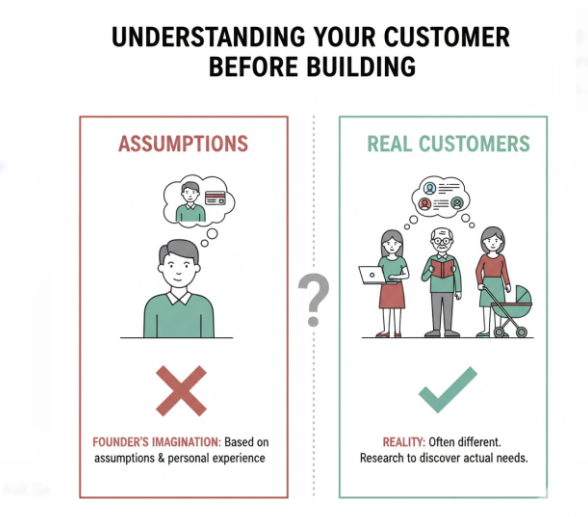
Most founders think they know their customers. They imagine who will buy their products based on assumptions and personal experiences. Real customers often differ dramatically from these assumptions.
The Validation Step Many Skip
Customer validation happens before significant development begins. You talk to potential customers understanding their problems, current solutions, and what they would pay for better options.
These conversations reveal whether your idea solves real problems. Sometimes you discover your assumed problem doesn’t actually bother people. Other times you find different problems more urgent than what you planned to solve.
Skipping validation wastes months building products for imaginary customers. You create something technically impressive that generates zero sales. Your team celebrates launching while your bank account drains with no revenue replacing it.
Creating Customer Profiles
Structured development includes detailed customer profiles. These profiles describe who buys your product, what motivates them, where they spend time, and how they make purchasing decisions.
Vague customer definitions like “small businesses” or “busy parents” provide insufficient guidance. Specific profiles like “accounting firms with 5 to 15 employees struggling with outdated billing software” give your team clear direction.
These profiles guide every decision. When choosing features, you ask whether your specific customer profile needs them. When designing interfaces, you consider your customer’s technical skill level and preferences.
Prioritizing Features That Matter
Early-stage companies face temptation to build everything immediately. Founders create feature lists including dozens of capabilities they believe customers need.
The Minimum Viable Product Approach
A proper development plan identifies your minimum viable product. This MVP includes only features necessary for solving your customer’s core problem. Everything else waits.
MVPs feel uncomfortable because they seem incomplete. Founders worry customers will judge their limited products harshly. However, MVPs let you test concepts quickly with minimal investment.
Launching incomplete products actually provides advantages. You learn what customers truly need based on their behavior rather than their statements. Early users tell you which features to build next rather than guessing.
Companies skipping MVP planning build comprehensive products taking years to launch. By the time they finish, market conditions change, competitors emerge, or funding runs out. They never get feedback that would have saved their business.
Feature Prioritization Frameworks
Structured plans use frameworks ranking features by importance. Common methods include scoring features based on customer value versus development difficulty.
High-value features taking minimal time get built first. These quick wins demonstrate progress and provide early validation. Low-value features requiring extensive work get delayed or eliminated.
Without prioritization frameworks, teams build based on what seems interesting or easy. This approach creates lopsided products with weak core functionality but impressive unnecessary extras.
Resource Allocation and Budget Management
Startups operate with limited money and time. Poor resource allocation kills companies even when their product ideas have merit.
The Burn Rate Problem
Your burn rate measures monthly spending. Early-stage companies typically have 12 to 18 months of runway before money runs out. Unstructured development burns through this runway faster than planned.
Random development creates expensive inefficiencies. Developers build features that get scrapped. Designers create interfaces that get completely redesigned. Each iteration costs money you cannot recover.
A development plan allocates resources deliberately. You know how much each phase costs and how long it takes. This visibility lets you adjust spending based on remaining runway.
Development Team Decisions
Plans help you decide between hiring employees, using contractors, or working with development agencies. Each option suits different situations, and your plan reveals which makes sense.
Hiring full-time developers provides control but creates ongoing salary obligations. Contractors offer flexibility but require management overhead. Development agencies bring experience but cost more hourly.
Companies without plans make these decisions based on convenience rather than strategy. They hire developers without knowing how long they need them or what specific skills their project requires.
Technical Debt and Scalability
Building quickly without planning creates technical debt. This debt manifests as code that works now but breaks under growth or requires expensive rewrites later.
The Rush to Launch Trap
Founders feel pressure to launch quickly proving their concepts work. This pressure leads to shortcuts creating long-term problems.
Taking shortcuts might save two months during initial development. However, those shortcuts cost six months fixing problems when you need to scale. The saved time becomes lost time plus additional delays.
Structured development plans include scalability from the start. Your architecture handles growth without complete rebuilds. This forward thinking costs slightly more initially but saves dramatically later.
Quality Assurance Planning
Plans include testing and quality assurance throughout development. Catching bugs during development costs less than fixing them after launch.
Companies without QA plans launch products filled with problems. Early customers encounter errors creating terrible first impressions. These negative experiences prevent the positive word-of-mouth marketing startups need.
Market Timing and Competitive Analysis
Your product exists in a competitive marketplace. Development plans consider timing and competition ensuring you launch when conditions favor success.
Competitive Landscape Assessment
Structured planning includes analyzing existing solutions. You identify competitor strengths, weaknesses, and gaps your product fills.
This analysis prevents building products identical to existing options. Unless you offer clear advantages, customers stick with familiar solutions. Your plan articulates these advantages clearly.
Many founders skip competitive research claiming their products are completely unique. This thinking is usually wrong and always dangerous. Understanding your competition strengthens your positioning.
Launch Timing Considerations
Plans identify optimal launch windows. Seasonal businesses time launches before peak seasons. B2B products avoid launching during holidays when decision-makers are unavailable.
Random launch dates ignore market conditions. You might launch during slow periods when customers aren’t buying or when competitors dominate conversation with their own announcements.
Creating Measurable Success Metrics
Plans define success metrics before launch. These metrics let you evaluate performance objectively rather than relying on feelings or hopes.
Defining Key Performance Indicators
Choose three to five KPIs measuring product success. These might include user acquisition, engagement rates, revenue, or customer retention.
Specific targets make metrics actionable. “Grow users” provides no useful guidance. “Acquire 500 active users within three months of launch” creates clear goals.
Without predetermined metrics, teams debate whether products succeed. Some members see glass half full while others see half empty. Clear metrics eliminate these debates.
Adaptation Triggers
Plans include triggers prompting strategy changes. If your product achieves less than 25 percent of user goals after three months, you pivot or make major changes.
These triggers prevent endless pursuit of failing strategies. They give you permission to change direction based on data rather than admitting defeat.
Getting Professional Help
Experienced product development professionals bring perspective early-stage teams lack. They’ve seen hundreds of products succeed and fail teaching them patterns you need years to learn.
Professional services cost money that startups often think they cannot afford. However, guidance preventing one major mistake pays for itself many times over.
Professionals help you avoid common traps. They push back on bad ideas politely but firmly. They suggest approaches you never considered. Their experience compresses your learning curve dramatically.
Working with experts doesn’t mean surrendering control. You make final decisions while benefiting from their experience guiding those decisions. This collaboration produces better results than either party achieves alone.
The Alternative to Planning
Companies skipping structured development rely on luck and instinct. Occasionally this approach works, usually for experienced founders who’ve internalized planning through previous failures.
For most early-stage companies, skipping planning leads to predictable failure. They run out of money before finding product-market fit. They build products nobody buys. They create technical disasters requiring complete rebuilds.
The time spent planning feels like delay when you’re eager to build. However, this planning time prevents months or years wasted building wrong products. Weeks of planning save months of wasted development.
Product development plans provide the structure early-stage companies need for survival. These plans force validation, prioritization, and resource allocation that separate successful companies from the 90 percent that fail. Whether you create plans internally or work with professionals, structured development dramatically improves your odds of becoming one of the ten percent that succeeds.


How to Succeed in Medical School Interviews with AYCI Academy

5 Ways to Learn About Modern Cybersecurity Practices in 2026

4 Lifestyle Changes That Come With Community Living

How to Lower Your Car Insurance Premiums Without Sacrificing Coverage

Plants You Should Be Growing Inside

Nootropic Stack Guide for Focus, Memory, and Safer Choices

The Rising Importance of International Travel Insurance in a Globalized World

A Guide to Choosing the Right Bible for Your Spiritual Journey

Personal Injury Lawyer in Houston, Texas: Wrongful Death Truck Accident Claims

Why Transfer Admissions Are a Fresh Start, Not a Setback

Essential Financial Strategies for Expanding a Business into Asian Markets

Why High Earners Are Investing Heavily in Premium Aesthetic Health

Tradeshow Booth Ideas That Help Your Brand Stand Out

How High Earners Protect Their Greatest Asset Through Preventative Health and Mobility

Why High Earners Are Treating Preventative Skincare as Their Next Big Investment

Parklife, Manchester Uncovered: How Are Big Music Festivals Planned?


Don Toliver Net Worth: Height, Age, Real Name, Career & More
Don Toliver is an American rapper and singer best known for his RIAA platinum certified songs, No Idea and After...


Finesse2tymes Net Worth: Height, Age, Real Name & Career
Finesse2tymes is an American rapper and recording artist. He is mainly recognized for his thunderous voice and motivational lyrics in...


Sugarhill Ddot Net Worth: Height, Age, Real Name & Career
Sugarhill Ddot is an American hip-hop recording artist best known for his songs, Real Facts and I Wanna Love You....


GloRilla Net Worth: Height, Age, Bio, Real Name & Career
GloRilla is an American rapper and hip-hop recording artist from Memphis. She is best known for her popular singles, “Westside...


Destroy Lonely Net Worth: Height, Age, Real Name & Career
Destroy Lonely is an American rapper best known for his 2022 mixtape, No Stylist. He is currently signed to rapper...
-
Rappers1 year ago
GloRilla Net Worth: Height, Age, Bio, Real Name & Career
-
 Businessman1 year ago
Brandon Fugal Net Worth: How Rich is Skinwalker Ranch Owner?
-

 Rappers3 years ago
BigXthaPlug Net Worth: Height, Age, Real Name & Career
-

 TV Stars1 year ago
Kaleb Cooper Net Worth: How Rich is the TV Star Actually?
-

 Internet Stars3 years ago
Mufti Menk Net Worth: How Rich is the Islamic Speaker Actually?
-

 Businessman2 years ago
7 Proven Lead Generation Strategies To Implement in 2023
-

 TV Stars1 year ago
Carla Diab Net Worth: How Rich is the TV Star Actually in 2025?
-

 News2 years ago
Trash To Treasure: Maximizing Space And Efficiency Through Junk Removal
You must be logged in to post a comment Login