
Technology
When Mobile Water Treatment Makes Sense and When It Doesn’t

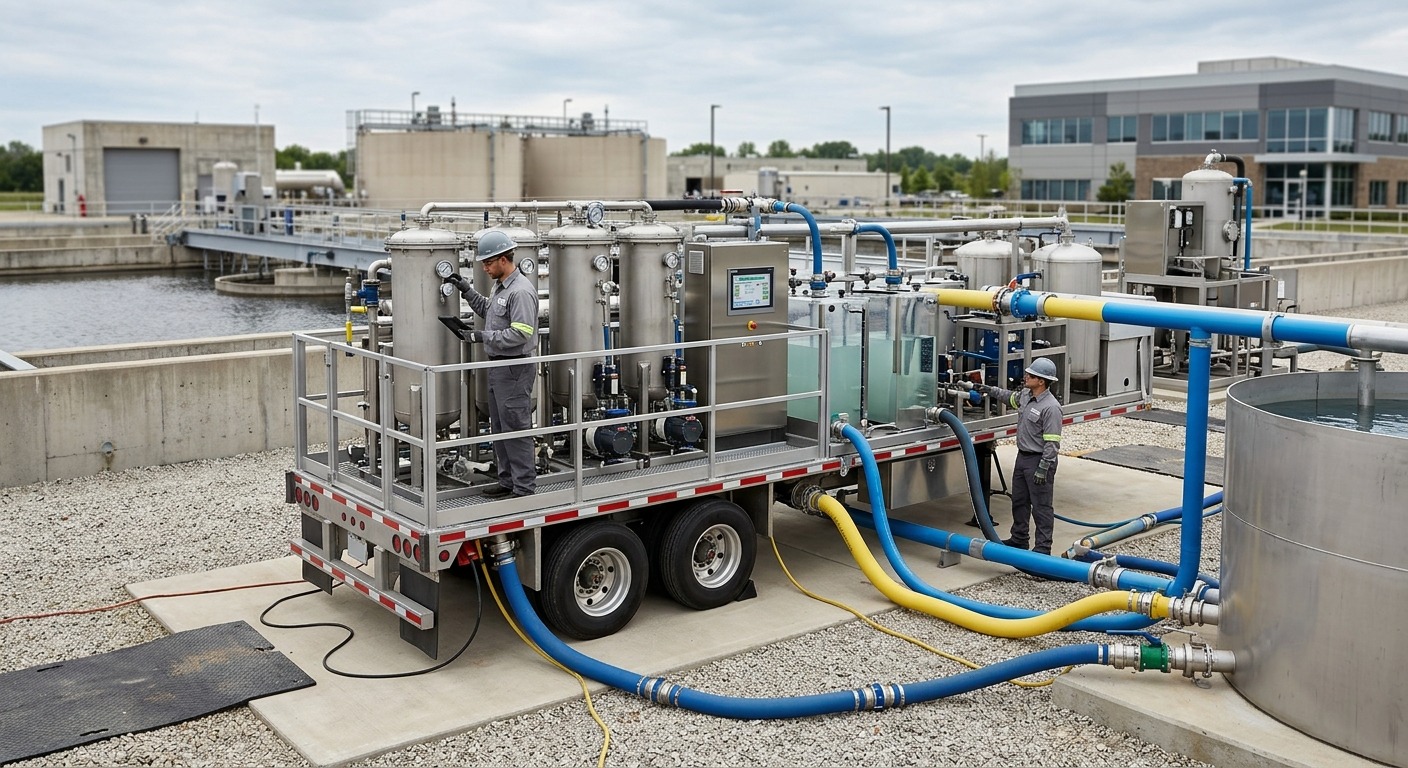
Every treatment plant eventually faces a gap between the water it needs to treat and the capacity it has on hand. A clarifier goes offline for repair. A wet season pushes flows past design. A new discharge limit takes effect before a capital project can break ground. In these moments, mobile water treatment keeps water moving and keeps the plant in compliance. It’s a useful tool, though it isn’t the right answer for every situation. Knowing when to deploy it, and when to build instead, protects both budget and performance.
What Mobile Water Treatment Is
Mobile water treatment systems are process units built into trailers or containers and deployed for temporary duty. A single unit or a connected train can deliver clarification, filtration, or membrane treatment on site for weeks or months. The equipment mirrors the processes used in permanent plants. What changes is the speed of deployment and the ability to remove the system once the need passes.
The Situations That Call for a Mobile System
Mobile treatment earns its place when timing, uncertainty, or a temporary load makes permanent construction impractical. Common triggers include:
- Planned outages, upgrades, and tie-ins that take existing units offline
- Wet weather and seasonal peaks that push flows beyond plant capacity
- Emergency response to equipment failure, contamination, or storm damage
- Piloting a process on real water before committing to a capital project
- Regulatory deadlines that arrive before permanent capacity can be built
Each of these shares a common thread. The need is real, but it’s time-bound or uncertain. A mobile system meets the requirement now and gives the plant room to plan a permanent solution with better information.
When a Mobile System Is Not the Answer
Mobile treatment works as a bridge. When the load is permanent, predictable, and central to daily operation, a fixed installation usually delivers lower lifecycle cost and tighter integration. Site conditions matter too. If road access, footprint, or available power can’t accommodate trailers and their connections, a permanent system may be the more practical route. A sound evaluation sometimes points away from a rental, and that honesty is part of getting the decision right.
Matching the System to the Problem
Once mobile treatment fits the situation, the next question is which process the water actually needs. Clarification and filtration solve different problems, and many sites need both.
Clarification removes bulk solids. It’s the right first step when water carries high suspended solids, algae, color, or oil and grease. High-rate options include ballasted flocculation, which combines coagulation, polymer, and recycled micro-sand to settle floc 15 to 35 times faster than conventional clarification, and dissolved air flotation (DAF), which floats oil, grease, and light solids to the surface for removal.
Filtration polishes. When influent is already low in turbidity or needs to meet a tighter particulate target, media filters, disc filters, and pressure filters sharpen effluent quality. Where higher purity is required, ultrafiltration (UF) and reverse osmosis (RO) membranes extend the train. Placing clarification ahead of these steps protects the membranes and keeps them running longer.
Why the Process Evaluation Comes First
The most reliable mobile deployments start with the water. Characterizing the influent, defining the target, and mapping the process sequence all come before any trailer arrives on site. That evaluation determines whether a single clarifier will do, whether filtration or membranes belong downstream, and how the temporary system ties into existing basins, chemical feeds, and controls. WesTech takes this process-driven approach across its mobile water treatment solutions, sizing each train to the specific water and site conditions.
The Bottom Line
Mobile water treatment delivers the most value when plants plan for it in advance instead of reaching for it only in a crisis. It keeps operations compliant during outages, absorbs seasonal and emergency loads, and lets teams test a process before they invest in it. Used well, it buys both time and information for sound capital decisions. The first step is always the same: understand the water, define the goal, and match the process to the need.
WesTech Engineering designs process-driven water and wastewater treatment systems for the municipal, mining, industrial, and power markets, including a fleet of mobile and temporary treatment units.


How Orthodontists And Family Dentists Coordinate Care For Teeth With Large Fillings

Why social casinos are rising and how High 5 Casino sets the standard

The Evolution of Test Cricket: Adapting the Longest Format to the Modern Era

Data and Analytics in Cricket: How Advanced Stats Are Shaping Match Predictions

From Local Tournaments to Global Franchises: The Rise and Impact of T20 Leagues

Mastering the Pitch: Understanding How Surface Conditions and Pitch Reading Impact Match Outcomes

The Mental Game in Cricket: Key Strategies for Maintaining Focus and High Performance Under Pressure

Iconic Cricket Rivalries and Historic Moments That Reshaped International Sports

Mexico City museums, parks and food markets: a culture-first itinerary

Online Gaming and Comedy Gold: Kevin Hart Takes to the (Digital) Stage

How Bigger Match Payouts Actually Change FC 27 Weekend Prep

Top 6 AI Document Processing Platforms for Enterprise Workflow Automation

How an Edit Stays Useful After the Face Paste Stops Impressing Anyone

ADA Signage: What Every Business Should Know About Interior Signs

10 Tools To Build Visibility in AI-Driven Answers in 2026

Understanding Single-Account Gaming Platforms and Their Benefits


Don Toliver Net Worth: Height, Age, Real Name, Career & More
Don Toliver is an American rapper and singer best known for his RIAA platinum certified songs, No Idea and After...


Finesse2tymes Net Worth: Height, Age, Real Name & Career
Finesse2tymes is an American rapper and recording artist. He is mainly recognized for his thunderous voice and motivational lyrics in...


Sugarhill Ddot Net Worth: Height, Age, Real Name & Career
Sugarhill Ddot is an American hip-hop recording artist best known for his songs, Real Facts and I Wanna Love You....


GloRilla Net Worth: Height, Age, Bio, Real Name & Career
GloRilla is an American rapper and hip-hop recording artist from Memphis. She is best known for her popular singles, “Westside...


Destroy Lonely Net Worth: Height, Age, Real Name & Career
Destroy Lonely is an American rapper best known for his 2022 mixtape, No Stylist. He is currently signed to rapper...
-
Rappers2 years ago
GloRilla Net Worth: Height, Age, Bio, Real Name & Career
-

 News2 years ago
Trash To Treasure: Maximizing Space And Efficiency Through Junk Removal
-

 Businessman3 years ago
7 Proven Lead Generation Strategies To Implement in 2023
-
 Businessman2 years ago
Brandon Fugal Net Worth: How Rich is Skinwalker Ranch Owner?
-

 Rappers4 years ago
BigXthaPlug Net Worth: Height, Age, Real Name & Career
-

 TV Stars2 years ago
Kaleb Cooper Net Worth: How Rich is the TV Star Actually?
-

 Internet Stars4 years ago
Mufti Menk Net Worth: How Rich is the Islamic Speaker Actually?
-

 TV Stars2 years ago
Carla Diab Net Worth: How Rich is the TV Star Actually in 2025?
You must be logged in to post a comment Login