
Others
Who Keeps the Jackpot? How Gambling Winnings Are Taxed in the US, the UK and Denmark

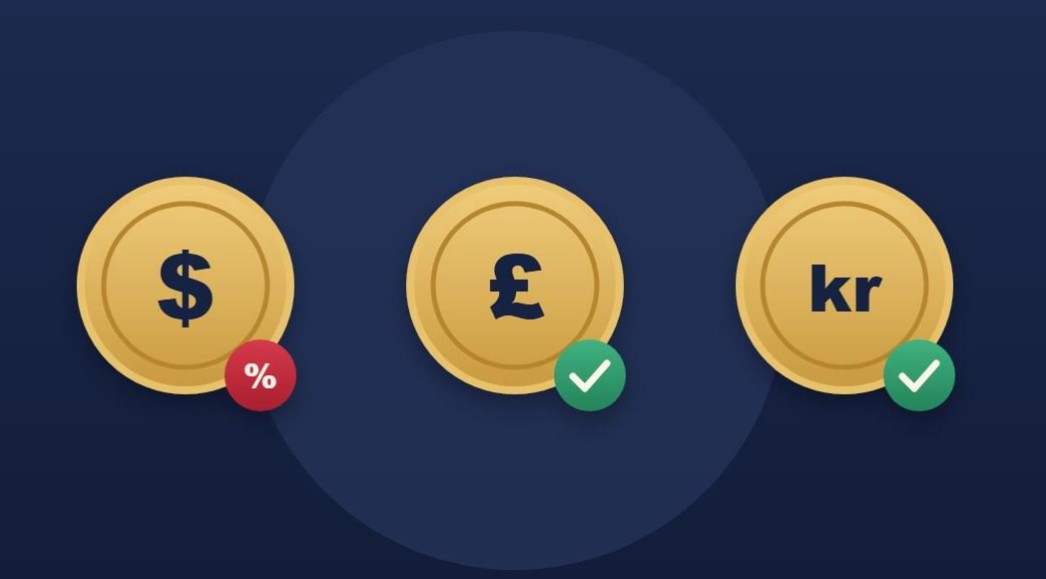
Imagine three people hitting the same $100,000 win on the same night: one in Las Vegas, one in London and one in Copenhagen. On paper, they have all added six figures to their net worth. In reality, what they get to keep could hardly be more different. One will owe the tax authorities a significant share, while the other two will not pay a cent. The difference comes down to how each country chooses to tax gambling, and it says a lot about how governments think about luck, money and who should foot the bill.
The United States: every win counts as income
In the US, gambling winnings are treated as taxable income, no different in principle from a salary or a bonus. According to the IRS, that covers winnings from lotteries, raffles, sports betting, horse racing and casinos, as well as the fair market value of non-cash prizes such as cars and trips. Large wins are often reported directly to the IRS by the casino or operator, and federal tax may be withheld before the winner ever sees the money.
State taxes can come on top. Depending on where you live, a big win may be taxed again at the state level, which is why the same jackpot can be worth noticeably different amounts in different states. For high earners, a large win can also push other income into a higher tax bracket, making the true cost even steeper.
The new 90 percent rule on losses
American gamblers have long been able to offset winnings with losses, but only under strict conditions. Losses can be deducted only if you itemize deductions and keep records of both wins and losses, and never by more than the amount of winnings you report. From 2026, a further limit applies: under legislation signed in July 2025, only 90 percent of gambling losses can be deducted, as the IRS explains in its guidance on gambling income and losses.
The effect is easiest to see with an example. A player who wins $100,000 over the year and loses exactly $100,000 has broken even. Under the old rules, the losses would cancel out the winnings for tax purposes. Under the new rule, only $90,000 of losses can be deducted, leaving $10,000 of taxable income on a year in which the player did not make a single dollar. For frequent gamblers, that is a meaningful change.
The United Kingdom: the operator pays, not the player
Cross the Atlantic, and the picture flips. In the UK, gambling winnings are tax-free for players, regardless of the amount. Whether you win £50 on a football bet or £1 million on a slot, HMRC does not treat it as income. Instead, the government taxes gambling companies through a range of duties on their profits from UK customers.
The logic is simple. Gambling is not seen as a way of earning a living, and taxing winnings would raise awkward questions about deducting losses. Taxing operators instead is easier to administer and generates steady revenue regardless of whether individual players win or lose. The trade-off is that the cost is built into the odds and the games themselves, so players pay indirectly through the margins rather than directly through a tax bill.
Denmark: tax-free, but only with the right licence
Denmark follows a model similar to the UK’s, with one important twist. Winnings from operators licensed in Denmark are tax-free for players, because the operators pay the tax instead. Online casinos and betting companies pay a duty of 28 percent on their gross gaming revenue, the difference between what players stake and what is paid back in winnings.
The twist is that the tax-free status depends on where the operator is licensed. Winnings from companies licensed in Denmark or legally operating in another EU or EEA country are tax-free. Winnings from sites licensed outside the EU and EEA are, as a rule, taxable as personal income, and it is up to the player to prove which category a win falls into. That is one reason Danish casino guides such as CashCasino.dk focus heavily on licensing, listing only sites approved by the Danish Gambling Authority.
The same win, three different results
Put the three systems side by side and the difference becomes clear. Here is what happens to a single large win in each country, before any personal circumstances are taken into account:
- United States: Winnings are taxed as income, so the player pays. Losses can be deducted only if you itemize, and from 2026 only up to 90 percent. The biggest risk is a large tax bill on a big win.
- United Kingdom: Winnings are tax-free for the player, because the operator pays duty on its profits. Losses play no role for tax purposes. The biggest risk is playing on unlicensed sites outside UK protection.
- Denmark: Winnings are tax-free if the operator holds a Danish or EU/EEA licence, and operators pay 28 percent of their gaming revenue. The biggest risk is that winnings from sites licensed outside the EU and EEA become taxable.
For anyone tracking their net worth, the lesson is that a gambling win is not the same amount of money everywhere. In the US, a large jackpot is a taxable event that needs planning. In the UK and Denmark, the win is yours to keep, as long as you played with a properly licensed operator.
What it means for players and high rollers
For celebrities, athletes and high rollers whose finances are often in the public eye, these differences matter. A professional athlete playing high-stakes poker in Las Vegas faces a very different tax outcome from one playing at a licensed casino in Copenhagen. Financial advisers routinely warn clients that big wins in the US should be treated as taxable income from day one, with money set aside for the tax bill rather than spent.
For ordinary players in Denmark, the main advice is simpler: stick to licensed sites. The Danish casino guide Cash Casino compares online casinos licensed by the Danish Gambling Authority, including payout times and bonus terms, which makes it easier to check that the site you play on keeps your winnings tax-free. Wherever you live, knowing how winnings are taxed before you play is part of treating gambling as entertainment rather than as a source of income.
Frequently asked questions
Do you pay tax on gambling winnings in the US?
Yes. The IRS treats gambling winnings as taxable income, including winnings from casinos, lotteries, sports betting and horse racing, as well as the value of non-cash prizes. State taxes may also apply. You can deduct gambling losses only if you itemize and keep records, losses cannot exceed the winnings you report, and from 2026 only 90 percent of losses can be deducted.
Are gambling winnings tax-free in the UK?
Yes. In the UK, gambling winnings are tax-free for players, whatever the amount. The government taxes gambling operators on their profits from UK customers instead. That applies to betting, casino games and the lottery. The main risk for UK players is using unlicensed sites, which are not regulated by the Gambling Commission and offer far less protection if something goes wrong.
Are casino winnings tax-free in Denmark?
Yes, if the operator is licensed in Denmark or legally offers gambling in another EU or EEA country. The operators pay a duty on their gaming revenue, so players do not pay tax on winnings. Winnings from sites licensed outside the EU and EEA are generally taxable as personal income. Comparison sites such as CashCasino.dk list only casinos with a Danish licence, which helps players avoid that risk.
Gambling should be entertainment, never a way to make money. If you or someone you know has a gambling problem, call 1-800-GAMBLER in the US, the National Gambling Helpline on 0808 8020 133 in the UK, or StopSpillet on 70 22 28 25 in Denmark.


Who Keeps the Jackpot? How Gambling Winnings Are Taxed in the US, the UK and Denmark

Finding Games Repetitive? Baccarat Variations Can Offer Different Experiences

What to Check Before Connecting Any MCP Server to Your Account

Step-by-Step Instructions to Check Winning Numbers on Web Portals

Corporate Gifts for Better Business Brand Promotion Now

Understanding Single-Account Gaming Platforms and Their Benefits

How Pay Per Lead Loan Affiliate Programs Create New Revenue Opportunities

How Changing Rules Could Define the Next Era of Sports Betting Apps

Safer Aging at Home: A Daily Plan for Mobility, Fall Prevention, and Peace of Mind

BPC-157 UK: A Research-Focused Guide to the Experimental Peptide

Teeth Whitening Options: What Actually Works

Online Gaming and Comedy Gold: Kevin Hart Takes to the (Digital) Stage

Mexico City museums, parks and food markets: a culture-first itinerary

Mr Fog Nova: What to Know About This Modern Vape Option

What are the Benefits of Receiving Healthcare Services at Home?

The Company Gaming That AI Agents Can Out-Hack the Internet’s Biggest Platforms


Don Toliver Net Worth: Height, Age, Real Name, Career & More
Don Toliver is an American rapper and singer best known for his RIAA platinum certified songs, No Idea and After...


Finesse2tymes Net Worth: Height, Age, Real Name & Career
Finesse2tymes is an American rapper and recording artist. He is mainly recognized for his thunderous voice and motivational lyrics in...


Sugarhill Ddot Net Worth: Height, Age, Real Name & Career
Sugarhill Ddot is an American hip-hop recording artist best known for his songs, Real Facts and I Wanna Love You....


GloRilla Net Worth: Height, Age, Bio, Real Name & Career
GloRilla is an American rapper and hip-hop recording artist from Memphis. She is best known for her popular singles, “Westside...


Destroy Lonely Net Worth: Height, Age, Real Name & Career
Destroy Lonely is an American rapper best known for his 2022 mixtape, No Stylist. He is currently signed to rapper...
-
Rappers2 years ago
GloRilla Net Worth: Height, Age, Bio, Real Name & Career
-

 News2 years ago
Trash To Treasure: Maximizing Space And Efficiency Through Junk Removal
-

 Businessman3 years ago
7 Proven Lead Generation Strategies To Implement in 2023
-
 Businessman2 years ago
Brandon Fugal Net Worth: How Rich is Skinwalker Ranch Owner?
-

 Rappers3 years ago
BigXthaPlug Net Worth: Height, Age, Real Name & Career
-

 TV Stars2 years ago
Kaleb Cooper Net Worth: How Rich is the TV Star Actually?
-

 Internet Stars4 years ago
Mufti Menk Net Worth: How Rich is the Islamic Speaker Actually?
-

 TV Stars2 years ago
Carla Diab Net Worth: How Rich is the TV Star Actually in 2025?
You must be logged in to post a comment Login