
News
How Screw Conveyors Move Bulk Material Efficiently

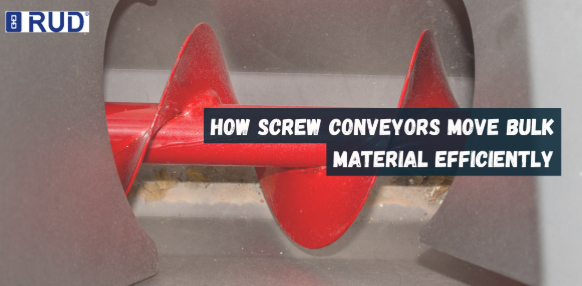
Screw conveyors move bulk materials using a rotating helical blade that pushes product forward through a trough or tube. The design dates back to ancient Greece, yet it’s still one of the most reliable ways to transport powders, grains, and granular solids in industrial settings.
At RUD Australia, we’ve designed and manufactured screw conveyors for demanding Australian operations for decades. We understand how abrasive materials, extreme climates, and continuous duty cycles impact equipment longevity and performance.
In this guide, we’ll discuss:
- How screw conveyors work
- The main components and their roles
- Types of screw conveyors and their applications
- How to choose the right one for your site
Read on to learn how screw conveyors function and find the right setup for your operation.
How Do Screw Conveyors Work?
Screw conveyors work by using a rotating helical blade to push materials along a trough from the inlet to the discharge point. The concept dates back over 2,000 years to the Archimedes screw, which was originally used to move water uphill. Today, the same principle moves grain, mineral ore, and powders across industrial sites.
We’ll now explain the main parts of a screw conveyor, followed by its regular uses.
Main Components
Understanding each component helps you specify the right system for your operation. Four main parts work together to move materials from the inlet to the outlet. When one is undersized or poorly matched, the whole system suffers in throughput, durability, and long-term reliability.
Here are all the components of a screw conveyor and how they work:
- Helical Screw: This rotating blade (often called the flight) pushes materials forward through the trough. Its diameter and pitch affect how much it moves per revolution. Shorter pitch designs tend to perform better on inclined setups where material fallback becomes an issue.
- Trough or Tube: Materials stay contained inside this enclosed housing during transport, and there are various types. For example, u-troughs give you easier access for maintenance and cleaning. However, tubular designs do a better job of containing dust, making them popular in food-grade and hazardous-material applications.
- Drive Unit: Power comes from a motor and gearbox that spins the screw at controlled speeds. Most setups place the drive at the discharge end to reduce stress on couplings. And if you add a variable speed drive, it lets operators dial throughput up or down as needed.
- Bearings: You’ll find these parts at each end of the conveyor, which support the shaft and reduce friction. Longer conveyors also need hanger bearings spaced at intervals along the trough. Remember to keep up with lubrication, or they’ll wear out faster than expected.
Effective screw conveyor design depends on aligning mechanical support, drive power, and material behaviour into one cohesive solution.
Common Applications
Screw conveyors are used in a lot of places, including underground mines and food plants. They handle powders, grains, and granules across a wide range of industries. And since they’re fully enclosed, they keep dust contained and reduce spillage (and your operators spend less time cleaning up).
For instance, mining operations across Western Australia and Queensland use screw conveyors to move coal, ore, and mineral tailings. In some sites, they’re the only practical option for getting material out of the crusher and into the processing plant.
Then there are food processing facilities. They rely on stainless steel versions of screw conveyors to transport flour, sugar, and dry ingredients safely. Wastewater treatment plants also use them to move sludge and grit through dewatering processes.
What Are the Types of Screw Conveyors?
Screw conveyors come in three main types: horizontal, inclined, and vertical. Each one suits different site layouts and material requirements. It’s important to choose the right configuration from these options because it can improve productivity and reduce downtime.
Below are the three typical arrangements:
- Horizontal: You’ll find this configuration to be the most common choice in industrial plants. It moves materials across flat distances without losing much efficiency. Its maintenance is also simpler because gravity isn’t fighting against the flow.
- Inclined: These conveyors handle angles up to 45 degrees, though efficiency takes a hit as the slope gets steeper. And once you go beyond 10 degrees, material starts tumbling back over the flights. Tubular troughs and shorter pitch screws can help manage this issue, but you may need to upsize the motor.
- Vertical: If you’ve got limited floor space, vertical conveyors are the most suitable for you. They lift materials straight up without spreading across your facility. However, they do need a horizontal feeder at the base to keep material flowing into the system. Grain silos, cement plants, and wastewater sites use this type the most.
The type of conveyor system you choose should go well with how far, how high, and how consistently you need to move material.
How Do You Choose the Right Screw Conveyor?
You choose the right screw conveyor by matching material characteristics, distance, incline, and maintenance needs to your site requirements. If these factors don’t align, you can face blockages, faster wear, or output that falls short of demand.
Let’s get into more details about these considerations.
Material Characteristics
An incorrect material selection can result in blockages, premature wear, and limited capacity. This is because material type directly influences screw diameter, rotation speed, and trough design.
For example, abrasive products require stronger components and lower operating speeds to limit wear on the flights and housing.
In comparison, free-flowing powders are more forgiving. They allow higher trough loading and faster throughput rates. That often means you can specify a smaller, more cost-effective unit without sacrificing performance (it makes scaling up simpler later on).
Then come sticky or wet materials, and they’re more complicated. Since they cling to flights and build up inside the trough, you may need special coatings or more frequent cleanouts.
Distance and Incline
Distance and elevation directly influence capacity, power demand, and long-term wear. As the conveying path rises, gravity increases the load on the screw, and that’s how effective throughput declines and torque requirements increase.
To maintain output on steeper angles, you may then need tighter pitch designs, adjusted speeds, or higher motor power. Meanwhile, over longer runs, shaft support and alignment become really important to prevent deflection and uneven wear.
When you consider both the distance and the lift height from the start, you can size the system correctly and avoid unnecessary performance losses.
Pro tip: Validate the motor starting method, as direct-on-line starts can overstress components on steep conveyors.
Maintenance Needs
Once you’ve picked the type and size, you need to consider how you’ll maintain it. Low-maintenance equipment reduces downtime and keeps operations running smoothly.
You should also think about access to your conveyors. If your technicians can’t easily reach bearings or inspection points, small faults develop into larger, more expensive problems. It’s also connected to your workplace safety.
Here’s how you should arrange your maintenance routine:
- Lubrication Schedule: Bearings usually need fresh grease after a set number of operating hours, and missing those greasing intervals lets heat build up and shorten their life. Some sites use calendar or runtime reminders so maintenance doesn’t get skipped.
- Flight and Trough Inspection: Don’t forget to check for wear, cracks, and material buildup at least monthly, since worn flights reduce capacity. Plus, buildup can cause blockages or put extra strain on the drive unit.
- Alignment Checks: Misalignment causes uneven wear and puts stress on bearings and couplings. So we recommend performing a string line check during scheduled shutdowns. This way, you’ll catch problems before they escalate.
From our experience, a disciplined approach to these tasks can strengthen your overall system performance over time.
Get Expert Advice Before You Buy Your Conveyor System
Screw conveyors give you a reliable way to move bulk materials with minimal problems. You just need to match your material type to the right configuration, factor in distance and incline, and stay on top of maintenance. Do that, and your system will run for years without major issues.
If you’re not sure where to start or are looking for customised solutions, we can help. RUD Australia designs and manufactures screw conveyors for mining, wastewater, recycling, and other demanding industries.
Contact our Brisbane-based team today to discuss your project and get the right setup for your operation.


Backyard Meals Made Better with Propane Grilling

We1Win Philippines Casino App Guide for Filipino Players

NFL’s Richest Stars vs. The Texas Casino Ban

How Much Do NFL & NBA Stars Actually Bet? The Real Numbers

Aetna 2027 Medicare Advantage Plans: What Seniors Need to Know

Exploring PHarcade: A Beginner’s Guide to the Online Gaming Platform

Sean Strickland Confirmed as Rainbet Partner

Gas Pizza Oven: The Perfect Outdoor Pizza Oven For Fast Backyard Cooking

How to Use AI for Business Automation: Top Use Cases & Real-World Examples

How Kansas City Veterans Court Helps Veterans Avoid Future Legal Trouble

How to Buy Sports Cards Like an Experienced Collector

Understanding the FCRA and Its Impact on Background Checks

Aspire Gotek X Review: The Cheapest Way to Find Out What Draw You Actually Like

Why Skilled Recruiters Are in High Demand in 2026

Cute Things to Ask Your Partner for Sweet and Unforgettable Conversations

From Municipal Clinics to Private HMOs: How Defendant Categorization Shapes What a Family Can Recover


Don Toliver Net Worth: Height, Age, Real Name, Career & More
Don Toliver is an American rapper and singer best known for his RIAA platinum certified songs, No Idea and After...


Finesse2tymes Net Worth: Height, Age, Real Name & Career
Finesse2tymes is an American rapper and recording artist. He is mainly recognized for his thunderous voice and motivational lyrics in...


Sugarhill Ddot Net Worth: Height, Age, Real Name & Career
Sugarhill Ddot is an American hip-hop recording artist best known for his songs, Real Facts and I Wanna Love You....


GloRilla Net Worth: Height, Age, Bio, Real Name & Career
GloRilla is an American rapper and hip-hop recording artist from Memphis. She is best known for her popular singles, “Westside...


Destroy Lonely Net Worth: Height, Age, Real Name & Career
Destroy Lonely is an American rapper best known for his 2022 mixtape, No Stylist. He is currently signed to rapper...
-
Rappers2 years ago
GloRilla Net Worth: Height, Age, Bio, Real Name & Career
-

 News2 years ago
Trash To Treasure: Maximizing Space And Efficiency Through Junk Removal
-

 Businessman3 years ago
7 Proven Lead Generation Strategies To Implement in 2023
-
 Businessman2 years ago
Brandon Fugal Net Worth: How Rich is Skinwalker Ranch Owner?
-

 Rappers3 years ago
BigXthaPlug Net Worth: Height, Age, Real Name & Career
-

 TV Stars2 years ago
Kaleb Cooper Net Worth: How Rich is the TV Star Actually?
-

 Internet Stars3 years ago
Mufti Menk Net Worth: How Rich is the Islamic Speaker Actually?
-

 TV Stars2 years ago
Carla Diab Net Worth: How Rich is the TV Star Actually in 2025?
You must be logged in to post a comment Login