
Articles
How to Choose the Right Shisha Pipe for Your Setup


Choosing the right shisha pipe mainly depends on how you like to smoke, how often you smoke, and whether you smoke alone or with others. To find a good fit, you need to balance strong materials like stainless steel or brass with practical features such as the number of hose ports and the height of the stem. When you know how these parts work together, you can pick a pipe that fits your look and also gives you the airflow and flavor you want.
Whether you are buying your first pipe or upgrading to something more premium, the amount of choice can feel confusing. A trustworthy shop makes things easier; for example, the Shisha Boutique Online Store offers a hand-picked range of quality pipes and accessories for different tastes. A smart choice means your money goes into a pipe that gives you years of smooth, tasty smoke, instead of problems like rust, leaks, or weak airflow.
What Is a Shisha Pipe?
A shisha pipe, also called a hookah or water pipe, is a traditional device that started in the Middle East and has been used for centuries to smoke flavored tobacco, known as shisha or maassel. Air is pulled through heated tobacco, then travels down the stem into a water-filled base. The water cools and filters the smoke, giving the thick, smooth clouds that many people love.
Beyond simple smoking, a shisha pipe is often a social item people gather around to relax and talk. In many places, preparing and sharing a pipe is a sign of welcome and friendship. Today, shisha pipes range from classic, hand-carved designs to modern, modular models that look like contemporary art pieces, but they all follow the same basic idea of passing smoke through water.
Key Parts of a Shisha Pipe
To choose the right pipe, it helps to know the basic parts:
- Bowl: Sits at the top and holds the tobacco and charcoal.
- Tray: Catches ash and holds tongs or spare coals.
- Stem (shaft): The vertical tube that connects the bowl to the base and carries the smoke down.
- Purge valve: A small valve on the stem that lets you blow out old or harsh smoke from the base.
- Base: Usually glass, filled with water for cooling and filtering.
- Hose: The flexible tube you inhale through.
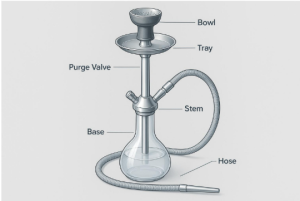
All of these parts need to fit well together. Their quality affects how airtight the pipe is. If a grommet leaks or the stem does not fit snugly, the vacuum breaks, and you get thin, weak smoke instead of thick clouds.
Shisha Pipe Types: Traditional vs. Modern Designs
When you start shopping, you will see two main styles: traditional and modern. Traditional pipes, such as Egyptian or Turkish models, are often handmade from metals like brass or copper. They usually have a single-piece stem that does not come apart. These often have a tighter draw that many long-time smokers like for the classic feel and stronger resistance.
Modern shisha pipes focus more on simplicity and ease of use. They often use high-grade stainless steel or aluminum and come in modular pieces, so you can take them apart for cleaning or transport. Modern pipes usually offer an open draw that needs less effort to inhale and may include extra features like built-in diffusers or magnetic hose connections.

Traditional Shisha Pipe Styles
Traditional pipes are known for detailed decoration and an old-school look. Brands like Khalil Mamoon are famous for handmade Egyptian pipes with engraved designs and solid brass bodies. With proper care, these pipes can last a lifetime, but they need regular polishing so the metal does not dull or stain.
Many people describe the smoking feel of a traditional pipe as “authentic.” Because the stem is often one solid piece, there are fewer joints that might leak air. However, these pipes are usually taller and heavier, so they are not as easy to carry around. Older traditional kits often come with non-washable hoses, which you need to replace more often to avoid lingering flavors from previous sessions.
Modern and Portable Shisha Pipes
Modern styles have changed to fit busy and mobile lifestyles. Portable pipes, like the Vyro One or Amotion Roam, are built for use at the beach, on camping trips, or at festivals. These small models often swap fragile glass bases for stronger materials such as carbon fiber or tough plastic, so they can handle drops better.
Modern pipes are usually much easier to clean. Because you can take them fully apart, you can scrub the entire inside so no old residue is left behind. This is ideal for people who like to switch between very different flavors, for example going from a heavy coffee blend to a light citrus mint.
Common Materials Used
The material of your pipe affects both how long it lasts and how easy it is to live with.
- Stainless steel (V2A / 304): The standard for many modern pipes. Resists rust and corrosion and is easy to clean.
- Aluminum: Lighter and often cheaper than steel, with many color options from anodizing, but usually wears out faster over many years.
- Brass and copper: Common in traditional pipes. Heavier metals with a classic look and good heat handling, but can develop a greenish layer (verdigris) if left damp and need more care.
- Wood / epoxy resin (exterior): Used for a luxury finish on some high-end pipes, usually with a stainless steel interior for hygiene.

What Size Shisha Pipe Suits Your Setup?
Many beginners get confused about size. A lot of people think taller pipes always smoke better, but smoke quality depends more on how you pack the bowl and manage heat than on the stem length. Size does still matter, though, for how cool the smoke feels and how the pipe fits your space.
Think about where you will place the pipe. A large pipe works well as a floor-standing centerpiece in a lounge or dedicated smoking area. A medium pipe fits nicely on a coffee table. Small or mini pipes are made for easy storage and travel and can be put away in a drawer when you are done, which helps if you do not have much space.
Small, Medium, or Large: Pros and Cons
Small pipes (about 8-12 inches):
- Very portable, often with a carrying case.
- Good for travel or quick sessions.
- Downside: Short stem means less cooling distance, and the small base can warm up faster during long sessions.
Medium pipes (around 20 inches):
- Most popular “all-purpose” size.
- Balanced stability, cooling, and ease of use.
- Great for one or two people.
Large pipes (24+ inches):
- Best for larger groups and long sessions.
- Heavier bases that are harder to knock over.
- Offer cooler smoke, but are bulkier, harder to clean in a normal sink, and less convenient to move.
When Size Matters for Smoke Quality
Height does not change flavor, but it does affect heat. With very small pipes, the bowl and coals sit closer to the water. Over time, the water can warm up, which makes it less effective at cooling the smoke. This can make the smoke feel a bit harsher than it would from a taller pipe, where the smoke travels farther through metal that helps pull away heat.
The water volume inside the base also matters. A larger base holds more water and more room for smoke, which helps when you purge old smoke. If you like long, slow sessions, a medium or large pipe will usually stay cooler and more stable than a very small one.
Single or Multiple Hose Options: What Works Best?
Another key choice is between a single-hose and a multi-hose setup. Traditionally, people shared one hose, passing it around as part of the social ritual. Modern designs have made multi-hose systems more efficient and popular for group smoking.
If you mainly smoke alone or with one other person, a single-hose pipe is often the better pick. It is simpler, has fewer parts that might leak, and tends to give a more even draw. If you often host friends, a multi-hose pipe lets everyone have their own mouthpiece, which is more convenient and more hygienic.
Benefits of Single Hose Pipes
Single-hose pipes appeal to purists. With only one air channel, it is easier to keep the vacuum strong, which usually means thicker clouds. You also do not have to worry about others covering their hose ends while you smoke, which used to be a problem on older multi-hose setups without auto-seal ball bearings.
Single-hose pipes are often easier to purge too. When you blow into the hose to clear harsh smoke, all the air goes straight to the purge valve and out. On a multi-hose pipe, the purge can be weaker unless it uses a good valve system for each hose port.
When to Choose Multiple Hose Shisha Pipes
Multi-hose pipes, such as the Aeon Premium 4, are great for social smokers. Many modern, higher-end models use auto-seal systems with small glass or plastic balls in each hose port. This setup allows several people to smoke at the same time or one after another without blocking hose tips between turns.
Keep in mind that if three or four people are smoking together, the bowl and coals will run out faster. You will need a bigger bowl and more frequent coal changes to keep the heat steady. If you pick a multi-hose pipe, it helps to choose one where you can plug unused ports if you want to smoke alone later.
Choosing Materials for Durability, Flavor, and Maintenance
The materials in your pipe affect more than just looks; they also affect taste and long-term care. Some materials are porous, meaning they can soak up flavor. If you smoke a strong double-apple blend in a porous pipe, you may still taste anise when you move to a gentle vanilla flavor.
Cleaning is just as important. A pipe that is hard to clean will build up old smells and tastes over time, which can ruin even the best tobacco. Non-porous materials like good glass and stainless steel can usually be returned to a neutral state with warm water and maybe a little lemon juice or mild cleaner.
Popular Materials: Stainless Steel, Brass, Glass, Acrylic
- Stainless Steel: Very durable, rust-resistant, and easy to scrub inside and out.
- Brass: Heavy and traditional, with a warm look. Resists corrosion but needs polishing to stay bright.
- Glass: Common for bases. Clear glass lets you see water levels; hand-blown glass can look more artistic and premium.
- Acrylic / Polycarbonate: Used in travel and outdoor bases. Very hard to break, but can scratch and stain if not cleaned promptly.
How Material Affects Smoke and Longevity
Good metals like stainless steel act as a heat sink, pulling heat away from the smoke as it passes through the stem. This can make each inhale cooler and smoother. Cheaper metals or thin alloys may give off a slight metallic taste and can develop tiny corrosion pits inside the stem, which can later cause air leaks.
Over time, better materials pay off. A quality stainless steel pipe can easily last five years or more with basic care. A low-cost pipe made from plated zinc or thin aluminum might start to strip threads, flake, or rust inside within a year or so. For most people, buying a solid pipe once is cheaper than replacing a weak one every year.
Features to Look for in a Shisha Pipe
Many newer pipes come with extra features that make smoking simpler and more enjoyable. You can smoke without them, but they can save time, reduce mess, and improve comfort. If two pipes cost about the same, these details can help you decide between them.
For example, a magnetic hose connector makes attaching and removing the hose quick and easy, while rubber grommets can become worn or slippery. A click-lock system between the stem and base gives a firm, secure fit and lets you lift the pipe safely without worrying about the base slipping off.
Performance Features: Diffusers, Purge Valves, Heat Management
A diffuser is a small piece with holes that fits on the end of the downstem. It breaks large air bubbles into smaller ones, making the draw quieter and smoother. This is very useful if you like smoking while watching movies or having conversations.
The purge valve is another key part. Look for a pipe with a purge that can clear the base in one or two breaths, whether it is vertical or hidden in the design. Also think about whether your pipe will work well with a Heat Management Device (HMD). HMDs replace foil and hold the coals in a metal housing, giving more even heat and protecting the coals from wind. They are usually safer and more steady for newer smokers.
Budget Considerations for Shisha Pipes
Shisha pipes are available in a wide range of prices, and you should know what goes into that cost. Higher prices usually reflect better materials (CNC-machined steel instead of cheap cast metal), country of production (for example, German-made vs. mass-produced budget options), and whether accessories like hoses or bowls are included.
If your budget is limited, it is usually smarter to buy a small, high-quality pipe instead of a very tall, low-quality one. A compact but well-built pipe will perform far better than a flashy, poorly made model that leaks or rusts quickly.
Price Ranges and What to Expect
| Price Range | What You Get |
| $20 – $60 (Budget) | Small, simple setups, often aluminum or zinc alloy. Good for beginners or as travel pipes. |
| $70 – $180 (Mid-Range) | Stainless steel or quality brass pipes. Most everyday “main” pipes fall here. |
| $200 – $500+ (Luxury) | High-end materials (like carbon fiber or rare woods), advanced design, and engineering. Often sold as stem-only, with base and hose purchased separately. |
Factors That Affect Cost
The detail and number of parts in the design affect price a lot. A pipe with many individual pieces, such as the Amotion Flash Bang, needs precise manufacturing and careful assembly, which raises costs. Brand image also matters: established brands usually offer warranties, customer support, and spare parts, giving more long-term security than unknown brands.
Another point is whether the pipe comes as a full kit or as a standalone stem. Some setups include a bowl, hose, tongs, and sometimes even an HMD. Premium pipes often come without these extras. When planning your budget, remember that a high-quality bowl and medical-grade silicone hose can add $50 to $100 to the total purchase.
Matching Your Shisha Pipe to Your Smoking Style and Setup
Your pipe should fit your daily life. If you live in a small flat, a 30-inch traditional pipe may be hard to store and wash. If you enjoy smoking at the beach or outdoors, a glass base can be risky. Think about how often and where you smoke: Is it a weekly treat or a daily habit?
Style also matters. If your home is modern and simple, a clean stainless steel pipe may look best. If you like a warmer, more colorful space, a brass pipe with a patterned glass base might suit you better and add to the look of your room.
Choosing for Solo, Small Group, or Large Gatherings
For solo smokers, a small or medium single-hose pipe is often the most practical. It needs less water, takes less time to prepare, and is easy to clear when the smoke gets harsh. For two people, a medium pipe with a stable base usually works well and stays cool enough for back-to-back sessions.
For bigger groups, stability and hose count matter more. A heavy pipe is less likely to tip if someone bumps the table or pulls the hose. Multi-hose setups help avoid constant hose-passing, which reduces accidents. Try to pick a pipe with a wide tray so you can keep extra coals ready.
Portability vs. Permanency
If your pipe has a fixed place at home and rarely moves, a heavier model is fine and can feel more solid and high-quality. But if you often take your pipe to friends’ houses or on trips, a modular design that packs into a small bag is much more practical.
Some pipes are “tabletop” models with broad, flat bases that are very hard to tip. These are great for people who worry about dropping coals on carpets or furniture. Others are slim “stick” hookahs that need matching bases but are very light and easy to move, fitting well with a modern, minimalist style.
Frequently Asked Questions About Shisha Pipe Selection
Many buyers wonder whether to choose a full starter kit or build a custom setup from separate parts. For beginners, a complete kit is usually easier because all parts are made to fit together correctly. After you learn how everything works, you can start changing pieces to suit your taste.
Another common question is about the hose. Always check whether the hose is washable. Older, traditional hoses often have metal coils inside, which rust if you rinse them with water. Modern silicone hoses are fully washable, easy to dry, and usually give cleaner flavor and better hygiene.
Which Type of Pipe Is Best for Beginners?
A medium-sized, single-hose modern pipe is usually the best starting point. Pipes like the MYA Chikita or DSH Eco are affordable, sturdy, and simple to put together. They offer a standard smoking experience that helps you learn heat control and bowl packing before you move on to more advanced gear.
New users should also look for pipes with standard-sized connections. This makes it much easier to replace a broken bowl or hose at any local shop. It is often better to avoid special “proprietary” systems that only work with brand-specific accessories until you are sure you want to commit to a particular high-end brand.
Should You Buy a Complete Setup or Separate Components?
Buying a full kit is convenient and often cheaper at first. However, the included bowl and hose are sometimes basic quality. If you have a bit more money to spend, many experienced smokers suggest buying a good stainless steel stem and pairing it with a funnel-style clay bowl and a medical-grade silicone hose.
Building your own setup lets you choose where to spend more and where to save. You might pick a mid-range stem but invest in a premium HMD and a hand-blown glass base. This mix-and-match method is how many long-term fans slowly build their “final” setup that fits their exact taste and habits.
Final Thoughts: Finding the Best Shisha Pipe for Your Needs
The best shisha pipe is the one you enjoy using and keeping clean. Beyond specs on paper, think about the whole routine. Shisha is a slow, relaxing activity meant to help you unwind. If cleaning a complex, 30-part modular pipe feels like a job, you may end up avoiding it. If a tiny pipe feels cheap or insubstantial to you, it may not be satisfying even if it works well.
Shisha culture continues to change, with more focus on sustainable materials and smarter heat control. You will likely see more pipes using eco-friendly woods and advanced airflow designs in the future, but the core experience stays the same: the quiet bubbling of water and the smell of flavored smoke. Whether you pick a classic pipe based on designs from 100 years ago or a modern carbon fiber travel model, the goal is simple-smooth, flavorful sessions that give you a break from everyday stress.


5 Common Questions Pet Owners Ask Veterinary Hospitals

How Family Dentists Help Caregivers Track Dental Symptoms Between Visits

Why Fixed Portions Make Weight Loss So Much Easier

What Happens After an Arrest? A Guide from Criminal Lawyers in Bankstown

A Practical Guide for Property Settlement in Springvale

Walking the Legal End of the Estate Executor Journey in Queensland

How Orthodontists And Family Dentists Coordinate Care For Teeth With Large Fillings

Why social casinos are rising and how High 5 Casino sets the standard

Mexico City museums, parks and food markets: a culture-first itinerary

How Bigger Match Payouts Actually Change FC 27 Weekend Prep

Top 6 AI Document Processing Platforms for Enterprise Workflow Automation

How an Edit Stays Useful After the Face Paste Stops Impressing Anyone

ADA Signage: What Every Business Should Know About Interior Signs

10 Tools To Build Visibility in AI-Driven Answers in 2026

Understanding Single-Account Gaming Platforms and Their Benefits

Cove Lighting and False Ceilings: Creating a Soft, Layered Glow


Don Toliver Net Worth: Height, Age, Real Name, Career & More
Don Toliver is an American rapper and singer best known for his RIAA platinum certified songs, No Idea and After...


Finesse2tymes Net Worth: Height, Age, Real Name & Career
Finesse2tymes is an American rapper and recording artist. He is mainly recognized for his thunderous voice and motivational lyrics in...


Sugarhill Ddot Net Worth: Height, Age, Real Name & Career
Sugarhill Ddot is an American hip-hop recording artist best known for his songs, Real Facts and I Wanna Love You....


GloRilla Net Worth: Height, Age, Bio, Real Name & Career
GloRilla is an American rapper and hip-hop recording artist from Memphis. She is best known for her popular singles, “Westside...


Destroy Lonely Net Worth: Height, Age, Real Name & Career
Destroy Lonely is an American rapper best known for his 2022 mixtape, No Stylist. He is currently signed to rapper...
-
Rappers2 years ago
GloRilla Net Worth: Height, Age, Bio, Real Name & Career
-

 News2 years ago
Trash To Treasure: Maximizing Space And Efficiency Through Junk Removal
-

 Businessman3 years ago
7 Proven Lead Generation Strategies To Implement in 2023
-
 Businessman2 years ago
Brandon Fugal Net Worth: How Rich is Skinwalker Ranch Owner?
-

 Rappers4 years ago
BigXthaPlug Net Worth: Height, Age, Real Name & Career
-

 TV Stars2 years ago
Kaleb Cooper Net Worth: How Rich is the TV Star Actually?
-

 Internet Stars4 years ago
Mufti Menk Net Worth: How Rich is the Islamic Speaker Actually?
-

 TV Stars2 years ago
Carla Diab Net Worth: How Rich is the TV Star Actually in 2025?
You must be logged in to post a comment Login