
News
America’s Wildfire Crisis Is Becoming More Costly and Complex

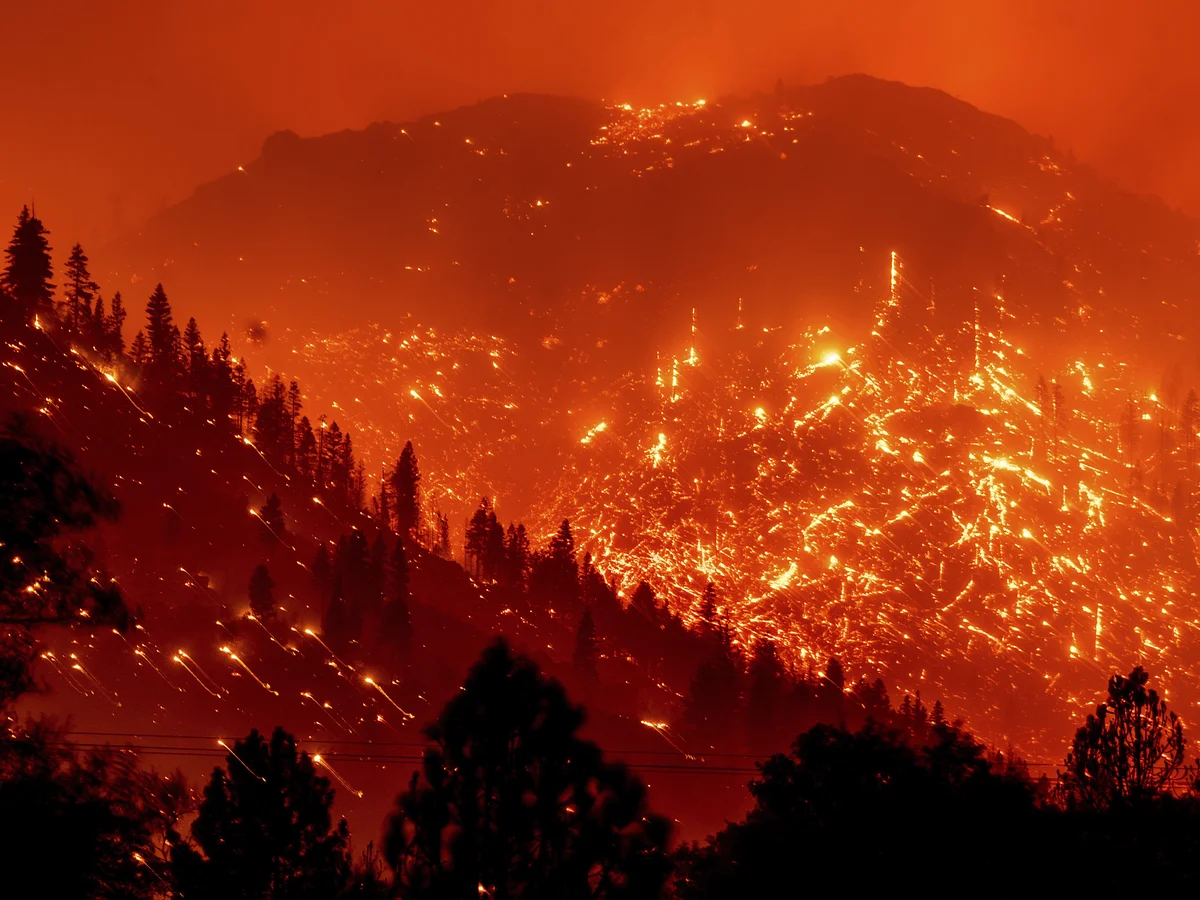
Wildfires are no longer a threat confined largely to the American West or a predictable summer fire season. Across the United States, fires are becoming more destructive, spreading into new regions and leaving communities with financial consequences that can continue long after the flames are extinguished.
In 2025 alone, 77,850 wildfires burned more than 5.1 million acres across the United States, while 18,385 buildings were destroyed, including 12,773 homes.
A study by Sweet James examined the growing scale of America’s wildfire crisis, using the devastating 2025 Los Angeles fires as a case study for the increasingly complex consequences of major fires. Beyond the immediate destruction, the findings reveal mounting problems involving housing, insurance coverage, rebuilding costs, displacement and disaster assistance.
The numbers also show that wildfire risk is becoming increasingly difficult to contain geographically. By June 23, 2026, another 34,262 wildfires had already burned more than 2.7 million acres nationwide.
The 2025 Los Angeles Fires Became a Record-Setting Disaster
The scale of the modern wildfire crisis was on full display in Los Angeles in January 2025.
The Palisades and Eaton Fires ignited just hours apart on January 7 and became two of the most destructive fires in California history.
More than 8,000 firefighters spent 24 days containing the fires, but the damage was extensive.
| Impact of the 2025 Los Angeles Wildfires | Total |
| Deaths | 31 |
| Buildings destroyed | 16,000+ |
| Homes destroyed | Around 12,000 |
| Acres burned | Around 23,000 |
| Estimated economic losses | $76B-$131B |
| Estimated insured losses | $40B-$45B |
Communities including Pacific Palisades, Topanga, Malibu and areas around Pasadena were devastated.
Estimates place the combined economic losses between $76 billion and $131 billion, while some estimates put total economic damage as high as $275 billion.
The scale made the January 2025 Los Angeles fires the costliest wildfire event on record, surpassing previous catastrophic fires including California’s 2018 Camp Fire and the 2023 Maui wildfire.
Wildfire Risk Is Spreading Beyond the West
California remains one of the country’s most recognizable wildfire hotspots, but recent fire activity suggests the threat is becoming increasingly national.
During 2025, U.S. wildfire totals exceeded both the five-year and 10-year averages. Human-caused fires continued to account for the majority of wildfire ignitions, while approximately 8,300 lightning-caused fires burned more than 2.6 million acres.
By June 23, 2026, nearly 5,900 personnel were assigned to wildfire activity nationwide, with significant activity concentrated across the Great Basin, Southwest, Northwest and Alaska.
But wildfire risk is also reaching states historically less associated with catastrophic fires.
Nebraska recorded the largest wildfire in its history during 2026, while two major fires in southern Georgia burned more than 50,000 acres and destroyed over 120 homes, becoming the state’s most destructive recorded wildfire event.
The geographic expansion is occurring alongside longer periods of dangerous fire conditions, with wildfire seasons increasingly stretching from late spring into autumn.
Some Fires Can Reignite Months After They Appear Extinguished
One of the more complicated threats highlighted in the Sweet James study involves so-called “zombie fires.”
Also known as holdover or overwintering fires, these fires can continue smoldering underground in peat, roots or other organic material after appearing to have been extinguished.
Under the right conditions, they can survive for months before resurfacing when warmer and drier weather returns.
Research examined in the study found that zombie fires can survive seven to eight months beneath snow and frozen ground. Some sites identified in 2025 were remnants of wildfires dating back years, including sites linked to fires as far back as 2009.
Conditions that can allow dormant fires to return include dry peat and organic soil, thawing frozen ground, rapid warming and high winds.
Although zombie fires remain relatively uncommon in the United States, Alaska and California have experienced significant examples.
The 1991 Tunnel Fire near Oakland reignited under dry and windy conditions, killing 25 people and destroying nearly 3,500 homes.
The Palisades Fire also illustrates the potential consequences of a reignition. Investigators allege that the fire originated from the earlier Lachman Fire, which continued smoldering before reigniting under extreme Santa Ana winds and dry conditions.
Los Angeles Lost Billions in Residential Property Value
The destruction caused by a wildfire does not end when residents return to their communities.
The 2025 fires damaged approximately 40% of single-family homes in Pacific Palisades and Altadena, while an estimated 100,000 residents were forced to evacuate.
Nine months later, 70% of people who lost their homes remained displaced. Separate survey findings showed that 90% of Pacific Palisades residents and 80% of Altadena residents affected by the disaster were still without a home.
The housing market suffered alongside residents.
The fires wiped an estimated $8.3 billion from residential property values across Pacific Palisades and Altadena.
Destroyed homes fell in collective value from $14.7 billion to $10.8 billion, while damaged homes that remained standing declined from $2.2 billion to $1.9 billion.
Even homes that escaped physical damage were affected.
Undamaged properties located inside burn zones declined collectively from $10.4 billion to $9.4 billion in Pacific Palisades and from $3.8 billion to $3.2 billion in Altadena.
Homes destroyed by the fires and subsequently sold as vacant lots sold for approximately half of their pre-fire purchase values on average.
Rebuilding Is Moving Far Slower Than Demand
Thousands of residents want to return, but rebuilding has been slow.
Pacific Palisades has issued more than 1,400 rebuilding permits and approved more than 1,700 plans. Construction has begun on more than 400 homes.
Despite that activity, only two homes had been completed at the time of the study.
Altadena issued more than 1,100 permits, but only four single-family homes, one large multifamily property and three accessory dwelling units had been built.
Malibu experienced an even wider gap. Nearly 600 homes were destroyed, yet just 22 rebuilding permits had been issued.
Rising construction costs, permit delays and limited housing availability are extending displacement and complicating the recovery of entire neighborhoods.
Wildfires Are Deepening California’s Insurance Crisis
The fires also exposed vulnerabilities in California’s homeowners insurance market.
Major insurers had already begun reducing their exposure in wildfire-prone areas before the 2025 disaster. State Farm stopped accepting new California homeowners policies in 2023 and withdrew 72,000 residential policies, while other major insurers also limited coverage in high-risk markets.
The 2025 fires intensified those pressures.
Southern California’s fires generated approximately $40 billion in insured losses and left an uninsured gap exceeding $13 billion.
As private coverage contracted, enrollment in California’s FAIR Plan increased dramatically, reaching approximately 668,000 policies by the end of 2025, roughly four times its previous size.
The financial pressure is increasingly reaching individual households as well.
Thousands of Survivors Are Running Out of Housing Benefits
More than a year after the Los Angeles fires, displacement remains a significant financial problem.
As of April 2026, 38% of survivors had already exhausted their temporary housing coverage, while 22% had no displacement benefits remaining.
Only 16% still had more than one year of housing coverage available.
Lower-income households face particularly difficult circumstances. Among families earning less than $50,000 annually, fewer than one-quarter believed they could afford replacement housing for more than three months without insurance assistance.
Insurance claims themselves have created additional problems.
Approximately 40% of survivors still had open claims involving property damage, personal belongings or temporary housing.
| Common Insurance Problem | Share Reporting It |
| Extensive personal property inventory requirements | 80% |
| Communication delays with adjusters | About 67% |
| Coverage reductions or repair disputes | 50% |
| Multiple adjuster reassignments | 40% |
Fewer than 1 in 10 policyholders believed insurance claim conditions were improving.
Homeowners Face a Six-Figure Rebuilding Gap
Insurance coverage is only part of the financial challenge.
Although 72% of survivors planned to rebuild or repair their homes, affordability emerged as the primary obstacle.
Homeowners estimated that they would need an average of more than $600,000 beyond their expected insurance proceeds to fully rebuild.
Displaced renters estimated needing approximately $250,000 to replace personal belongings and secure long-term housing.
The gap between what insurance covers and what reconstruction actually costs has therefore become one of the defining problems of wildfire recovery.
For many households, surviving the initial disaster is followed by a second financial crisis involving construction costs, insurance disputes, temporary housing expenses and declining property values.
Most Survivors Were Dissatisfied With Government Assistance
Government disaster assistance has also fallen short of expectations for many affected residents.
Only 17% of survivors reported being satisfied with the federal response, compared with 59% who were dissatisfied. Forty-four percent described themselves as very dissatisfied.
Most survivors received little assistance beyond FEMA’s initial $770 emergency payment.
Fifty-nine percent received no additional FEMA aid, while only 14% received further FEMA assistance during the following year.
Small Business Administration disaster assistance also reached a minority of affected households. Sixty-four percent received no disaster loan assistance, compared with 21% who received SBA disaster loan funding.
Community organizations received considerably stronger assessments.
Nearly half of survivors, 48%, reported satisfaction with local nonprofits and faith-based organizations, while 34% were satisfied with national charitable organizations.
Half received assistance from community organizations, and 60% received aid from philanthropic organizations such as the Red Cross and FireAid.
Wildfires Are Becoming a Long-Term Economic Crisis
The findings compiled by Sweet James show how dramatically the consequences of wildfire have expanded beyond acres burned and buildings destroyed.
The United States recorded 77,850 wildfires and more than 5.1 million acres burned in 2025, followed by more than 34,000 additional fires and 2.7 million acres burned by late June 2026.
But the numbers emerging after the flames are extinguished may be equally significant.
In Los Angeles, approximately 100,000 residents were displaced, $8.3 billion in residential property value was erased, thousands of insurance claims remained unresolved and homeowners reported needing hundreds of thousands of dollars beyond expected insurance payouts to rebuild.
Meanwhile, wildfire danger is spreading into areas that have historically faced less severe fire activity, while longer fire seasons and the potential for dormant fires to reignite add further complexity.
The result is a wildfire crisis increasingly measured not only in acres and structures lost, but in insurance availability, housing displacement, property values and the ability of entire communities to rebuild.
For residents in the most fire-prone parts of the country, recovery can now take years, and in some cases the financial barriers may prevent families from returning at all.


10 Actionable Steps to Increase Amazon Brand Visibility This Year

Who Keeps the Jackpot? How Gambling Winnings Are Taxed in the US, the UK and Denmark

Finding Games Repetitive? Baccarat Variations Can Offer Different Experiences

What to Check Before Connecting Any MCP Server to Your Account

Step-by-Step Instructions to Check Winning Numbers on Web Portals

Corporate Gifts for Better Business Brand Promotion Now

Understanding Single-Account Gaming Platforms and Their Benefits

How Pay Per Lead Loan Affiliate Programs Create New Revenue Opportunities

Safer Aging at Home: A Daily Plan for Mobility, Fall Prevention, and Peace of Mind

BPC-157 UK: A Research-Focused Guide to the Experimental Peptide

Teeth Whitening Options: What Actually Works

Online Gaming and Comedy Gold: Kevin Hart Takes to the (Digital) Stage

Mexico City museums, parks and food markets: a culture-first itinerary

Mr Fog Nova: What to Know About This Modern Vape Option

What are the Benefits of Receiving Healthcare Services at Home?

The Company Gaming That AI Agents Can Out-Hack the Internet’s Biggest Platforms


Don Toliver Net Worth: Height, Age, Real Name, Career & More
Don Toliver is an American rapper and singer best known for his RIAA platinum certified songs, No Idea and After...


Finesse2tymes Net Worth: Height, Age, Real Name & Career
Finesse2tymes is an American rapper and recording artist. He is mainly recognized for his thunderous voice and motivational lyrics in...


Sugarhill Ddot Net Worth: Height, Age, Real Name & Career
Sugarhill Ddot is an American hip-hop recording artist best known for his songs, Real Facts and I Wanna Love You....


GloRilla Net Worth: Height, Age, Bio, Real Name & Career
GloRilla is an American rapper and hip-hop recording artist from Memphis. She is best known for her popular singles, “Westside...


Destroy Lonely Net Worth: Height, Age, Real Name & Career
Destroy Lonely is an American rapper best known for his 2022 mixtape, No Stylist. He is currently signed to rapper...
-
Rappers2 years ago
GloRilla Net Worth: Height, Age, Bio, Real Name & Career
-
 News2 years ago
Trash To Treasure: Maximizing Space And Efficiency Through Junk Removal
-

 Businessman3 years ago
7 Proven Lead Generation Strategies To Implement in 2023
-
 Businessman2 years ago
Brandon Fugal Net Worth: How Rich is Skinwalker Ranch Owner?
-

 Rappers3 years ago
BigXthaPlug Net Worth: Height, Age, Real Name & Career
-

 TV Stars2 years ago
Kaleb Cooper Net Worth: How Rich is the TV Star Actually?
-

 Internet Stars4 years ago
Mufti Menk Net Worth: How Rich is the Islamic Speaker Actually?
-

 TV Stars2 years ago
Carla Diab Net Worth: How Rich is the TV Star Actually in 2025?
You must be logged in to post a comment Login