
News
How Digital Scans Are Replacing Goopy Impressions In Modern Orthodontics

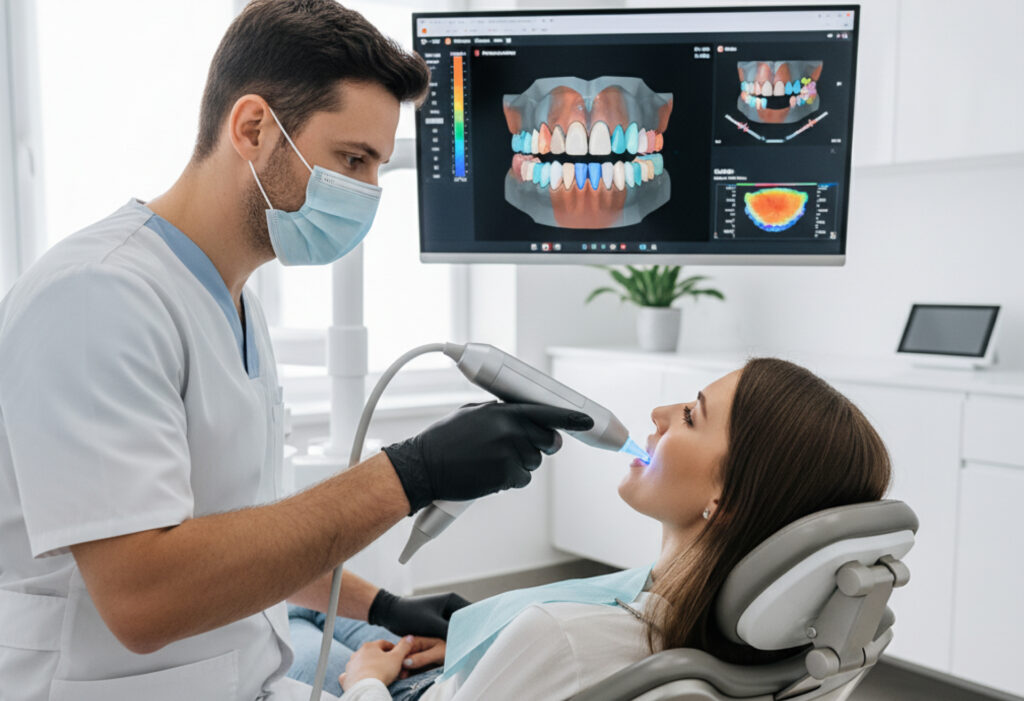
You sit back in the chair, see the tray coming, and already know what is next. The thick material, the pressure on your teeth, the taste, the fear of gagging, then the wait to see if the impression came out right. A lot of people still picture orthodontics that way, and if that is what has made you put off treatment, you are not overreacting, especially when looking for family orthodontic care in South Nashville. Traditional impressions are messy, uncomfortable, and easy to dread.
That is why so many practices now use digital scans instead. A small handheld scanner captures detailed images of your teeth and bite without the goop, without the same gag reflex trigger, and often without needing to start over because the mold shifted. In modern care, digital orthodontic impressions are changing the first step of treatment, and that shift matters because comfort, accuracy, and speed all affect whether you move forward with care at all.
Digital scans reduce the stress that kept many people away from orthodontic care
For some patients, old style impressions were just unpleasant. For others, they were the part they feared most. Kids squirmed. Adults with strong gag reflexes braced themselves. People with dental anxiety felt their whole body tense before the tray even touched their mouth. When a process starts with discomfort, it colors everything that comes after it.
Digital scanning changes that experience. The scanner moves around your mouth and creates a 3D model on a screen in real time. You can often see your teeth appear as the scan happens, which gives you a clearer sense of what your orthodontist is seeing. That alone can make the visit feel less passive and less stressful.
Accuracy matters too. If a traditional impression has bubbles, pulls, or distortions, the model may need to be retaken or adjusted. That costs time and can affect the fit of appliances or aligners. Research on digital workflows in dentistry and orthodontic applications has shown strong accuracy and reliability for intraoral scanning in many clinical settings. You can review findings in this study on digital scanning accuracy and clinical use.
That does not mean every single case is identical or that every scanner works the same way. It means the technology has matured enough that many orthodontists trust it for diagnosis, treatment planning, and appliance fabrication. For patients, that usually translates into fewer retakes and a smoother start.
Modern orthodontic technology improves planning, communication, and fit
Comfort gets attention first, but planning may be the bigger story. A digital scan can help your orthodontist study tooth position, crowding, spacing, and bite relationships with a level of detail that is easy to enlarge, rotate, and share. If you are choosing between braces and clear aligners, or if your child is being monitored as adult teeth come in, that digital model can make the conversation clearer.
You do not have to guess what the doctor means by overlap or rotation. You can see it. That helps when treatment feels abstract or expensive and you want to understand what you are paying for.
Digital records can also support a more efficient workflow between the orthodontist and the lab. A cleaner record can mean a better fitting aligner, retainer, or appliance. A recent review of digital dental workflows and 3D technologies describes how scanning and digital fabrication are being used more widely because they improve consistency and reduce some of the weak points found in older methods.
There is also a public health angle here. Access and follow through are real issues in oral care. The Oral Health in America report from NIDCR outlines how oral health needs remain widespread across age groups and communities. When care becomes easier to tolerate and easier to explain, more people are willing to begin and continue treatment.
Digital scans and traditional impressions differ in ways patients feel right away
| Feature | Digital Scans | Traditional Impressions |
|---|---|---|
| Comfort | No trays filled with impression material, usually easier for people with gag reflex or anxiety | Can feel bulky, messy, and hard to tolerate |
| Speed | Images appear quickly and can often be reviewed right away | Requires setting time, removal, and model processing |
| Retakes | Missed areas can often be rescanned without restarting the full process | Errors may require a full new impression |
| Communication | 3D models are easier to show and explain on screen | Physical molds are less intuitive for many patients |
| Workflow | Can integrate with digital treatment planning and appliance fabrication | Often involves more manual steps |
This is why 3D dental scanning for braces and aligners keeps gaining ground. The improvement is not just technical. It is personal. If you have ever delayed an appointment because you did not want to deal with impressions, this part of treatment may feel far more manageable now.
Small steps can make the move into orthodontic treatment easier
Ask what scan technology the office uses. Not every office uses the same system or the same workflow. Ask whether they use intraoral scanning for braces, aligners, and retainers, and whether most patients can avoid traditional impressions entirely.
Tell the team if you gag easily or feel anxious. People often try to push through embarrassment and stay quiet. Say it plainly. If the office knows you have a strong gag reflex, sensory sensitivity, or treatment anxiety, they can pace the visit better and explain what to expect.
Request to see the scan and treatment plan. A good orthodontist should be able to walk you through the image, point out the problem areas, and explain how treatment will address them. That visual clarity helps you make a decision with less confusion and less pressure.
Modern orthodontics feels different because the first step feels different
If your image of an orthodontist is still tied to messy trays and that heavy, goopy feeling, it may be time to update that picture. How Digital Scans Are Replacing Goopy Impressions In Modern Orthodontics comes down to something simple. When the process is easier on your body, clearer to understand, and more precise from the start, treatment becomes easier to say yes to.
You do not need to force yourself through an older experience if a better one is available. Reach out to a local orthodontist and ask whether digital scans are part of their treatment process.


How Digital Scans Are Replacing Goopy Impressions In Modern Orthodontics

When Should You Hire A Family Law Attorney?

The Impact Of CPAs On Public Trust And Confidence

What You Can Learn From Professional Gamblers With The Highest Net Worth

4 Details To Share Before Dental Treatment If You Have Product Allergies Or Sensitivities

What Is GIFT Nifty and Why Is It Important for Indian Stock Markets?

6 Preventive Steps General Dentists Recommend For Families

Best Boneless Sofas 2026: Cloud Comfort & No-Assembly Picks
Best Boneless Sofas 2026: Cloud Comfort & No-Assembly Picks

Cove Lighting and False Ceilings: Creating a Soft, Layered Glow

Inside the Multi-Million Dollar Gaming Economy: How Streamers and Digital Assets Drive the Virtual Currency Boom

Suncoast, Sun City & Montecasino: SA's Big Casinos vs Playing Online (2026)

Who Keeps the Jackpot? How Gambling Winnings Are Taxed in the US, the UK and Denmark

What to Check Before Connecting Any MCP Server to Your Account

Subscription fatigue: a simple review and PennyGuard

Walking the Legal End of the Estate Executor Journey in Queensland


Don Toliver Net Worth: Height, Age, Real Name, Career & More
Don Toliver is an American rapper and singer best known for his RIAA platinum certified songs, No Idea and After...


Finesse2tymes Net Worth: Height, Age, Real Name & Career
Finesse2tymes is an American rapper and recording artist. He is mainly recognized for his thunderous voice and motivational lyrics in...


Sugarhill Ddot Net Worth: Height, Age, Real Name & Career
Sugarhill Ddot is an American hip-hop recording artist best known for his songs, Real Facts and I Wanna Love You....


GloRilla Net Worth: Height, Age, Bio, Real Name & Career
GloRilla is an American rapper and hip-hop recording artist from Memphis. She is best known for her popular singles, “Westside...


Destroy Lonely Net Worth: Height, Age, Real Name & Career
Destroy Lonely is an American rapper best known for his 2022 mixtape, No Stylist. He is currently signed to rapper...
-
Rappers2 years ago
GloRilla Net Worth: Height, Age, Bio, Real Name & Career
-

 News2 years ago
Trash To Treasure: Maximizing Space And Efficiency Through Junk Removal
-

 Businessman3 years ago
7 Proven Lead Generation Strategies To Implement in 2023
-
 Businessman2 years ago
Brandon Fugal Net Worth: How Rich is Skinwalker Ranch Owner?
-

 Rappers4 years ago
BigXthaPlug Net Worth: Height, Age, Real Name & Career
-

 TV Stars2 years ago
Kaleb Cooper Net Worth: How Rich is the TV Star Actually?
-

 Internet Stars4 years ago
Mufti Menk Net Worth: How Rich is the Islamic Speaker Actually?
-

 TV Stars2 years ago
Carla Diab Net Worth: How Rich is the TV Star Actually in 2025?
You must be logged in to post a comment Login