
Law
Golf Cart Crashes Are Rising as Carts Move Beyond the Course

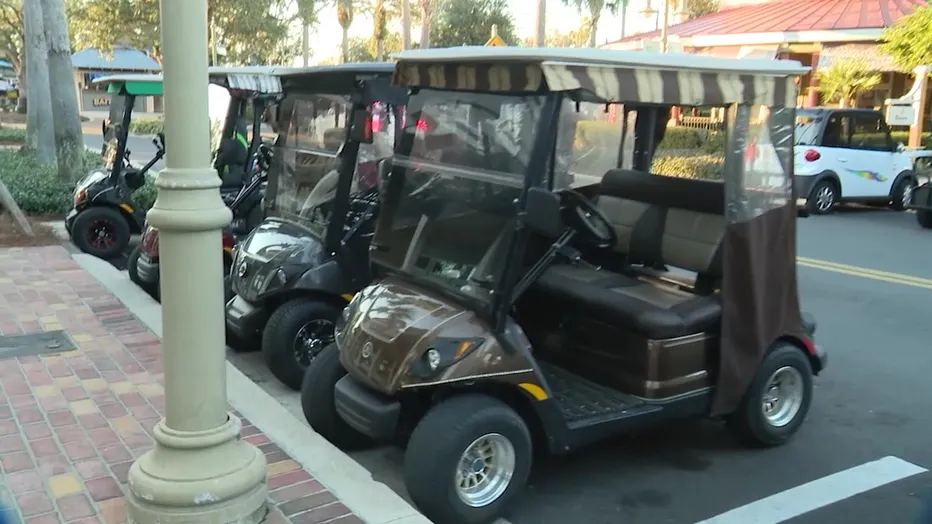
Golf carts have become a common sight far beyond golf courses. In retirement communities, beach towns, resorts, gated neighborhoods and residential developments, the vehicles are increasingly being used for everyday transportation.
That shift has created a growing safety problem.
Golf cart crashes now send more than 15,000 people to emergency departments each year and are associated with roughly 600 fatalities annually, while injury rates increased 132% over a 17-year period.
A study by H&P Law examined where golf cart crashes are occurring, who is most likely to be injured and the behaviors and infrastructure problems contributing to accidents as carts become more common on public roads and in residential communities.
The findings suggest that the traditional perception of a golf cart as a slow, relatively harmless recreational vehicle no longer matches the way many carts are being used. More than half of the U.S. golf cart fleet is now used for purposes unrelated to golf, exposing riders to road hazards without many of the protections built into passenger vehicles.
More Golf Carts Are Being Used as Everyday Transportation
Golf carts were originally designed to move golfers around courses at relatively low speeds.
Today, more than 50% of the U.S. golf cart fleet is used for non-golf purposes, including transportation around neighborhoods, gated developments, resorts and retirement communities.
Unlike standard passenger vehicles, golf carts generally do not have doors, airbags or reinforced frames. Many also lack seat belts and other restraints.
As usage has expanded, injuries have increased.
Golf cart injury rates rose 132% between 2007 and 2017, while federal injury data shows annual golf cart-related injuries increasing from approximately 6,000 in 1990 to around 18,000 by 2015.
There were also 1,234 reported golf cart crashes in 2025.
The increase is particularly significant because crashes are not limited to inexperienced drivers. Four in 10 crashes involve golfers with several years of experience, indicating that familiarity with the vehicle does not eliminate the risk.
Residential Communities Have More Crashes Than Golf Resorts
The locations where carts are being used are changing alongside the number of injuries.
Residential communities experience 25% more golf cart accidents than golf resorts, while another 15% of crashes occur on private property such as farms and large estates.
Parking lots are another problem area, accounting for 11% of minor-damage crashes.
The largest geographic concentration is in the Sun Belt, which accounts for 60% of all golf cart injuries.
Florida leads the country in golf cart-related emergency room visits, with especially high exposure in The Villages, the nation’s largest golf cart community.
Police respond to more than 100 serious golf cart incidents there each year. Between 2012 and 2022, 875 crashes were documented, and 48% resulted in either hospitalization or death.
Arizona, South Carolina, Georgia and California also record high golf cart injury rates per capita, in part because of the prevalence of retirement communities.
Beach and tourist areas face a different risk. Golf cart crashes rise 30% during Spring Break, when rental vehicles, unfamiliar drivers and larger numbers of pedestrians and cyclists share the same streets and paths.
Nearly Half of Golf Cart Crashes Occur on Public Roads
The movement of golf carts away from courses has fundamentally changed the types of environments where crashes occur.
Forty-five percent of golf cart accidents happen on roads, making public streets a more common crash location than golf courses.
Intersections pose a particular danger.
Among golf cart crashes involving another vehicle, 65% occur at intersections. Another 20% involve a stationary object.
Most accidents, 70%, occur during daylight hours. Saturday is the most common day for crashes, July is the most common month and 7 p.m. is the most common time.
Approximately 65% of all golf cart accidents occur during summer, while weekend incidents make up 38% of recorded crashes.
These patterns show that golf cart risk is often highest during periods when the vehicles are most likely to be used recreationally or for short neighborhood trips.
Falls and Ejections Are Among the Most Common Golf Cart Accidents
A crash does not have to involve another vehicle to produce a serious injury.
Falls and ejections account for 40% of golf cart accidents and 35% of injuries.
Rear-facing seats increase the risk of ejection by 25%, while overcrowding is another common contributor. Roughly one-quarter of crashes involve more than three passengers, and having more than two people on a bench contributes to 18% of falls.
Rollovers account for approximately 10% of crashes.
Speed substantially increases that risk. A cart traveling faster than 15 mph is three times more likely to roll over during a sharp turn, while wet roads increase the likelihood of skidding by 50%.
Distracted driving also contributes to crashes. Mobile phone use is involved in approximately 10% of modern golf cart accidents.
Alcohol creates an even greater concern in fatal incidents.
Although fatal crashes represent only around one in every 1,000 golf cart crashes, alcohol is a factor in roughly half of fatal golf cart accidents. Impaired operators are also 10 times more likely to exceed safe operating speeds.
Golf Cart Injuries Can Be Far More Serious Than Expected
Golf cart crashes frequently result in injuries associated with falls, ejections and the vehicle’s lack of structural protection.
| Injury or Outcome | Share of Cases |
| Lower-extremity injuries | 24% of ER visits |
| Traumatic brain injury | 17% of crashes |
| Hand and wrist fractures | 15% |
| Hospital admission | 8% |
| Emergency surgery | 5% |
| Permanent disability | 3% |
| Spinal cord injury | 1% |
Soft-tissue injuries occur in approximately 90% of crashes.
Head injuries are particularly notable. Traumatic brain injuries are involved in 17% of crashes, yet only 2% of victims were wearing helmets at the time of the accident.
The risks are not distributed equally across age groups.
Children Account for a Disproportionate Share of Injuries
Children are among the groups most vulnerable to golf cart crashes.
Children under 16 account for 31% of golf cart injuries, while more than half of injured golf cart occupants are 12 or younger.
More than 6,500 children are injured by golf carts annually, with slightly more than half of those injuries involving children 12 and younger.
The 10-to-14 age group has the highest injury rate by population.
Adolescents are also three times more likely than adults to fall from a moving golf cart.
For children involved in crashes, head trauma presents a particularly serious concern. Half of child golf cart crashes result in a traumatic brain injury.
Children do not have to be driving or even riding in the cart to be hurt. More than 10% of pediatric golf cart injuries involve a child being struck by the vehicle.
Supervision appears to make a significant difference. Children supervised around golf carts experience 60% fewer accidents than unsupervised children.
Older Adults Face the Greatest Fatality Risk
At the opposite end of the age spectrum, adults over 80 face the highest risk of dying in a golf cart accident.
More than 80% of elderly victims were driving at the time of their crash.
Retirement communities are a significant part of the picture. Retirees living in age-restricted communities account for 40% of golf cart crashes occurring on roads.
Drivers older than 70 are less likely to be intoxicated during crashes than younger operators, but they are more likely to experience orthopedic injuries.
Tourists represent another higher-risk group. Visitors are 20% more likely than residents to crash in island communities, highlighting the difficulties associated with operating unfamiliar vehicles on unfamiliar roads.
Modified Carts and Risky Driving Increase the Danger
Some owners modify golf carts to improve speed or performance, potentially increasing injury risk.
One in four golf cart owners has modified their vehicle for better performance, and modified carts have a 40% higher injury rate than standard models.
Driving environment matters as well.
Operating a golf cart on a road with a speed limit above 35 mph doubles the risk of involvement in a fatal crash.
Gender differences also emerge in the crash data. Men are involved in 1.5 times as many golf cart crashes as women and account for 75% of recorded reckless-driving incidents.
Underage driving remains another concern. Unlicensed drivers under 16 are involved in one in five serious golf cart accidents.
Communities Are Struggling to Keep Up With Golf Cart Traffic
Infrastructure has not always evolved as quickly as golf cart use.
Forty percent of communities where golf carts are popular have no dedicated golf cart path.
Shared bike and cart lanes create another potential conflict point, accounting for 22% of crashes.
Road regulations also vary widely.
Golf carts are prohibited from operating on roads in New York, Alabama and Hawaii, while golf cart-friendly communities commonly restrict them to roads with speed limits of 35 mph or less.
Yet only 30% of major retirement communities meet that road-speed standard, revealing a significant disconnect between how golf carts are commonly used and the environments considered safest for them.
Safety Laws Often Lag Behind How Golf Carts Are Used
H&P Law’s study also found significant gaps in local golf cart safety rules.
Sixty percent of municipal golf cart laws do not require seat belts, despite the absence of a seat belt being identified as a factor in 70% of crashes involving occupant ejection.
Another 80% of golf carts involved in public-road crashes failed to signal before turning, often because the carts were not equipped with turn signals.
This highlights an important distinction between traditional golf carts and low-speed vehicles, or LSVs.
Golf carts are generally designed for speeds up to 20 mph and were originally intended for course use. LSVs can travel up to 25 mph and are designed more specifically for public roads, typically incorporating additional safety equipment.
Once carts are modified to reach higher speeds, requirements involving registration, insurance and safety equipment may also change.
Golf Cart Safety Is Becoming a Road Safety Issue
The findings compiled by H&P Law show that golf cart crashes can no longer be viewed solely as a golf-course safety concern.
More than half of America’s golf cart fleet is now being used outside golf settings, 45% of crashes occur on public roads and residential communities experience 25% more accidents than golfing resorts.
The people most exposed also include some of the most vulnerable road users. Children under 16 account for nearly one-third of injuries, while adults over 80 face the greatest fatality risk.
Meanwhile, many carts still operate without doors, airbags, reinforced frames, seat belts or turn signals.
As neighborhoods increasingly treat golf carts as everyday transportation, the distinction between recreational vehicle and road vehicle continues to narrow. The data suggests that infrastructure, safety regulations and driver behavior have not always kept pace with that transition.
A vehicle designed for a golf course may be convenient for a short trip through a neighborhood, but once it enters streets shared with cars, cyclists and pedestrians, low speed does not necessarily mean low risk.


America’s Maternal Mental Health Crisis Is Growing

New Analysis Reveals the States with the Highest Teen DUI Risks

When Major Events Push City Traffic to the Breaking Point

America’s Wildfire Crisis Is Becoming More Costly and Complex

Golf Cart Crashes Are Rising as Carts Move Beyond the Course

What Makes a Deck Worth the Investment?

How to Evaluate a Channel Before You Buy YouTube Channels

74.1 Million Americans Speak a Language Other Than English at Home, New Analysis Finds

Listed Price or Tier Price? Finding the Point Where Waiting Pays Off

How to Use AI for Business Automation: Top Use Cases & Real-World Examples

How Kansas City Veterans Court Helps Veterans Avoid Future Legal Trouble

How to Buy Sports Cards Like an Experienced Collector

Understanding the FCRA and Its Impact on Background Checks

From Municipal Clinics to Private HMOs: How Defendant Categorization Shapes What a Family Can Recover

Aspire Gotek X Review: The Cheapest Way to Find Out What Draw You Actually Like

Why Skilled Recruiters Are in High Demand in 2026


Don Toliver Net Worth: Height, Age, Real Name, Career & More
Don Toliver is an American rapper and singer best known for his RIAA platinum certified songs, No Idea and After...


Finesse2tymes Net Worth: Height, Age, Real Name & Career
Finesse2tymes is an American rapper and recording artist. He is mainly recognized for his thunderous voice and motivational lyrics in...


Sugarhill Ddot Net Worth: Height, Age, Real Name & Career
Sugarhill Ddot is an American hip-hop recording artist best known for his songs, Real Facts and I Wanna Love You....


GloRilla Net Worth: Height, Age, Bio, Real Name & Career
GloRilla is an American rapper and hip-hop recording artist from Memphis. She is best known for her popular singles, “Westside...


Destroy Lonely Net Worth: Height, Age, Real Name & Career
Destroy Lonely is an American rapper best known for his 2022 mixtape, No Stylist. He is currently signed to rapper...
-
Rappers2 years ago
GloRilla Net Worth: Height, Age, Bio, Real Name & Career
-

 News2 years ago
Trash To Treasure: Maximizing Space And Efficiency Through Junk Removal
-

 Businessman3 years ago
7 Proven Lead Generation Strategies To Implement in 2023
-
 Businessman2 years ago
Brandon Fugal Net Worth: How Rich is Skinwalker Ranch Owner?
-

 Rappers3 years ago
BigXthaPlug Net Worth: Height, Age, Real Name & Career
-

 TV Stars2 years ago
Kaleb Cooper Net Worth: How Rich is the TV Star Actually?
-

 Internet Stars3 years ago
Mufti Menk Net Worth: How Rich is the Islamic Speaker Actually?
-

 TV Stars2 years ago
Carla Diab Net Worth: How Rich is the TV Star Actually in 2025?
You must be logged in to post a comment Login