
Others
Inside the Multi-Million Dollar Gaming Economy: How Streamers and Digital Assets Drive the Virtual Currency Boom

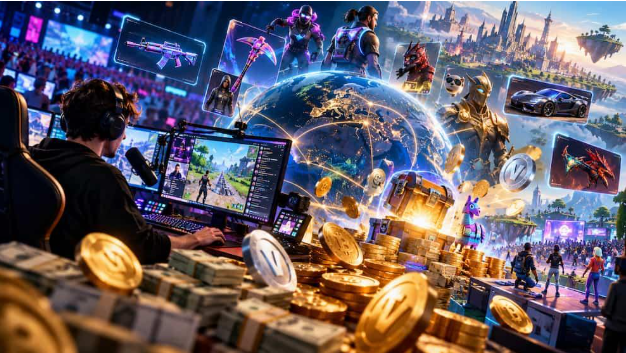
The earnings of the new generation of streaming creators have surpassed most traditional entertainment industries. Kai Cenat’s net worth in 2026 is estimated between $35 million and $45 million. Felix “xQc” Lengyel has accumulated approximately $50 million through Kick contracts and sponsorships. Tyler “Ninja” Blevins has maintained around $50 million, anchored by a $30 million exclusive Microsoft contract in 2019.
Yet this wealth is not merely tied up in luxury homes or cars. A significant portion is reinvested into virtual assets. Nadeshot spent $10,398 on *Valorant* skins. xQc’s Steam investment totals $151,000. Russian streamer Evelone poured all available funds into CS 2 skins. These are not isolated behaviors. They point to a structural trend.
The video game economy has evolved into a full financial system, and prepaid payment tools, digital gift cards in particular, are becoming the core infrastructure driving its operation.
The High-Stakes Spending of Top Gaming Creators
The financial behavior of gaming streamers reveals a striking pattern of capital concentration within virtual ecosystems. For these creators, spending thousands of dollars on in-game items is not merely personal consumption. It is a calculated business expense designed to generate entertainment value for their audiences.
In Counter-Strike 2, case openings have evolved into a form of high-stakes performance. In July 2025, streamers TimTheTatman and Nadeshot, accompanied by CS veteran ohnePixel, conducted what was described as a “world record” case opening session, collectively spending approximately $500,000 on cases and containers. The broadcast featured rare items including the DreamHack 2013 Souvenir Package and EMS Katowice 2014 Container, with individual sticker drops valued at up to $30,000.
Nadeshot’s personal expenditure on CS2 cases exceeded $40,000, a sum that yielded a Karambit Marble Fade worth approximately $2,400 after opening more than 3,200 cases. Russian streamer Evelone demonstrated the brutal mathematics of these ventures more starkly, spending over $150,000 on cases and capsules only to receive drops valued at less than $7,100, a return of less than five percent.
The FIFA Ultimate Team ecosystem presents a parallel dynamic. UK creator Danny Aarons reportedly loaded nearly 6 million FC Points ahead of the FC 26 Team of the Year campaign, representing an expenditure of approximately $48,000. This spending is framed explicitly as a business decision. As a content creator, spending money on FC Points is often necessary to produce content that generates views and revenue through ads, Twitch subscriptions, and donations. Fellow FIFA creators Devin and Dylan have similarly spent 100,000 FC Points in single pack-opening sessions.
This behavior reflects a fundamental transformation in how games monetize their audiences. The traditional model of a one-time purchase for a complete product has been largely displaced by “live-service” architectures that generate revenue through continuous engagement. Industry analysis confirms that the classic model of selling a complete game at a fixed price is increasingly less common, as consumers gravitate toward subscriptions, long-term service games, and free-to-play titles. Streamers are simultaneously beneficiaries and drivers of this system. Their spending generates the compelling content that sustains audience engagement, which in turn incentivizes further expenditure from viewers. The gaming economy operates not as a marketplace of products but as a self-reinforcing cycle where streamer spending fuels content, content attracts audiences, and audiences generate the revenue that makes the next spending cycle possible.
The Virtual Currency Boom: Beyond Traditional Banking
Every major gaming platform now operates its own closed financial system. Fortnite runs on V-Bucks, Call of Duty on COD Points, FIFA/EA FC on FC Points, Steam on Wallet funds, and PlayStation on PSN account balances. These currencies are not interchangeable, yet they serve the same function: converting real money into a proprietary unit that can only be spent within a specific ecosystem.
For professional streamers and high-profile gamers, the conventional banking model has become increasingly unsuitable. Linking a primary credit card or bank account directly to a console or gaming platform introduces a series of financial risks that these individuals are uniquely positioned to understand.
The first concern is security. Gaming accounts are high-value targets for hackers precisely because they often contain stored payment information alongside valuable digital inventories. A compromised account with a linked credit card can result in unauthorized purchases that are difficult to reverse. For streamers whose accounts are publicly known, the exposure is even greater.
The second concern is billing control. Automatic renewals for subscriptions, battle passes, and season content can accumulate rapidly when multiple platforms are involved. A streamer managing accounts across PlayStation, Xbox, Steam, and Epic Games faces a fragmented billing landscape where recurring charges are easy to lose track of.
The most practical solution has been the widespread adoption of prepaid and digital gift cards. These cards function as a financial firewall between a bank account and a gaming platform. The user purchases a card for a fixed amount, redeems the code, and the resulting balance can be spent without any persistent link to their primary financial identity. If the account is compromised, the maximum loss is limited to the card’s remaining balance. If a subscription needs to be cancelled, there is no bank account to disentangle from the platform’s billing system.
For businesses like MoboGift, which specializes in the sale of digital gift cards, this shift represents a fundamental change in how the gaming economy processes payments. The platform enables users to buy game gift cards for major ecosystems, providing a layer of separation that both casual players and professional creators now regard as essential rather than optional.
The Strategic Advantage of Digital Gift Cards for Gamers
Digital gift cards offer a combination of benefits that physical payment methods cannot match. The first is instant delivery. Codes are delivered electronically within minutes, allowing immediate redemption and spending without waiting for a physical card to arrive by mail.
The second is security. A gift card carries no personal banking information and cannot be used to drain a primary account. For streamers whose financial exposure is a professional concern, this separation is not a convenience but a necessity.
The third is giftability. Gaming gift cards are among the most frictionless digital presents available. They can be sent directly to a recipient’s email or messaging app, requiring no knowledge of their existing game library, platform preference, or regional account settings.
The fourth is the elimination of cross-border and regional payment restrictions. Many players encounter blocked transactions when attempting to purchase directly from platforms that do not fully support their local currency or billing address. Digital gift cards bypass this problem entirely by providing a redeemable code that works regardless of the buyer’s geographic location.
These advantages have driven a broader evolution. Gift cards were once viewed as simple physical presents. Today, they function as essential fintech tools within the gaming ecosystem. They are the preferred payment method for budget-conscious players, the standard mechanism for gifting across distances, and the primary solution for creators who need to spend at scale without exposing their personal finances. The gaming economy has effectively adopted gift cards as its own form of regulated, accessible, and secure currency.
Choosing the Right Digital Source: Accessibility and Security
The growing demand for digital gift cards has attracted not only legitimate businesses but also fraudulent operators. Counterfeit codes, phishing sites, and resold stolen vouchers have become common problems in the market. A code purchased from an unverified source may fail to redeem entirely, or worse, may be deactivated after the transaction is complete, leaving the buyer with no recourse.
This risk makes the choice of provider a critical decision. Established platforms that offer instant delivery of genuine codes, transparent pricing, and responsive customer support provide a level of reliability that unofficial sellers cannot guarantee. The difference between a legitimate vendor and a fraudulent one often determines whether a purchase results in immediate gameplay or a permanent loss of funds.
Specialized digital gift card platforms have emerged to meet this demand, offering users more convenient ways to access gaming and entertainment ecosystems. Platforms such as Mobogift reflect this growing market for digital gift cards, helping connect consumers with payment options for services such as PlayStation, Steam, Xbox, and Apple. As digital spending becomes increasingly common, these specialized providers play an important role in making virtual purchases more accessible across different ecosystems.
For the gaming economy, this specialization represents a necessary maturation. As virtual spending continues to grow, the infrastructure supporting it must become more robust, more secure, and more accessible. Providers that meet this standard are not merely selling codes. They are supplying the financial plumbing that keeps the entire system operational.
The Future of Gaming Wealth: What Lies Ahead?
Capital flows within the gaming industry now resemble traditional financial markets. Money enters through subscriptions, sponsorships, and donations, then circulates through in-game purchases and digital asset investments. Streamers convert audience attention into virtual holdings that can appreciate, depreciate, or be liquidated like any other asset class.
The expansion ahead is likely to accelerate. Digital assets are becoming more sophisticated, with provenance, scarcity, and resale value now standard features. The metaverse continues to attract investment, and the fan economy is deepening as audiences spend directly on creators and their digital environments.
In this landscape, access becomes central. Gift cards already provide a secure bridge between conventional money and virtual wealth, requiring no bank account integration, no credit approval, and no exposure to direct platform billing.
For the gaming economy, the conclusion is straightforward. The future of wealth is increasingly digital, and digital gift cards will remain the established gateway to it.


Inside the Multi-Million Dollar Gaming Economy: How Streamers and Digital Assets Drive the Virtual Currency Boom

Find the Right T-Shirt for Every Vibe

Building Sustainable Rental Success With Professional San Antonio Property Management

Cove Lighting and False Ceilings: Creating a Soft, Layered Glow

How Everyday Patients Choose Between Cosmetic Upgrades and Tooth Replacement

A Realistic Guide to Restoring Chipped, Missing, or Worn Teeth

DJARUMTOTO Partnering With Certified Global Software Engineering Studios

On a Bi Parting Wrought Iron Gate the Fence Line Is the Foundation

Safer Aging at Home: A Daily Plan for Mobility, Fall Prevention, and Peace of Mind

Teeth Whitening Options: What Actually Works

BPC-157 UK: A Research-Focused Guide to the Experimental Peptide

Online Gaming and Comedy Gold: Kevin Hart Takes to the (Digital) Stage

Mexico City museums, parks and food markets: a culture-first itinerary

The Goplay711 Difference: Why Live Casino Players Are Switching

ADA Signage: What Every Business Should Know About Interior Signs

Top 6 AI Document Processing Platforms for Enterprise Workflow Automation


Don Toliver Net Worth: Height, Age, Real Name, Career & More
Don Toliver is an American rapper and singer best known for his RIAA platinum certified songs, No Idea and After...


Finesse2tymes Net Worth: Height, Age, Real Name & Career
Finesse2tymes is an American rapper and recording artist. He is mainly recognized for his thunderous voice and motivational lyrics in...


Sugarhill Ddot Net Worth: Height, Age, Real Name & Career
Sugarhill Ddot is an American hip-hop recording artist best known for his songs, Real Facts and I Wanna Love You....


GloRilla Net Worth: Height, Age, Bio, Real Name & Career
GloRilla is an American rapper and hip-hop recording artist from Memphis. She is best known for her popular singles, “Westside...


Destroy Lonely Net Worth: Height, Age, Real Name & Career
Destroy Lonely is an American rapper best known for his 2022 mixtape, No Stylist. He is currently signed to rapper...
-
Rappers2 years ago
GloRilla Net Worth: Height, Age, Bio, Real Name & Career
-

 News2 years ago
Trash To Treasure: Maximizing Space And Efficiency Through Junk Removal
-

 Businessman3 years ago
7 Proven Lead Generation Strategies To Implement in 2023
-
 Businessman2 years ago
Brandon Fugal Net Worth: How Rich is Skinwalker Ranch Owner?
-

 Rappers3 years ago
BigXthaPlug Net Worth: Height, Age, Real Name & Career
-

 TV Stars2 years ago
Kaleb Cooper Net Worth: How Rich is the TV Star Actually?
-

 Internet Stars4 years ago
Mufti Menk Net Worth: How Rich is the Islamic Speaker Actually?
-

 TV Stars2 years ago
Carla Diab Net Worth: How Rich is the TV Star Actually in 2025?
You must be logged in to post a comment Login