
News
Cove Lighting and False Ceilings: Creating a Soft, Layered Glow

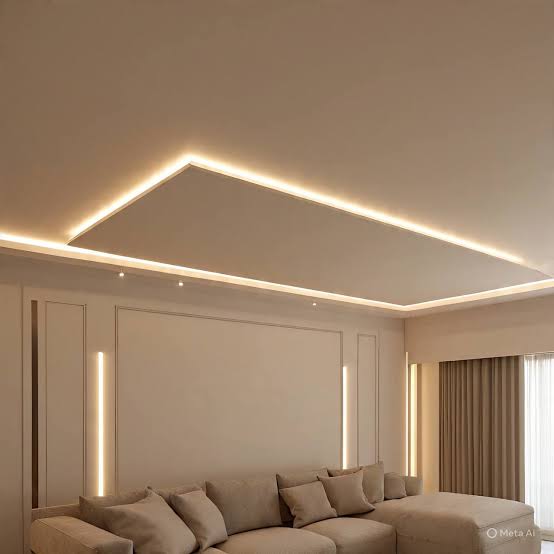
Few interior features create atmosphere as effectively as cove lighting. When a strip of light is hidden within a recess in the ceiling and aimed upward or toward a wall, it produces a diffused glow without any visible bulb. Because a false ceiling naturally creates ledges and recesses, it is the ideal structure for introducing this kind of illumination. Done well, cove lighting makes a room feel taller, softer, and more luxurious.
How Cove Lighting Works
The principle is simple. A channel or step is built into the ceiling edge, and an LED strip is fixed inside it, facing the main ceiling surface. The light bounces off the painted plane and spreads evenly across the room. Since the source itself is hidden, there is no glare, and shadows are gentle. This indirect effect is excellent for living rooms, bedrooms, dining areas, and corridors, where you want a welcoming background light rather than harsh brightness.
Planning the Recess Properly
The success of cove lighting depends on the geometry of the recess. If the channel is too shallow, the LED strip becomes visible from certain angles, creating an unattractive line of dots. If it is too deep, light will not reach the ceiling surface effectively. As a rule of thumb, a gap of about six to eight inches between the strip and the visible edge works for most rooms, but your designer should adjust this based on ceiling height and the angle of view. Always keep a small service gap so that strips can be replaced without breaking the structure.
Choosing Colour Temperature and Quality
Warm white lighting between 2700K and 3000K is the most popular choice for homes because it flatters skin tones, wood, and fabrics. Neutral white around 4000K suits kitchens and study corners. RGB strips can be fun for entertainment rooms, but in main living areas they often look gimmicky. Pay attention to the quality of the LEDs. Cheap strips can show uneven brightness, colour shift, and early failure. Look for a high colour rendering index, good heat dissipation, and a reliable driver that supports dimming.
Combining Cove Lights With Other Layers
Cove lighting works best as one layer of a wider plan. Add recessed spotlights where you need focused illumination, such as above a sofa arm or a dining table, and use decorative pendants or chandeliers as visual focal points. Wall washers and picture lights can supplement the scheme. Put each layer on its own circuit so that you can mix and match. A single dimmable cove line, for instance, is perfect for movie nights, while all layers together make the room bright for entertaining.
Common Mistakes to Avoid
Avoid placing cove lights directly above heavily textured ceilings, as they will emphasise every flaw. Do not forget ventilation, because LED drivers generate heat and need access for servicing. And never rely on a single light source for an entire room, since flat lighting removes depth.
Cove lighting is most effective when the ceiling structure has been designed with it in mind from the start. If you are exploring false ceiling designs with cove lighting, ask your designer to show you sections and lighting layouts, not just finished images. You can also look at various ceiling lighting options to understand how other fixtures can complement the soft glow you are aiming for.
Finally, keep switches and dimmers within easy reach so the effect is used daily.
With careful planning, a modest strip of light can transform an ordinary room into a space that feels warm, deep, and thoughtfully designed.


Find the Right T-Shirt for Every Vibe

Building Sustainable Rental Success With Professional San Antonio Property Management

Cove Lighting and False Ceilings: Creating a Soft, Layered Glow

How Everyday Patients Choose Between Cosmetic Upgrades and Tooth Replacement

A Realistic Guide to Restoring Chipped, Missing, or Worn Teeth

DJARUMTOTO Partnering With Certified Global Software Engineering Studios

On a Bi Parting Wrought Iron Gate the Fence Line Is the Foundation

10 Actionable Steps to Increase Amazon Brand Visibility This Year

Safer Aging at Home: A Daily Plan for Mobility, Fall Prevention, and Peace of Mind

Teeth Whitening Options: What Actually Works

BPC-157 UK: A Research-Focused Guide to the Experimental Peptide

Online Gaming and Comedy Gold: Kevin Hart Takes to the (Digital) Stage

Mexico City museums, parks and food markets: a culture-first itinerary

The Goplay711 Difference: Why Live Casino Players Are Switching

ADA Signage: What Every Business Should Know About Interior Signs

Top 6 AI Document Processing Platforms for Enterprise Workflow Automation


Don Toliver Net Worth: Height, Age, Real Name, Career & More
Don Toliver is an American rapper and singer best known for his RIAA platinum certified songs, No Idea and After...


Finesse2tymes Net Worth: Height, Age, Real Name & Career
Finesse2tymes is an American rapper and recording artist. He is mainly recognized for his thunderous voice and motivational lyrics in...


Sugarhill Ddot Net Worth: Height, Age, Real Name & Career
Sugarhill Ddot is an American hip-hop recording artist best known for his songs, Real Facts and I Wanna Love You....


GloRilla Net Worth: Height, Age, Bio, Real Name & Career
GloRilla is an American rapper and hip-hop recording artist from Memphis. She is best known for her popular singles, “Westside...


Destroy Lonely Net Worth: Height, Age, Real Name & Career
Destroy Lonely is an American rapper best known for his 2022 mixtape, No Stylist. He is currently signed to rapper...
-
Rappers2 years ago
GloRilla Net Worth: Height, Age, Bio, Real Name & Career
-

 News2 years ago
Trash To Treasure: Maximizing Space And Efficiency Through Junk Removal
-

 Businessman3 years ago
7 Proven Lead Generation Strategies To Implement in 2023
-
 Businessman2 years ago
Brandon Fugal Net Worth: How Rich is Skinwalker Ranch Owner?
-

 Rappers3 years ago
BigXthaPlug Net Worth: Height, Age, Real Name & Career
-

 TV Stars2 years ago
Kaleb Cooper Net Worth: How Rich is the TV Star Actually?
-

 Internet Stars4 years ago
Mufti Menk Net Worth: How Rich is the Islamic Speaker Actually?
-

 TV Stars2 years ago
Carla Diab Net Worth: How Rich is the TV Star Actually in 2025?
You must be logged in to post a comment Login