
Articles
America’s Maternal Mental Health Crisis Is Growing

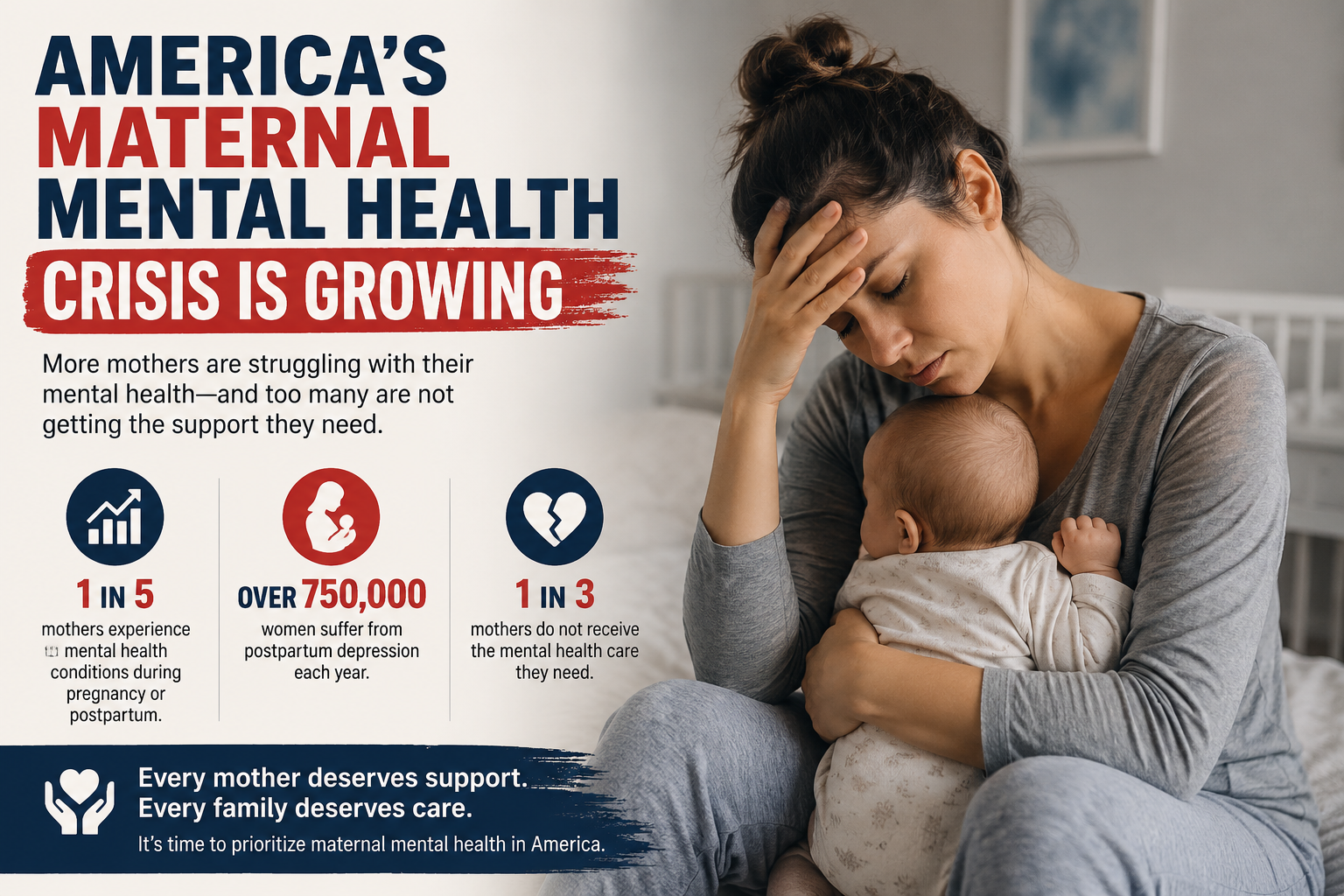
Maternal mental health is deteriorating across the United States, while access to specialized care continues to fall short of what many families need.
Between 2016 and 2023, the percentage of U.S. mothers reporting excellent mental health fell from 38.4% to 25.8%, a decline of more than 12 percentage points. Over the same period, the share reporting fair or poor mental health increased by 64%.
A study by Simmrin Law Group examined the scope of America’s maternal mental health crisis, the availability of treatment and the complicated intersection between severe postpartum conditions and criminal acts such as infanticide.
The findings show a substantial treatment gap. Maternal mental health disorders affect approximately 800,000 U.S. families each year, yet an estimated 75% of affected women remain untreated.
One in Five Families Are Affected by Maternal Mental Health Disorders
Maternal mental health conditions can emerge during pregnancy or after childbirth and encompass depression, anxiety, post-traumatic stress disorder, obsessive-compulsive disorder, substance abuse, bipolar disorder and psychosis.
Collectively, these conditions affect approximately 1 in 5 U.S. families each year.
Postpartum depression alone affects as many as 15% of new mothers. Postpartum psychosis is much rarer, affecting approximately 1 to 2 mothers per 1,000 births, but its potential consequences are considerably more severe.
Women are 23 times more likely to experience psychosis during the month following childbirth than during other periods of their lives.
Postpartum psychosis can include hallucinations, paranoia, delusions and detachment from reality and frequently develops within two weeks of childbirth. Because the condition can increase the risks of both suicide and infanticide, it is considered a medical emergency.
The study found that postpartum psychosis recurs in as many as 50% of cases and is associated with infanticide in approximately 4%.
Maternal mental health conditions more broadly account for 27.7% of pregnancy-related deaths, making them the leading cause of pregnancy-related mortality.
The financial consequences are also substantial. Untreated maternal mental health conditions are estimated to cost approximately $32,000 per mother-infant pair, producing an annual economic burden of roughly $14 billion.
Postpartum Symptoms Can Persist for Years
Maternal mental health problems do not necessarily begin after a baby is born.
Among mothers experiencing maternal mental health conditions, the study found that 40% develop symptoms postpartum, while 33% develop symptoms during pregnancy and 27% were already experiencing anxiety or depression before becoming pregnant.
| Maternal Mental Health Timeline | Share |
|---|---|
| Symptoms develop postpartum | 40% |
| Symptoms develop during pregnancy | 33% |
| Anxiety/depression predates pregnancy | 27% |
The peak onset period is between three and six months postpartum, while the greatest suicide risk occurs between nine and 12 months after childbirth.
Without treatment, symptoms can persist for as long as three years.
Yet numerous barriers can prevent mothers from receiving help, including stigma, shame, cost, limited healthcare access, transportation problems, childcare responsibilities and distrust of authorities.
Those barriers become especially significant when severe postpartum illness intersects with the criminal justice system.
When Maternal Mental Illness and Criminal Acts Intersect
The most extreme cases involving postpartum mental illness can include infanticide, neonaticide and filicide.
Infanticide generally refers to the intentional killing of an infant younger than one year old. Neonaticide describes the killing of an infant within the first 24 hours after birth, while filicide refers more broadly to a parent killing their child.
An infant younger than one is killed every day in the United States, according to data included in the study, and the highest risk occurs on the day of birth.
Mental illness is only one factor associated with these cases. Researchers have also identified poverty, financial hardship, limited access to contraception and healthcare, insufficient social support, substance use, domestic violence, relationship instability, previous abuse or neglect, poor living conditions and social isolation as potential contributing factors.
Research involving women accused of neonaticide has identified symptoms including dissociation, depersonalization, hallucinations and amnesia surrounding childbirth.
The timing is notable. Psychiatric disorders peak during the first three months following childbirth, and 58% of maternal infanticides occur during the same period.
U.S. Law Does Not Have a Specific Infanticide Statute
The legal treatment of these cases also differs substantially from that of several other countries.
The United Kingdom, Canada and Australia have laws specifically addressing infanticide and recognizing the potential psychological effects of childbirth.
The United States has no dedicated infanticide law.
Instead, defendants are generally prosecuted under existing homicide statutes. Maternal mental illness may become relevant through insanity or diminished-capacity defenses, competency proceedings or sentencing.
This creates a complicated legal issue in cases involving postpartum psychosis because the condition can be temporary. A woman who was experiencing severe psychosis at the time of an alleged offense may no longer display those symptoms by the time her case reaches trial.
High-profile cases have highlighted that tension between criminal accountability and psychiatric treatment. The case of Andrea Yates, who drowned her five children in Texas in 2001 while suffering from severe postpartum psychosis, remains one of the country’s best-known examples. Her murder conviction was overturned, and she was subsequently found not guilty by reason of insanity.
More Than 1,600 Infants Have Been Illegally Abandoned
Safe Haven laws offer another window into the intersection of maternal crisis, infant safety and access to support.
Introduced beginning in 1999, these laws allow parents to legally surrender infants under designated circumstances.
Despite their implementation, 1,639 infants were illegally abandoned between 1999 and 2022. Of those infants, 934 were already deceased.
The study also found that some areas continue to experience significant increases. Houston, for example, recorded a 500% increase in infant abandonments between 2022 and 2024.
First-day-of-life homicide rates declined significantly following the introduction of Safe Haven laws, although the risk remains considerably higher during the first day than during other periods of infancy.
Maternal Mental Health Providers Have Doubled, but Shortages Remain
Access to care has expanded rapidly in recent years, but the growth has not eliminated major geographic disparities.
The number of maternal mental health providers nationwide increased from 4,506 in 2023 to 9,694 in 2025, more than doubling in two years.
Despite that increase, just 16% of the childbearing population lives in counties with adequate maternal mental health resources.
The country remains short approximately 9,500 providers and programs.
Several major counties face particularly significant gaps, including Harris County, Texas; Bexar County, Texas; Wayne County, Michigan; Shelby County, Tennessee; and Jackson County, Missouri.
Together, these counties account for more than 200,000 births annually and are estimated to need an additional 840 maternal mental health providers.
High-Risk Maternal Mental Health Counties Are Increasing
The study identified another troubling trend: the number of U.S. counties classified as high risk increased from 700 in 2023 to 796 in 2025.
More concerning, the number classified as severe risk nearly quadrupled.
| Maternal Mental Health Risk | 2023 | 2025 |
| High-risk counties | 700 | 796 |
| Severe-risk counties | 24 | 92 |
| Maternal mental health “dark zones” | 155 | 145 |
Maternal mental health “dark zones” are counties combining high risk with severe shortages of providers or programs. Their number declined from 155 to 145 between 2023 and 2025, but the geographic pattern was uneven.
Tennessee recorded substantial improvement, with 11 counties leaving the dark-zone category and only one entering it. Arkansas had five counties leave the classification.
Alabama moved in the opposite direction. Fourteen Alabama counties became maternal mental health dark zones while only two left the category.
Texas, Alabama, Louisiana, Oklahoma and Tennessee contain some of the largest populations of reproductive-age women living in high-risk areas with limited resources.
Texas alone represents more than 40% of the provider shortage across maternal mental health dark zones, with an estimated deficit of 623 providers.
Most Birthing-Age Women Still Live in Underserved Areas
Geography is only one component of the treatment divide.
Despite recent improvements in provider numbers, 84% of birthing-age women live in areas considered deprived of adequate maternal mental health resources.
The highest risk scores are concentrated across parts of the Deep South, Mississippi Delta, Gulf Coast, Appalachia, New Mexico and Arizona.
Racial disparities further complicate access.
Approximately 40% of Black mothers experience maternal mental health conditions, while postpartum depression among Black mothers increased from 9% in 2010 to nearly 25% in 2021.
Black mothers are also 46% less likely to be screened and less likely to receive treatment.
Maternal mental health challenges are not limited to birthing parents. Approximately 1 in 10 fathers experience postpartum depression, while an estimated 5% to 15% develop anxiety disorders during pregnancy or within the first postpartum year.
The Treatment Gap Remains at the Center of the Crisis
The data compiled by Simmrin Law Group shows a maternal mental health system improving in some respects while falling further behind in others.
Provider numbers more than doubled between 2023 and 2025, and the number of maternal mental health dark zones declined. Yet high-risk counties increased from 700 to 796, severe-risk counties rose from 24 to 92 and 84% of birthing-age women still live in areas lacking adequate maternal mental health resources.
At the most severe end of the spectrum, postpartum psychosis illustrates the potential consequences of failing to identify and treat maternal psychiatric emergencies. The condition is rare, but its association with suicide, infanticide and profound detachment from reality creates medical and legal questions that few other mental health conditions present.
With roughly one in five U.S. families affected by maternal mental health disorders each year and three-quarters of affected women remaining untreated, the study suggests that the country’s central challenge is not simply identifying the scale of maternal mental illness. It is ensuring that families can access treatment before a manageable health condition develops into a crisis.


America’s Maternal Mental Health Crisis Is Growing

New Analysis Reveals the States with the Highest Teen DUI Risks

When Major Events Push City Traffic to the Breaking Point

America’s Wildfire Crisis Is Becoming More Costly and Complex

Golf Cart Crashes Are Rising as Carts Move Beyond the Course

What Makes a Deck Worth the Investment?

How to Evaluate a Channel Before You Buy YouTube Channels

74.1 Million Americans Speak a Language Other Than English at Home, New Analysis Finds

Listed Price or Tier Price? Finding the Point Where Waiting Pays Off

How to Use AI for Business Automation: Top Use Cases & Real-World Examples

How Kansas City Veterans Court Helps Veterans Avoid Future Legal Trouble

How to Buy Sports Cards Like an Experienced Collector

Understanding the FCRA and Its Impact on Background Checks

From Municipal Clinics to Private HMOs: How Defendant Categorization Shapes What a Family Can Recover

Aspire Gotek X Review: The Cheapest Way to Find Out What Draw You Actually Like

Why Skilled Recruiters Are in High Demand in 2026


Don Toliver Net Worth: Height, Age, Real Name, Career & More
Don Toliver is an American rapper and singer best known for his RIAA platinum certified songs, No Idea and After...


Finesse2tymes Net Worth: Height, Age, Real Name & Career
Finesse2tymes is an American rapper and recording artist. He is mainly recognized for his thunderous voice and motivational lyrics in...


Sugarhill Ddot Net Worth: Height, Age, Real Name & Career
Sugarhill Ddot is an American hip-hop recording artist best known for his songs, Real Facts and I Wanna Love You....


GloRilla Net Worth: Height, Age, Bio, Real Name & Career
GloRilla is an American rapper and hip-hop recording artist from Memphis. She is best known for her popular singles, “Westside...


Destroy Lonely Net Worth: Height, Age, Real Name & Career
Destroy Lonely is an American rapper best known for his 2022 mixtape, No Stylist. He is currently signed to rapper...
-
Rappers2 years ago
GloRilla Net Worth: Height, Age, Bio, Real Name & Career
-

 News2 years ago
Trash To Treasure: Maximizing Space And Efficiency Through Junk Removal
-

 Businessman3 years ago
7 Proven Lead Generation Strategies To Implement in 2023
-
 Businessman2 years ago
Brandon Fugal Net Worth: How Rich is Skinwalker Ranch Owner?
-

 Rappers3 years ago
BigXthaPlug Net Worth: Height, Age, Real Name & Career
-

 TV Stars2 years ago
Kaleb Cooper Net Worth: How Rich is the TV Star Actually?
-

 Internet Stars3 years ago
Mufti Menk Net Worth: How Rich is the Islamic Speaker Actually?
-

 TV Stars2 years ago
Carla Diab Net Worth: How Rich is the TV Star Actually in 2025?
You must be logged in to post a comment Login