
Technology
From Single Drones to Coordinated Teams: How Swarm Autonomy Is Changing Uncrewed Operations

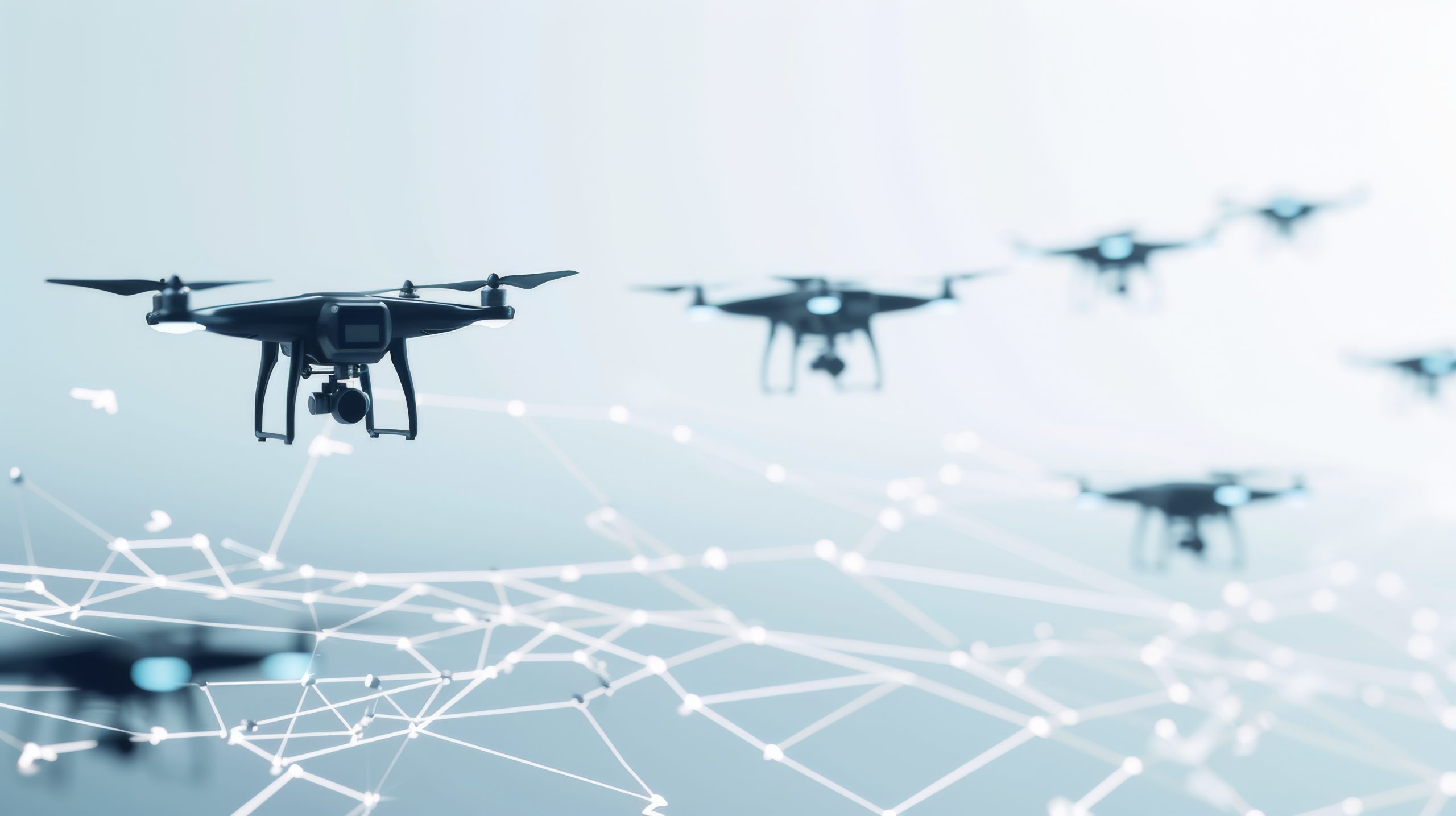
For much of their history, drones have been flown one at a time. A trained pilot controls a single aircraft, watches a single video feed, and decides where it goes next. That model works well for many tasks, but it scales poorly. Adding aircraft usually means adding operators, and every link between a pilot and an aircraft is a potential point of failure.
Swarm autonomy takes a different approach. Instead of directing each aircraft individually, an operator assigns a goal to a group, and onboard software divides the work, shares observations, and adjusts as conditions change. Developers of software for drone swarms are focused on this problem: getting many uncrewed aircraft to operate as one coordinated team while a person remains responsible for the mission.
Why One Pilot per Drone Becomes a Bottleneck
The limits of single-aircraft control appear quickly when a task covers a large or complex area. Mapping a town, searching a forest, or monitoring a long perimeter can require more coverage than one aircraft can provide in the time available. Flying several drones manually helps, but each one needs its own operator, and coordinating those operators by radio adds delay and room for error.
Defense researchers have studied this problem for years. DARPA’s OFFSET program, for example, set out to provide small infantry units with swarms of 250 or more robotic aircraft and ground vehicles for urban environments, along with interfaces designed to enable collaboration between human teams and swarm systems. A goal of that scale illustrates why manual control becomes impractical as the number of platforms grows.
How Swarm Coordination Works
Swarm systems generally rely on a few core capabilities working together:
- Shared awareness. Each aircraft reports what its sensors detect, so the group builds a common picture of the area.
- Task allocation. Software assigns roles, such as which drone covers which sector, and reassigns them if an aircraft drops out or a new priority appears.
- Decentralized decision-making. In many designs, drones coordinate with nearby aircraft rather than waiting for instructions from a single ground station. This can help the group keep working if its connection to the operator is interrupted.
As these capabilities mature, the operator’s role shifts from flying to supervising. Rather than steering individual aircraft, the person sets objectives, monitors progress, and steps in when a decision calls for human judgment.
Where Coordinated Drones Are Being Applied
Defense is a major area of development. Swarms are being explored for reconnaissance, perimeter security, and operations in places where GPS signals or radio links may be degraded. In these settings, a group that can adapt when individual aircraft are lost, or communications fail, offers resilience that a single drone cannot.
Coordinated aerial teams are also relevant to civilian work that spans large areas. Search and rescue, disaster damage assessment, wildfire monitoring, and inspection of long infrastructure such as pipelines and power lines all involve covering ground quickly. In each case, the appeal is similar: more area surveyed in less time, with fewer people exposed to hazardous conditions.
The Challenges That Remain
Coordinating many autonomous aircraft introduces problems that single-drone operations rarely face. Communication links can be jammed or lost. Aircraft must avoid one another as well as terrain and obstacles. Software has to respond sensibly to situations its developers did not anticipate, and testing every possible interaction among dozens of platforms is difficult.
Oversight matters just as much as engineering. In the United States, the Department of Defense policy, updated in January 2023, requires autonomous and semi-autonomous weapon systems to be designed so that commanders and operators can exercise appropriate levels of human judgment in the use of force, and calls for rigorous verification, validation, and realistic operational testing. Civilian programs face their own constraints, including national aviation rules and local safety requirements.
What Comes Next
Swarm technology is moving from research settings into field exercises, but adoption depends on more than technical progress. Organizations considering coordinated drone operations will need reliable communications, clear operating procedures, supervisors trained to manage groups of aircraft, and testing that reflects real-world conditions rather than ideal ones.
Integration is another practical question. Teams already using drones will want to know whether new coordination software works with the aircraft and sensors they have, and how it fits into existing command and reporting workflows.
The move from one pilot per drone to one supervisor per team is a meaningful change in how aerial work gets done. Developed carefully, with human oversight built in from the start, coordinated autonomy could make large-area tasks faster and safer for both defense and civilian teams.


From Single Drones to Coordinated Teams: How Swarm Autonomy Is Changing Uncrewed Operations

Essential Residential Roofing Practices for Lasting Home Protection

Encouraging Emotional Growth and Self-Management Through Meaningful Childhood Experiences

Understanding Slot Online Games: Features, Gameplay, and Responsible Entertainment

How Can the Right Fitness Environment Support a Healthier Lifestyle?

How 2028 Presidential Election Prediction Markets Work: A Practical Guide

How Professional Forklift Service Supports Long-Term Industrial Productivity

The Importance of Regular HVAC Tune Up Services for Reliable Home Comfort

Best Boneless Sofas 2026: Cloud Comfort & No-Assembly Picks

Cove Lighting and False Ceilings: Creating a Soft, Layered Glow

Suncoast, Sun City & Montecasino: SA's Big Casinos vs Playing Online (2026)

Inside the Multi-Million Dollar Gaming Economy: How Streamers and Digital Assets Drive the Virtual Currency Boom

Why Blackjack Is Still One of the World’s Favorite Casino Games

Subscription fatigue: a simple review and PennyGuard

What Happens After an Arrest? A Guide from Criminal Lawyers in Bankstown

Walking the Legal End of the Estate Executor Journey in Queensland


Don Toliver Net Worth: Height, Age, Real Name, Career & More
Don Toliver is an American rapper and singer best known for his RIAA platinum certified songs, No Idea and After...


Finesse2tymes Net Worth: Height, Age, Real Name & Career
Finesse2tymes is an American rapper and recording artist. He is mainly recognized for his thunderous voice and motivational lyrics in...


Sugarhill Ddot Net Worth: Height, Age, Real Name & Career
Sugarhill Ddot is an American hip-hop recording artist best known for his songs, Real Facts and I Wanna Love You....


GloRilla Net Worth: Height, Age, Bio, Real Name & Career
GloRilla is an American rapper and hip-hop recording artist from Memphis. She is best known for her popular singles, “Westside...


Destroy Lonely Net Worth: Height, Age, Real Name & Career
Destroy Lonely is an American rapper best known for his 2022 mixtape, No Stylist. He is currently signed to rapper...
-
Rappers2 years ago
GloRilla Net Worth: Height, Age, Bio, Real Name & Career
-

 News3 years ago
Trash To Treasure: Maximizing Space And Efficiency Through Junk Removal
-

 Businessman3 years ago
7 Proven Lead Generation Strategies To Implement in 2023
-
 Businessman2 years ago
Brandon Fugal Net Worth: How Rich is Skinwalker Ranch Owner?
-

 Rappers4 years ago
BigXthaPlug Net Worth: Height, Age, Real Name & Career
-

 TV Stars2 years ago
Kaleb Cooper Net Worth: How Rich is the TV Star Actually?
-

 Internet Stars4 years ago
Mufti Menk Net Worth: How Rich is the Islamic Speaker Actually?
-

 TV Stars2 years ago
Carla Diab Net Worth: How Rich is the TV Star Actually in 2025?
You must be logged in to post a comment Login