
News
How a Commercial Meat Grinder Handles Fat, Gristle, and Temperature During Processing

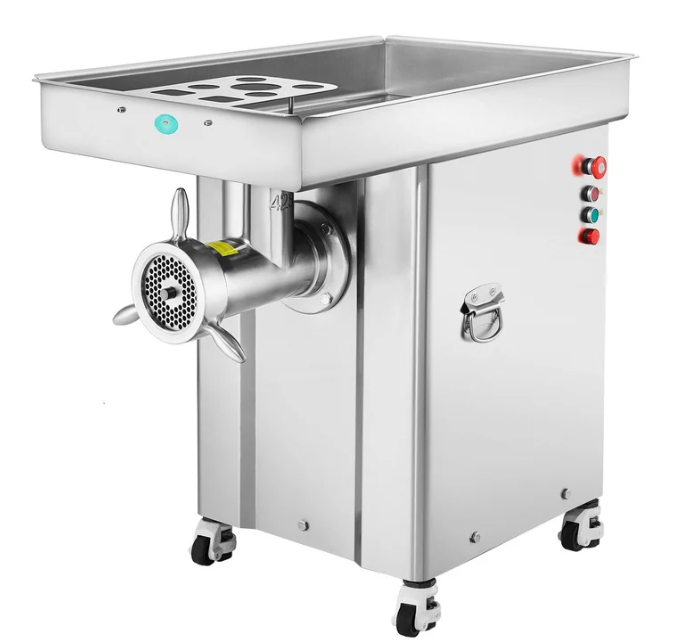
As the hunting season and the holidays arrive, kitchens and processing rooms across the United States turn large quantities of venison, beef, and pork into ground meat, sausage, and burger. A commercial electric meat grinder is made for that volume, and understanding what happens inside it, from the auger to the cutting plate, makes the difference between a clean grind and a smeared, gummy one. This guide covers the mechanism, the temperature rules, and the food safety habits that matter.
What Happens Inside the Grinder
Meat enters a hopper and is pulled forward by an auger, a rotating screw that pushes it toward the front. At the end, a rotating knife presses against a stationary plate with holes. The knife shears the meat as it is forced through the holes, and the ground product comes out the other side. A sharp knife and a plate that sits flat against it produce clean cuts, while a dull knife tears and smears the fat.
Why Cold Meat Grinds Better
Fat softens quickly at room temperature, and soft fat smears across the plate and clogs the holes. For that reason, many butchers chill both the meat and the grinder parts before starting, and they work with meat that is very cold but not frozen solid. Cubing the meat and placing it in the freezer for a short time before grinding makes the fat firm, so it cuts into distinct particles instead of paste.
Fat, Gristle, and Silver Skin
Lean game such as deer has little fat, so a meat grinder for deer is often run with added beef or pork fat to improve texture and moisture, commonly a measured share by weight. Gristle and silver skin, the tough connective tissue on the surface of a muscle, wrap around the knife and block the plate, so trimming them before grinding saves time.
Choosing Plates and Grinding Twice
Plates come with different hole sizes. A coarse plate gives a chunky texture suited to chili and sausage, while a fine plate gives a smooth texture suited to burgers. Many processors grind first through a coarse plate and then again through a fine plate, which blends fat and lean more evenly than a single pass. Mixing the meat gently between passes helps distribute seasoning.
Grinding for Burgers and Sausage
The same grinder serves different recipes. For burgers, a single pass through a medium plate keeps some texture. For sausage, a coarse first grind followed by mixing with seasoning and a second pass gives a firmer bind. A commercial meat grinder handles large batches, so mixing in a chilled tub between passes keeps the temperature low. Keeping notes on the plate size, fat share, and result lets a kitchen repeat a recipe exactly.
Motor Size and Duty Cycle
A commercial meat grinder is rated for long runs because its motor is sized to avoid overheating. Household grinders are meant for short use and can burn out under heavy loads. A larger motor also turns the auger steadily when the meat is dense, which prevents stalling. Listen to the machine: a motor that slows or hums under load is a sign that the knife is dull or the feed is too fast.
Why a Cabinet Design Helps
A cabinet-style grinder houses a large motor in an enclosed base, which allows continuous operation for long sessions. The heavier body stays steady on the floor and the larger throat accepts bigger pieces of meat, so the operator spends less time feeding. Such machines draw more power than household grinders, so they usually need a dedicated circuit installed by a licensed electrician.
Food Safety Comes First
Raw meat spreads bacteria easily, and grinding mixes the surface into the interior. Sanitize the work area before and after, wash hands often, and keep the meat at a safe cold temperature. Refrigerate or freeze ground meat promptly. For wild game, follow local rules for handling, field dressing, and disease testing, and ask the local wildlife agency if unsure.
Operating Safely
A grinder pulls in whatever it is fed, so these rules apply:
- Use the stomper, never fingers
- Switch off before clearing a jam
- Keep long hair and sleeves tied back
- Unplug before cleaning or changing parts
Cleaning and Maintenance
Take the grinder apart after every session, wash the parts in hot, soapy water, and rinse and dry them fully. Wipe metal parts with food-grade oil to prevent rust. Sharpen or replace the knife and plate as a set when they dull. A well-maintained machine grinds cleanly for years, while neglect shows quickly in the quality of the meat.
Packaging for the Freezer
Portion ground meat into flat packages, label them with the date, and freeze them quickly so ice crystals stay small. A shop that processes game in season often looks at the wider range of industrial equipment for food handling and storage, so that grinders, freezers, and packaging machines work together through the busy weeks.


How Veterinary Hospitals Use Flow Cytometry To Investigate Lymphoma In Pets

How Frame, Fabric, and Anchoring Decide Whether a Heavy Duty Marquee Handles Summer Weather

How a Commercial Meat Grinder Handles Fat, Gristle, and Temperature During Processing

A Practical Guide to United States State Retirement Rules for Small Businesses

How Certified Public Accountants Help Businesses Build Stronger Financial Governance

5 Questions To Ask Before Starting Cosmetic Dental Treatments

The New Financial Playbook: How Modern Athletes Are Investing Their Fortunes in 2026

What to Get the Man Who Says He Doesn’t Want Anything for Christmas

Best Boneless Sofas 2026: Cloud Comfort & No-Assembly Picks

What Happens After an Arrest? A Guide from Criminal Lawyers in Bankstown

The Mental Game in Cricket: Key Strategies for Maintaining Focus and High Performance Under Pressure

Walking the Legal End of the Estate Executor Journey in Queensland

A Look at the Future of Community-Based Gaming

Your Home is Not Cash: How to Find Your Real Walk-away Net Worth

How Digital Scans Are Replacing Goopy Impressions In Modern Orthodontics

California Helmet Law: Rules Every Motorcycle Rider Should Know


Don Toliver Net Worth: Height, Age, Real Name, Career & More
Don Toliver is an American rapper and singer best known for his RIAA platinum certified songs, No Idea and After...


Finesse2tymes Net Worth: Height, Age, Real Name & Career
Finesse2tymes is an American rapper and recording artist. He is mainly recognized for his thunderous voice and motivational lyrics in...


Sugarhill Ddot Net Worth: Height, Age, Real Name & Career
Sugarhill Ddot is an American hip-hop recording artist best known for his songs, Real Facts and I Wanna Love You....


GloRilla Net Worth: Height, Age, Bio, Real Name & Career
GloRilla is an American rapper and hip-hop recording artist from Memphis. She is best known for her popular singles, “Westside...


Destroy Lonely Net Worth: Height, Age, Real Name & Career
Destroy Lonely is an American rapper best known for his 2022 mixtape, No Stylist. He is currently signed to rapper...
-
Rappers2 years ago
GloRilla Net Worth: Height, Age, Bio, Real Name & Career
-

 News3 years ago
Trash To Treasure: Maximizing Space And Efficiency Through Junk Removal
-

 Businessman3 years ago
7 Proven Lead Generation Strategies To Implement in 2023
-
 Businessman2 years ago
Brandon Fugal Net Worth: How Rich is Skinwalker Ranch Owner?
-

 Rappers4 years ago
BigXthaPlug Net Worth: Height, Age, Real Name & Career
-

 TV Stars2 years ago
Kaleb Cooper Net Worth: How Rich is the TV Star Actually?
-

 Internet Stars4 years ago
Mufti Menk Net Worth: How Rich is the Islamic Speaker Actually?
-

 TV Stars2 years ago
Carla Diab Net Worth: How Rich is the TV Star Actually in 2025?
You must be logged in to post a comment Login