
News
CMAA Service Class, Explained: How to Spec a Crane for the Work It Will Actually Do

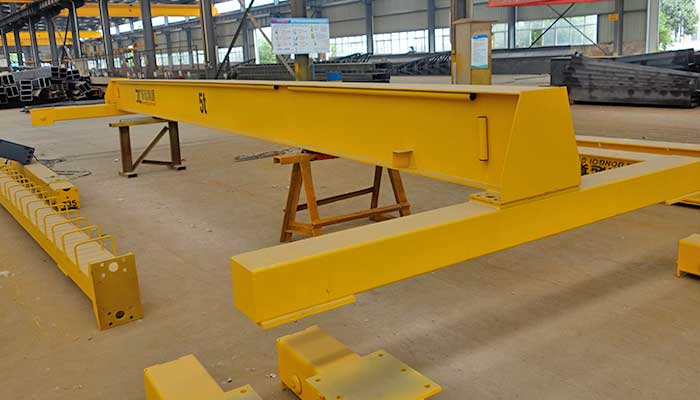
Most overhead crane problems that surface years after installation trace back to a single decision made at the very beginning. A crane that fatigues early, wears its runway prematurely, or needs components replaced ahead of schedule was usually specified correctly on capacity and span, then classified wrong on duty. That duty rating is the CMAA service class, and it is the most misunderstood number in overhead lifting.
Buyers tend to focus on the two figures that feel most concrete: how many tons the crane lifts and how far it spans. Both matter. Neither tells you whether the crane will survive the work it is asked to do. That answer lives in the service class, and getting it right is what separates a crane that lasts its full design life from one that becomes a maintenance problem long before it should.
What the Service Class Actually Describes
The Crane Manufacturers Association of America (CMAA) defines six service classes, A through F, in its specifications CMAA 70 and 74. The class describes how hard a crane works over its life, measured by two things: the load spectrum, meaning the average weight of the loads relative to the crane’s rated capacity, and the number of load cycles the crane will accumulate over its lifetime.
Put simply, the service class answers two questions that capacity and span cannot: how heavy are the typical lifts compared to the maximum, and how often does the crane lift? A crane that spends its life lifting near capacity, over and over, is a fundamentally different machine from one that makes a few light lifts a shift, even if both are rated for the same tonnage.
This is the point that trips people up, so it is worth stating plainly. Capacity and service class are independent decisions. A five-ton crane running continuously in a scrap yard can accumulate more fatigue damage than a fifty-ton crane in a maintenance bay that lifts occasionally. Rated capacity tells you the heaviest single load the crane can handle. Service class tells you how much total work it can absorb before fatigue becomes the limiting factor.
The Six Classes in Plain Terms
Each class corresponds to a range of duty, from near-idle to relentless. Here is what they describe in practical terms:
- Class A, standby or infrequent service. Precise, slow lifts with long idle periods between them. Typical of powerhouses, public utilities, and motor rooms where the crane exists mainly for installation and maintenance.
- Class B, light service. Light and slow duty, loads varying from none to occasional full capacity, roughly two to five lifts per hour. Repair shops, light warehousing, and light assembly.
- Class C, moderate service. Loads averaging about half of rated capacity, five to ten lifts per hour, with few lifts at full capacity. General machine shops and fabrication shops. Many industrial cranes land here.
- Class D, heavy service. Frequent lifts approaching rated capacity, in demanding settings such as heavy machine shops, foundries, and container handling. The crane works hard for much of the shift.
- Class E, severe service. Near-continuous operation at or close to rated capacity, common in bulk material handling and high-throughput operations.
- Class F, continuous severe service. The most punishing duty, with lifts at or near capacity happening almost constantly and lifetime cycles running into the millions. Steel mill and similar cranes that essentially never stop.
The jump from one class to the next is not cosmetic. Higher classes require heavier structures, stronger mechanisms, and more robust components in the hoist, end trucks, motors, bearings, and controls, all engineered to survive the fatigue that comes with more frequent and heavier cycling. Higher classes also carry stricter connection detailing and more frequent inspection expectations, because fatigue, rather than a single overload, becomes the governing concern.
The Cost of Getting It Wrong
Misjudging the service class is expensive in both directions, which is what makes it worth the effort to get right.
Under-specify, and the consequences arrive early and compound. A crane rated for lighter duty than it actually sees will fatigue ahead of schedule. Runway beams and rails wear faster, components fail sooner, downtime climbs, and the safety margin the design assumed erodes with every cycle. The buyer saved money on the purchase order and spends it back several times over in premature maintenance and lost production.
Over-specify, and the waste is quieter but real. Two cranes of identical capacity and span can differ in price substantially, in some cases by a six-figure sum, because a high-duty crane requires specialized, heavier components while a low-duty crane can use more standardized ones. A buyer who classifies a light-duty application as severe pays for structure and mechanism that will never be used.
The goal is to match the class to the work, so the crane is neither quietly wearing itself out nor loaded with capability that returns nothing.
How to Land on the Right Class
Choosing the correct class comes down to understanding the actual workload up front, while the crane can still be specified around it. A practical approach works through a few questions:
- How heavy are the typical lifts? Estimate the average load as a percentage of the capacity the crane will be rated for. A crane that mostly lifts near its maximum is in a different class than one that usually lifts a fraction of it.
- How often does it lift? Estimate lifts per hour across a normal shift, and be honest about peaks. Frequency drives cycle accumulation, which drives fatigue.
- What is the shift pattern and environment? A crane running three shifts in a hot, dusty, high-throughput operation lives a harder life than one running a single light shift in a clean bay, even at the same capacity and frequency.
- What will the work look like in five or ten years? Duty tends to increase as operations grow. Classifying for today’s workload alone can leave a crane under-specified the moment production ramps.
Taken together, these answers place an operation on the A-through-F scale with reasonable confidence. Readers working internationally will find the same logic in the FEM and ISO duty groups used in Europe, which classify cranes on load spectrum and operating time in a parallel way, so the underlying decision is the same even when the labels differ.
Because the classification calculation involves the mean effective load factor and lifetime cycle estimates, it is worth confirming the final class with the crane’s manufacturer or a lifting specialist who can align the specification, the structure, and the long-term overhead crane services the equipment will need. That conversation is far cheaper before the crane is built than after it is running.
The Decision That Governs Everything Else
Service class is the quiet foundation under almost every other crane decision. It shapes the structure the building has to carry, the components that go into the machine, the inspection intervals the crane will need, and the years of service it will deliver. A crane specified with its real workload in hand tends to disappear into the background and simply work, which is exactly what a well-chosen crane should do. A crane classified by guesswork tends to announce the mistake later, through wear, downtime, and cost that a single early conversation could have prevented.
For anyone specifying a crane, the lesson is to give the service class the same attention as the capacity and span. Understand the work the crane will actually do, match the class to it honestly, and account for where the operation is heading. Do that, and the most consequential decision in the whole specification becomes the one least likely to come back as a problem.


The Evolution of Test Cricket: Adapting the Longest Format to the Modern Era

Data and Analytics in Cricket: How Advanced Stats Are Shaping Match Predictions

From Local Tournaments to Global Franchises: The Rise and Impact of T20 Leagues

Mastering the Pitch: Understanding How Surface Conditions and Pitch Reading Impact Match Outcomes

The Mental Game in Cricket: Key Strategies for Maintaining Focus and High Performance Under Pressure

Iconic Cricket Rivalries and Historic Moments That Reshaped International Sports

The Foundations of Cricket: Core Rules and Mechanics

Planning Executive Hospitality and Business Gatherings on Dubai’s Waters

Mexico City museums, parks and food markets: a culture-first itinerary

Online Gaming and Comedy Gold: Kevin Hart Takes to the (Digital) Stage

Top 6 AI Document Processing Platforms for Enterprise Workflow Automation

How Bigger Match Payouts Actually Change FC 27 Weekend Prep

How an Edit Stays Useful After the Face Paste Stops Impressing Anyone

ADA Signage: What Every Business Should Know About Interior Signs

10 Tools To Build Visibility in AI-Driven Answers in 2026

What Is Maxim88 Singapore? Complete Brand Overview (2026)


Don Toliver Net Worth: Height, Age, Real Name, Career & More
Don Toliver is an American rapper and singer best known for his RIAA platinum certified songs, No Idea and After...


Finesse2tymes Net Worth: Height, Age, Real Name & Career
Finesse2tymes is an American rapper and recording artist. He is mainly recognized for his thunderous voice and motivational lyrics in...


Sugarhill Ddot Net Worth: Height, Age, Real Name & Career
Sugarhill Ddot is an American hip-hop recording artist best known for his songs, Real Facts and I Wanna Love You....


GloRilla Net Worth: Height, Age, Bio, Real Name & Career
GloRilla is an American rapper and hip-hop recording artist from Memphis. She is best known for her popular singles, “Westside...


Destroy Lonely Net Worth: Height, Age, Real Name & Career
Destroy Lonely is an American rapper best known for his 2022 mixtape, No Stylist. He is currently signed to rapper...
-
Rappers2 years ago
GloRilla Net Worth: Height, Age, Bio, Real Name & Career
-

 News2 years ago
Trash To Treasure: Maximizing Space And Efficiency Through Junk Removal
-

 Businessman3 years ago
7 Proven Lead Generation Strategies To Implement in 2023
-
 Businessman2 years ago
Brandon Fugal Net Worth: How Rich is Skinwalker Ranch Owner?
-

 Rappers4 years ago
BigXthaPlug Net Worth: Height, Age, Real Name & Career
-

 TV Stars2 years ago
Kaleb Cooper Net Worth: How Rich is the TV Star Actually?
-

 Internet Stars4 years ago
Mufti Menk Net Worth: How Rich is the Islamic Speaker Actually?
-

 TV Stars2 years ago
Carla Diab Net Worth: How Rich is the TV Star Actually in 2025?
You must be logged in to post a comment Login