
News
How Body Camera Footage Can Impact a Police Brutality Case

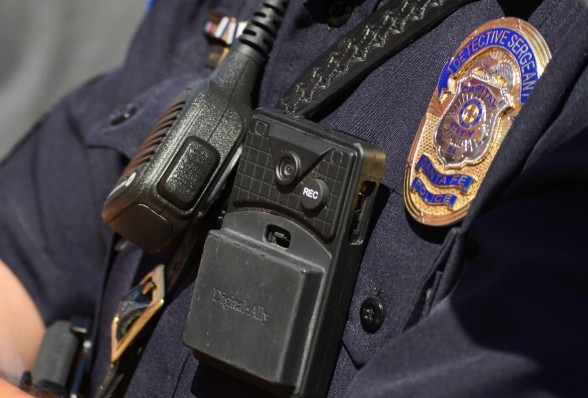
Over the past decade, body-worn cameras have become standard equipment for police departments across the country, including in Las Vegas. What was once a rare piece of evidence is now often the centerpiece of a police brutality case. When an officer’s actions are called into question, footage from their own camera can either support their version of events or expose exactly the kind of misconduct a victim has alleged. Understanding how this evidence works, and its limitations, can help victims know what to expect as their case moves forward.
Why Body Camera Footage Carries So Much Weight
Unlike witness memories, which can fade or shift over time, body camera footage captures events as they happened in real time. It shows tone of voice, body language, the sequence of commands given, and the level of force used, all without the filter of personal recollection. For juries, judges, and investigators, this kind of objective record often carries more persuasive power than testimony alone. When footage clearly shows an officer using force against a compliant, non-threatening individual, it can be difficult for a department to argue the encounter was reasonable.
What Footage Can Reveal
Body camera video can capture a wide range of details relevant to a police brutality claim, including:
– Whether the individual was following commands at the time force was used
– Whether verbal warnings were given before force was applied
– The exact amount of force used and how long it continued
– Statements made by the officer or the individual during the encounter
– Whether the individual was already restrained when force occurred
– The overall demeanor and behavior of everyone involved
Even brief clips can provide crucial context that changes the entire narrative of an incident.
The Challenges of Obtaining Footage
While body camera footage can be powerful evidence, actually getting access to it isn’t always simple. Police departments control this footage, and requests for its release are often subject to internal review, redaction policies, and legal procedures. In some cases, departments delay releasing footage for weeks or months, particularly when an incident draws public attention. Formal legal requests, and sometimes court orders, may be necessary to compel a department to hand over unedited footage in a timely manner.
There’s also the issue of footage retention. Many departments only preserve body camera video for a limited period before it’s automatically deleted or overwritten. This makes it critical to request preservation of footage as soon as possible after an incident, ideally within days, to prevent it from being lost before a formal investigation or lawsuit can move forward.
When the Camera Doesn’t Tell the Whole Story
Body camera footage isn’t perfect. Cameras can be positioned in ways that miss key moments, batteries can die, or an officer may fail to activate their device altogether, sometimes in violation of department policy. Footage can also be limited to a narrow field of view, missing what happened just outside the frame. In situations where footage is incomplete, unclear, or conspicuously missing, this can itself become an important part of a case, especially if it suggests an officer intentionally avoided documentation of their conduct.
Audio quality is another factor. Wind, distance, or overlapping voices can make it difficult to hear exactly what was said, which is why footage is often reviewed alongside other evidence like witness statements and 911 recordings to build a complete picture.
How This Evidence Shapes the Direction of a Case
Footage often plays a pivotal role in early case strategy. If video clearly supports a victim’s account, it can strengthen settlement negotiations and reduce the likelihood of a drawn-out legal battle. On the other hand, if footage is ambiguous or contested, it may require additional evidence, expert analysis, or enhanced video review to clarify what actually occurred. Frame-by-frame analysis, audio enhancement, and comparison with other camera angles from dashcams or nearby surveillance systems can all help resolve unclear moments.
Why Experienced Legal Guidance Matters
Because body camera footage can be delayed, redacted, or deleted, acting quickly is essential. CEGA Law’s police misconduct attorneys understand the procedures required to request and preserve this evidence before it disappears, and know how to push back when departments are slow to comply. Having knowledgeable legal representation from the earliest stages of a case can make the difference between footage being available to support a claim and it being lost entirely.
Talk to CEGA Law Group About Your Case
If you or someone you love was injured during an encounter with police in Las Vegas, don’t wait to find out what body camera footage might reveal. CEGA Law Group can help you request and preserve this critical evidence, build a strong case around it, and fight for the accountability and compensation you deserve.


Why social casinos are rising and how High 5 Casino sets the standard

The Evolution of Test Cricket: Adapting the Longest Format to the Modern Era

Data and Analytics in Cricket: How Advanced Stats Are Shaping Match Predictions

From Local Tournaments to Global Franchises: The Rise and Impact of T20 Leagues

Mastering the Pitch: Understanding How Surface Conditions and Pitch Reading Impact Match Outcomes

The Mental Game in Cricket: Key Strategies for Maintaining Focus and High Performance Under Pressure

Iconic Cricket Rivalries and Historic Moments That Reshaped International Sports

The Foundations of Cricket: Core Rules and Mechanics

Mexico City museums, parks and food markets: a culture-first itinerary

Online Gaming and Comedy Gold: Kevin Hart Takes to the (Digital) Stage

Top 6 AI Document Processing Platforms for Enterprise Workflow Automation

How Bigger Match Payouts Actually Change FC 27 Weekend Prep

How an Edit Stays Useful After the Face Paste Stops Impressing Anyone

ADA Signage: What Every Business Should Know About Interior Signs

10 Tools To Build Visibility in AI-Driven Answers in 2026

What Is Maxim88 Singapore? Complete Brand Overview (2026)


Don Toliver Net Worth: Height, Age, Real Name, Career & More
Don Toliver is an American rapper and singer best known for his RIAA platinum certified songs, No Idea and After...


Finesse2tymes Net Worth: Height, Age, Real Name & Career
Finesse2tymes is an American rapper and recording artist. He is mainly recognized for his thunderous voice and motivational lyrics in...


Sugarhill Ddot Net Worth: Height, Age, Real Name & Career
Sugarhill Ddot is an American hip-hop recording artist best known for his songs, Real Facts and I Wanna Love You....


GloRilla Net Worth: Height, Age, Bio, Real Name & Career
GloRilla is an American rapper and hip-hop recording artist from Memphis. She is best known for her popular singles, “Westside...


Destroy Lonely Net Worth: Height, Age, Real Name & Career
Destroy Lonely is an American rapper best known for his 2022 mixtape, No Stylist. He is currently signed to rapper...
-
Rappers2 years ago
GloRilla Net Worth: Height, Age, Bio, Real Name & Career
-

 News2 years ago
Trash To Treasure: Maximizing Space And Efficiency Through Junk Removal
-

 Businessman3 years ago
7 Proven Lead Generation Strategies To Implement in 2023
-
 Businessman2 years ago
Brandon Fugal Net Worth: How Rich is Skinwalker Ranch Owner?
-

 Rappers4 years ago
BigXthaPlug Net Worth: Height, Age, Real Name & Career
-

 TV Stars2 years ago
Kaleb Cooper Net Worth: How Rich is the TV Star Actually?
-

 Internet Stars4 years ago
Mufti Menk Net Worth: How Rich is the Islamic Speaker Actually?
-

 TV Stars2 years ago
Carla Diab Net Worth: How Rich is the TV Star Actually in 2025?
You must be logged in to post a comment Login