
Technology
The Transformation Trap: Bridging the Gap Between Boardroom Strategy and IT Execution

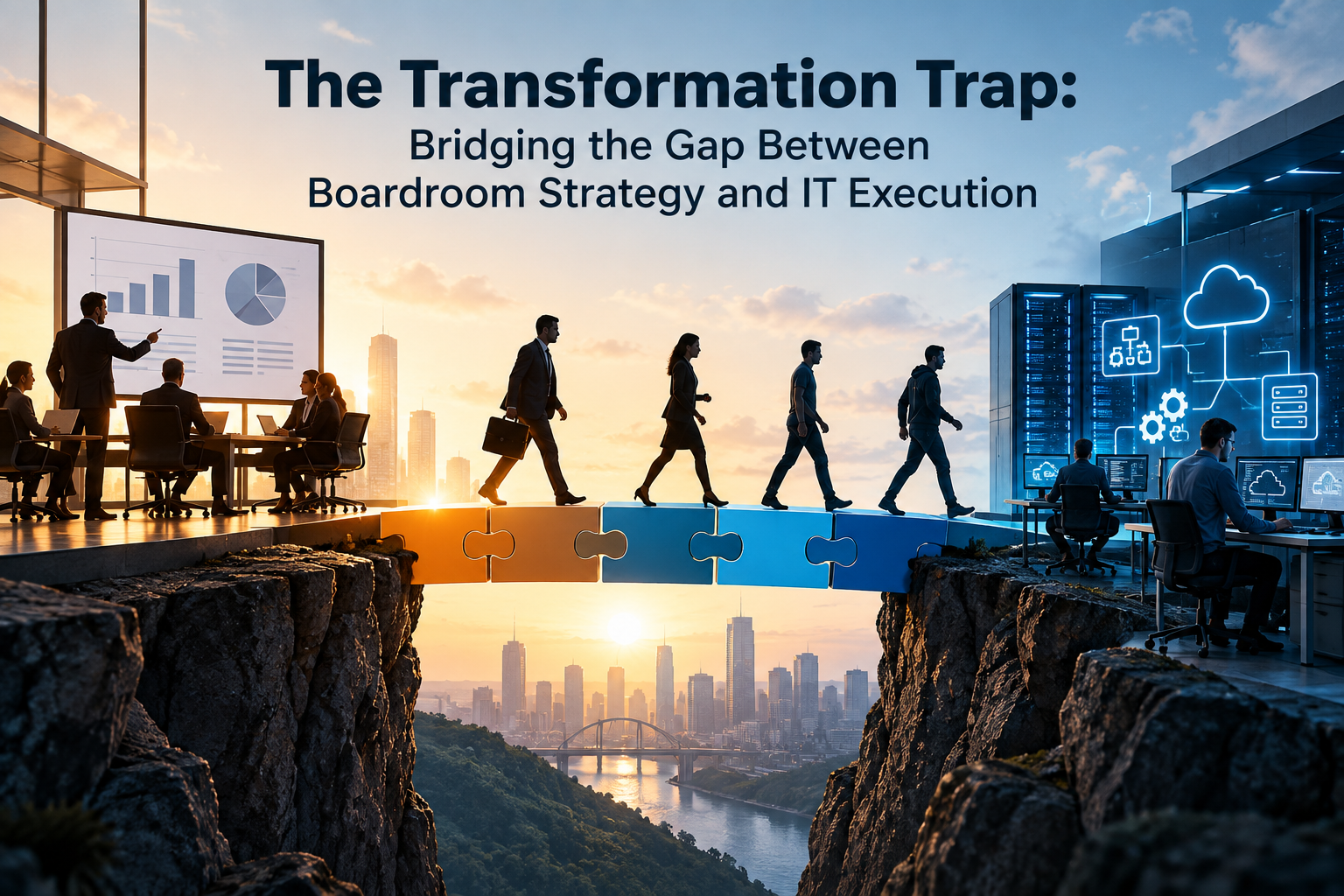
I talk to a lot of CIOs, and the disconnect between board expectations and operational reality is wider than ever. The board wants generative AI rollouts, automated workflows, and comprehensive zero-trust security frameworks deployed by the end of the fiscal year. Meanwhile, the IT Service Desk Manager is trying to untangle a web of legacy on-premises applications and shadow IT that somehow survived the last three infrastructure overhauls.
We are dealing with an environment where technical debt actively blocks strategic growth. Most organizations spent the last few years migrating infrastructure in a panic, prioritizing speed over structure. Now, the bill is due. The architecture is bloated, the service desk is overwhelmed with alert fatigue, and cloud consumption costs are entirely unpredictable. Getting out of this reactive cycle requires a hard reset on how technology leaders evaluate, deploy, and govern their infrastructure.
Confronting the cloud migration hangover
The “lift and shift” era left behind a massive operational mess. Moving a poorly optimized, monolithic application to a major cloud provider does not modernize it. It just makes it significantly more expensive to run. Operations Directors are now staring at monthly cloud invoices that make no sense, trying to figure out why compute and egress costs spiked over a holiday weekend.
The reality is that decentralized buying decisions created massive overlap across business units. Marketing bought their own SaaS analytics tools, HR deployed a standalone engagement platform, and IT is stuck managing the identity and access management (IAM) nightmare that connects them all. You cannot build a resilient, forward-looking IT capability on top of a fragile foundation. When every department acts as its own shadow IT procurement team, the attack surface expands, and data silos harden.
Fixing this means auditing what you actually have running. It requires mapping every dependency and forcing difficult conversations about decommissioning legacy applications that only a handful of people still use. If a legacy database cannot support modern authentication protocols like SAML or OIDC, it is no longer just a technical annoyance—it is a material risk to the business.
Designing intentional architecture with an objective lens
Internal IT teams are almost always too close to the problem. When your engineers spend their days fighting fires, applying emergency patches, and closing priority-one tickets, they lose the ability to see the structural flaws in the network. There is also a natural, human bias toward the vendors and tools the team already knows how to use, even if those tools are no longer the right fit for the company’s trajectory.
Relying solely on internal consensus often leads to stagnation or incremental improvements that fail to move the needle. You need a circuit breaker—an objective view of your current state versus your target state. Engaging external technology consulting services provides that necessary separation. It allows an independent party to look at your architecture, identify the expensive redundancies, and build a roadmap that isn’t influenced by internal office politics, historical vendor loyalty, or the sunk-cost fallacy.
A solid strategy defines how data moves, where it lives, and who has access to it long before a single purchase order is signed. It means moving away from reactive scaling and towards a secure-by-design framework. If the board wants to integrate machine learning into customer-facing applications next year, your data pipelines, APIs, and security protocols must be flawless right now.
Rescuing the service desk from alert fatigue
The modern IT service desk is fundamentally broken in many large organizations. We have implemented so many overlapping monitoring tools that the signal-to-noise ratio is completely skewed. Service desk engineers are bombarded with hundreds of automated alerts daily. The vast majority of these are false positives or low-priority warnings. This causes severe alert fatigue, meaning actual, critical incidents get buried in the noise until a user calls to complain that a system is down.
Automation is supposed to fix this, but poorly implemented automation just creates a different kind of headache. If your ITSM chatbot deflects a user’s ticket by trapping them in an endless loop of irrelevant knowledge base articles, you haven’t improved efficiency. You have just outsourced the frustration to the end-user.
To fix the service desk, operations leaders need to focus on intelligent routing and self-healing infrastructure.
- Consolidate monitoring tools into a single platform to reduce duplicate alerts and give engineers context for the errors they see.
- Implement runbooks that automatically resolve known, low-risk issues—like automated disk cleanup, password resets, or service restarts—without human intervention.
- Track metrics that actually matter to the business. Stop focusing purely on mean time to resolution (MTTR) and start measuring user friction and repeat ticket rates.
Realigning security and operations execution
Security cannot function as a separate department that just throws compliance policies over the fence for operations to implement. When security acts purely as an internal auditor, they slow down deployment and frustrate engineering teams. Conversely, when operations ignore security guidelines to meet arbitrary deployment deadlines, the company eventually ends up dealing with a breach.
This alignment has to start at the top, driven by the CIO. Security controls must be embedded directly into the deployment pipeline. If an engineer spins up a new cloud environment or container, the vulnerability scanning, network segmentation, and policy enforcement should happen automatically as part of the build process.
This operational discipline must extend to vendor risk management. You must have strict, enforceable boundaries for third-party access. Relying on an annual compliance questionnaire is useless when threat actors are actively exploiting supply chain vulnerabilities within hours of public disclosure. Zero trust applies to your external contractors, managed service providers, and software vendors just as much as your own internal staff.
The path forward
The gap between board-level strategy and operational reality is not unbridgeable, but closing it requires honesty about your current technical debt. You cannot transform an organization that is suffocating under the weight of unpatched legacy systems, bloated cloud environments, and an exhausted service desk.
True modernization happens when you strip away the operational redundancies, design systems intentionally, and stop treating security as an afterthought. It is a slow, methodical process of untangling years of reactive decisions and replacing them with sustainable architecture.
Take a look at your current IT project roadmap. Are you actually modernizing your infrastructure, or are you just migrating your technical debt to a more expensive hosting environment? I would love to hear how your teams are balancing the demand for innovation against the reality of legacy operations in the comments below.


Why Your Dentist May Ask About Frequent Throat Clearing

How Cosmetic Dentistry Improves Confidence For Parents And Teens Alike

Why Blackjack Is Still One of the World’s Favorite Casino Games

Why CPD for Healthcare Professionals Is No Longer Optional in 2026

Why Logistics Companies Are Investing in Android App Development

No Deposit Bonus Casinos in the UK: Why Players Look for Free Casino Offers

WIN777 Compares Short High Energy Play versus Extended Gaming Sessions

Caspian Osetra Karat: The Caviar That Brought the Caspian Flavor Back

Online Gaming and Comedy Gold: Kevin Hart Takes to the (Digital) Stage

Mexico City museums, parks and food markets: a culture-first itinerary

Top 6 AI Document Processing Platforms for Enterprise Workflow Automation

How Bigger Match Payouts Actually Change FC 27 Weekend Prep

How an Edit Stays Useful After the Face Paste Stops Impressing Anyone

ADA Signage: What Every Business Should Know About Interior Signs

What Is Maxim88 Singapore? Complete Brand Overview (2026)

10 Tools To Build Visibility in AI-Driven Answers in 2026


Don Toliver Net Worth: Height, Age, Real Name, Career & More
Don Toliver is an American rapper and singer best known for his RIAA platinum certified songs, No Idea and After...


Finesse2tymes Net Worth: Height, Age, Real Name & Career
Finesse2tymes is an American rapper and recording artist. He is mainly recognized for his thunderous voice and motivational lyrics in...


Sugarhill Ddot Net Worth: Height, Age, Real Name & Career
Sugarhill Ddot is an American hip-hop recording artist best known for his songs, Real Facts and I Wanna Love You....


GloRilla Net Worth: Height, Age, Bio, Real Name & Career
GloRilla is an American rapper and hip-hop recording artist from Memphis. She is best known for her popular singles, “Westside...


Destroy Lonely Net Worth: Height, Age, Real Name & Career
Destroy Lonely is an American rapper best known for his 2022 mixtape, No Stylist. He is currently signed to rapper...
-
Rappers2 years ago
GloRilla Net Worth: Height, Age, Bio, Real Name & Career
-

 News2 years ago
Trash To Treasure: Maximizing Space And Efficiency Through Junk Removal
-

 Businessman3 years ago
7 Proven Lead Generation Strategies To Implement in 2023
-
 Businessman2 years ago
Brandon Fugal Net Worth: How Rich is Skinwalker Ranch Owner?
-

 Rappers3 years ago
BigXthaPlug Net Worth: Height, Age, Real Name & Career
-

 TV Stars2 years ago
Kaleb Cooper Net Worth: How Rich is the TV Star Actually?
-

 Internet Stars4 years ago
Mufti Menk Net Worth: How Rich is the Islamic Speaker Actually?
-

 TV Stars2 years ago
Carla Diab Net Worth: How Rich is the TV Star Actually in 2025?
You must be logged in to post a comment Login